Chelsea Fined £10m and Suspended Transfer Ban Over Abramovich Deals
Chelsea’s Roman Abramovich years have come back to bite – but only just hard enough to sting the bank account.
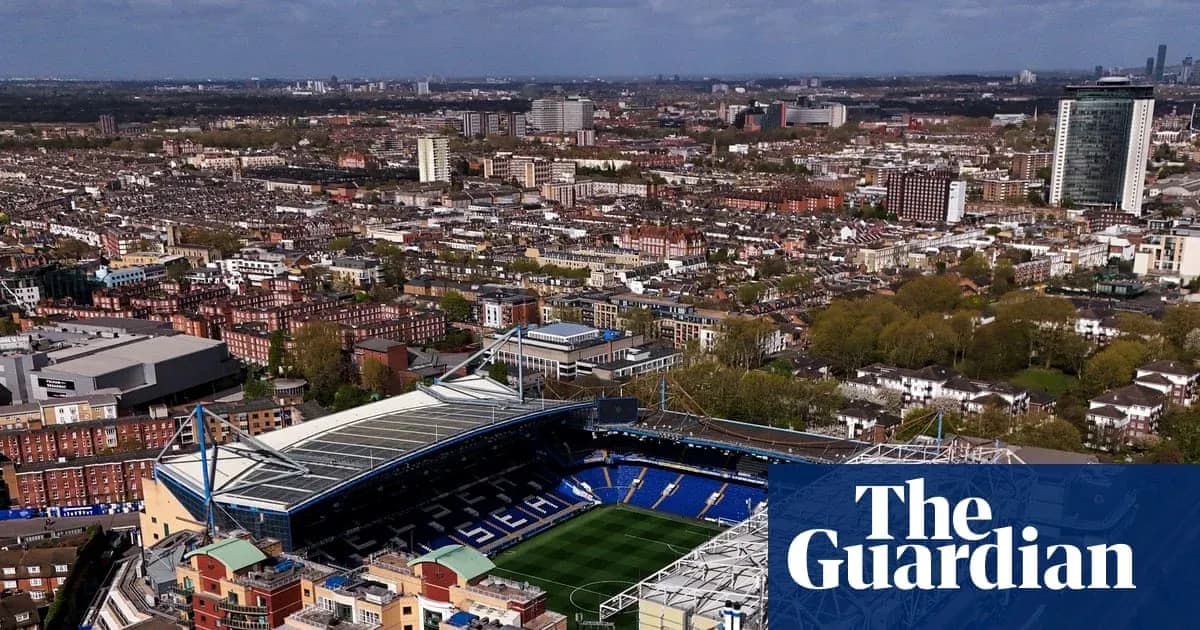
The club have been fined £10m by the FA and handed a suspended two-window transfer ban after an independent commission found “shameful and arrogant” breaches of transfer rules across more than a decade, from 2009 to 2022. The punishment mirrors the Premier League sanction issued earlier this year, which also centred on the use of unlicensed agents and attempts to disguise the true nature of transfer payments.
Deals involving Samuel Eto’o, Eden Hazard and Willian were among those dragged into the spotlight, emblematic of an era when Chelsea’s aggressive spending reshaped English football – and, the commission concluded, repeatedly broke its rules.
From 15-point threat to “meagre” fine
Behind the final verdict lies a disciplinary journey that could have looked far more brutal.
The FA’s written reasons reveal that the commission initially considered a starting point equivalent to a 15-point deduction. That was cut to a suspended six-point penalty. Even that never saw daylight. After submissions from both the FA and the Premier League arguing against a sporting sanction, Chelsea appealed and the punishment was recast as a suspended transfer ban, leaving the club with only the £10m fine to pay.
The appeal board decided there was not enough evidence to prove Chelsea had actually gained a sporting advantage, even if the original panel believed that was exactly what the club had sought.
Football finance expert Stefan Borson, head of sport at law firm McCarthy Denning, did not mince his words. He described the club’s legal strategy as “a masterclass in non-adversarial diplomacy with both the FA and the Premier League”, noting how the process ended with what he called a “final meagre fine” effectively covered by funds held in escrow from Abramovich’s sale.
FA slams Abramovich-era conduct – and questions its own case
The FA commission did not hold back in its assessment of the previous regime at Stamford Bridge. The panel said the rule-breaking showed “a shameful and arrogant disregard for the rules of the game … which has done so much to bring the game of football in general, and the name of CFC into disrepute”.
At the same time, the commission turned its fire on the FA itself. It expressed “particular concern” that no individuals had been charged over the misconduct and criticised the governing body for asking that no sporting sanction be imposed at all. The Premier League took a similar stance.
That position jarred with the FA’s own argument that Chelsea’s conduct had been driven by a desire to flex financial muscle and secure an edge on the pitch. In one internal exchange cited in the documents, an unnamed senior Chelsea figure reacted to the prospect of losing Willian to Tottenham in 2013 by saying it was “not good” and that losing him to Spurs was “adding insult to injury”. The FA suggested this person “may have loved the power associated with having a bottomless pocket when it came to acquiring players of great quality and/or with great potential”, and said it strained credulity to suggest there was no intention to gain a sporting advantage.
The pressure finally told in the form of financial sanctions alone, rather than the points hit many rivals might have expected.
Offshore payments, leaked files and a rare glimpse inside
The case grew out of a vast paper trail. The Premier League and FA had been poring over tens of millions of pounds in secret payments routed through offshore companies owned by Abramovich. Those arrangements came to light through Cyprus Confidential, an investigation led by the Guardian and international partners, based on leaked data from Cypriot financial services firms used to manage the oligarch’s wealth.
Among the deals exposed were apparent off-book payments to Hazard’s agent and to an associate of former title-winning manager Antonio Conte. For a club that dominated headlines on the pitch, the documents offered a rare, unvarnished look at how it operated off it.
The Willian transfer in 2013, snatched from under Tottenham’s nose at the last minute, became a symbol of that culture. The internal message about the optics of losing him to a London rival captured the mood of a hierarchy used to getting its way, and willing to push the boundaries to do so.
New owners, self-reporting and a line under the past
The twist in this saga is that the offences were not uncovered by regulators first, but by Chelsea themselves. When BlueCo, the consortium fronted by Todd Boehly and Clearlake Capital, took control in 2022, the new regime ordered a review of historic transactions and then self-reported the irregularities.
The commission praised that approach and highlighted the club’s cooperation throughout the process. Chelsea, already operating under a separate settlement agreement with Uefa, stressed they had “worked openly and transparently with all regulators” and said they were “pleased to confirm that this brings all regulatory proceedings against the club to a close”.
The FA’s ruling also disclosed, for the first time, that BlueCo reached a multi-million pound settlement with HM Revenue & Customs over transactions dating back to 2011. The precise figure remains redacted, but the appeal board indicated that at least £1.35m had been repaid.
One final detail underlines the FA’s desire to spin some good from an ugly chapter: the entire £10m fine will be channelled into grassroots football.
So Chelsea move on, the Abramovich years officially filed under history, their punishment heavy on condemnation but light on competitive damage. The question now is whether the rest of the game will see this as a warning shot – or a blueprint for how to break the rules, reset under new owners and walk away with little more than a financial slap.