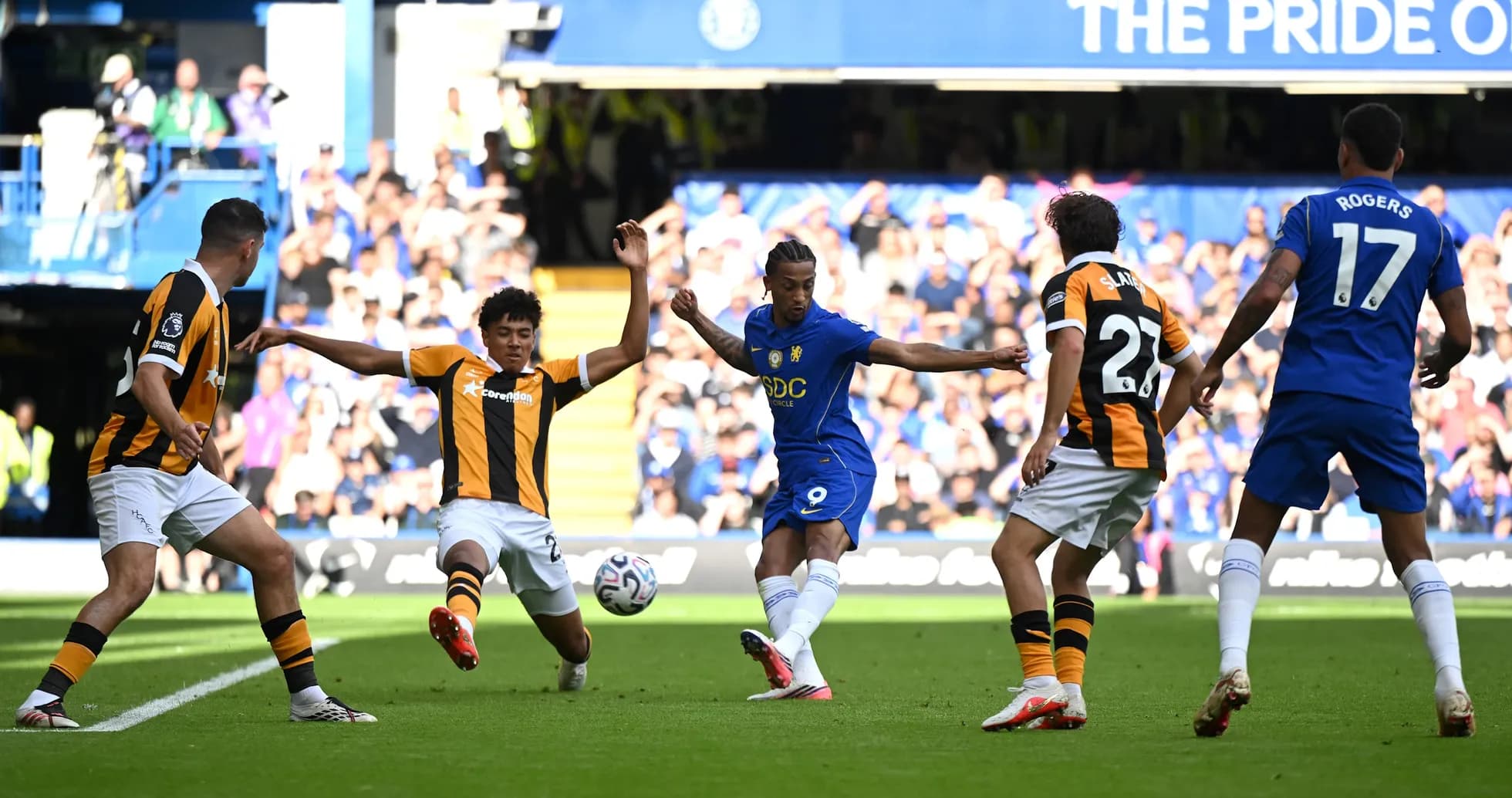
Chelsea vs Hull City: A Tactical Analysis of the 2-2 Draw
Stamford Bridge had the feel of an early‑season crossroads rather than a routine September fixture. Chelsea, fifth in the Premier League on 7 points with a goal difference of +1 (10 scored, 9 conceded overall), hosted a newly promoted Hull City side sitting third on 8 points and a goal difference of +3 (5 scored, 2 conceded overall). Over 90 minutes that ended 2-2, the league’s early storylines hardened into something more permanent: Chelsea as a high‑ceiling, high‑risk attacking project, Hull as a compact, stubborn machine that refuses to lose.
I. The Big Picture – Systems, Identities, and the 90-Minute Story
Xabi Alonso doubled down on his progressive blueprint, rolling out a 4-2-3-1 that in reality morphed into a 3-2-4-1 in possession. E. Martínez started in goal behind a back line of W. Fofana, L. Colwill, J. Hato and Pedro Neto. In front, R. Lavia and R. James formed a double pivot with an attacking quartet of M. Gusto, C. Palmer, M. Rogers and Joāo Pedro.
The numbers heading into this game underlined Chelsea’s attacking intent: overall they had scored 10 goals in 4 matches, with an average of 3.0 goals at home and 2.0 on their travels. The flip side of that aggression was a porous back line, conceding 9 in total, including 5 at home with an average of 2.5 per home match. No clean sheets in any venue, no failures to score either – Chelsea’s season had become a guarantee of chaos.
Hull arrived with the opposite profile. S. Jakirović’s 5-4-1 was a defensive thesis: K. Tzolakis in goal, a back five of L. Coyle, S. Ajayi, J. Egan, N. Mendy and R. Giles, shielded by a hard‑working midfield of M. Belloumi, M. Crooks, R. Slater and E. Stroud behind lone forward O. McBurnie. Heading into this game they had allowed only 2 goals in 4 matches overall, with clean sheets in both home fixtures and 1 on their travels. Their overall goals against average sat at 0.5, with 0.0 at home and 1.0 away. They had yet to lose, and their away record – 1 win, 1 draw, 0 defeats, 3 scored and 2 conceded – suggested they were comfortable suffering without the ball.
The 2-2 at full time, after Hull had led 2-1 at the break, fitted those profiles almost too perfectly: Chelsea’s firepower eventually broke through, but Hull’s structure and resilience were enough to escape London with a point.
II. Tactical Voids – Absences and Discipline
Both managers had to navigate notable absences that subtly reshaped their squads. For Chelsea, M. Caicedo, E. Emegha, J. Henderson and M. Palestra all missed out through various injuries. The most significant tactical void was Caicedo: without his ball‑winning and positional discipline, Alonso leaned heavily on R. Lavia as the lone true holding midfielder, with R. James asked to balance between full‑back instincts and central responsibility. That increased the burden on J. Hato and L. Colwill to defend large spaces behind an aggressive press.
Hull’s absentee list was longer: I. Ansah, J. Butland, D. Gyabi, C. Hughes, E. Matazo and H. Morita were all unavailable. The missing midfielders – Gyabi, Hughes, Matazo, Morita – removed some of Jakirović’s options for rotating his engine room. It meant extra responsibility on M. Crooks and R. Slater to handle Chelsea’s central overloads, with M. Belloumi asked to work both ways as the creative outlet and auxiliary defender.
Disciplinary trends added another layer. Chelsea’s yellow cards this season had been spread across the match, but with a clear early spike: 33.33% of their cautions had come in the first 15 minutes, followed by a late‑game surge where 22.22% arrived between 76-90 minutes. That pattern speaks of an aggressive start and a tiring, stretched finish. Hull, by contrast, saw 30.77% of their yellows between 46-60 minutes, often as they reset after half‑time and absorbed fresh pressure. O. McBurnie and M. Crooks both came into the game with 2 yellow cards each this campaign, emblematic of a side that defends with edge but usually stays on the right side of the line. Neither team had seen a red card in league play, despite McBurnie’s presence on the top red‑cards list from previous disciplinary records.
III. Key Matchups – Hunter vs Shield, Engine Room Battles
The headline duel was always going to be Chelsea’s attacking trident against Hull’s low block. Joāo Pedro, M. Rogers and C. Palmer have been among the league’s most productive forwards so far. Joāo Pedro arrived with 3 goals and 3 assists in 4 appearances, underpinned by 8 shots (4 on target) and 7 successful dribbles from 10 attempts. Rogers matched him with 3 goals and 1 assist, adding 10 key passes and 12 dribble attempts. Palmer, operating as the creative hub, had 2 goals and 2 assists, 9 key passes and a passing accuracy of 80% from 139 passes.
Against them stood Hull’s collective shield, but particularly the trio of J. Egan, S. Ajayi and N. Mendy in the central defensive lane, and M. Belloumi as the two‑way midfielder in front. Belloumi’s numbers this season – 2 goals, 1 assist, 10 tackles, 3 successful blocks and 9 interceptions – made him both a counter‑attacking threat and a key component of Hull’s defensive resistance. His job was to disrupt Palmer’s rhythm between the lines and to spring transitions into the spaces behind Chelsea’s advanced full‑backs.
In midfield, R. Lavia’s duel with M. Crooks and R. Slater defined Chelsea’s ability to control second balls. Lavia had to screen a back line that, overall, had conceded 9 goals in 4 matches, while also providing the first pass into Palmer and Rogers. Crooks, who had already accumulated 2 yellow cards in just 2 appearances, brought height and physicality, looking to unsettle Chelsea’s build‑up and attack the space around Lavia whenever Hull broke.
At the top end, O. McBurnie embodied Hull’s direct threat. With 6 shots (3 on target), 1 assist and a huge 74 duels contested (36 won), he was less a classic finisher and more a reference point to drag Fofana and Colwill into uncomfortable aerial battles. His ability to draw 9 fouls this season made him a magnet for set‑pieces – a crucial route to goal for a side that scores only 1.0 at home and 1.5 on their travels on average.
IV. Statistical Prognosis – What the Numbers Say About These Sides
Even without explicit xG values, the season data sketches a clear balance of probabilities. Chelsea’s overall scoring average of 2.5 goals per match, combined with an overall concession rate of 2.3, points to high‑volume chance creation and a defensive structure that is still being calibrated. Hull’s overall scoring rate of 1.3, paired with a miserly 0.5 goals conceded on average, suggests a side that generates fewer opportunities but defends them with ruthless efficiency.
The clean‑sheet split is telling. Chelsea have not kept a single clean sheet at home or away, while Hull have 3 in total – 2 at home and 1 on their travels. That defensive solidity underpins their unbeaten start, and it is why, even at Stamford Bridge, a draw felt within their grasp.
From a tactical forecasting lens, Chelsea’s attacking trio will continue to tilt matches in their favour, especially at home where they average 3.0 goals. But until Alonso finds a way to lower that 2.5 home goals‑against average, their fixtures will remain open and vulnerable to well‑drilled visitors like Hull.
Hull, meanwhile, will lean on their 5-4-1 as a portable fortress. With Belloumi’s all‑action profile, McBurnie’s aerial presence and a disciplined back five, they have the tools to keep games tight and steal results in key moments. Their away record – unbeaten, with 3 goals scored and only 2 conceded – is no accident.
Following this result, the narrative hardens: Chelsea are the league’s entertainers, capable of overwhelming any opponent but not yet trusted to close the door. Hull are the disruptors, a promoted side with a Champions League‑level defensive platform. When the hunter meets the shield again later in the season, it will not just be a clash of styles, but a test of which philosophy has evolved more – Alonso’s high‑wire attacking act, or Jakirović’s compact, calculated resistance.