Chelsea’s Barco Signing: Last Stand for Recruitment or Alonso’s Secret Weapon?
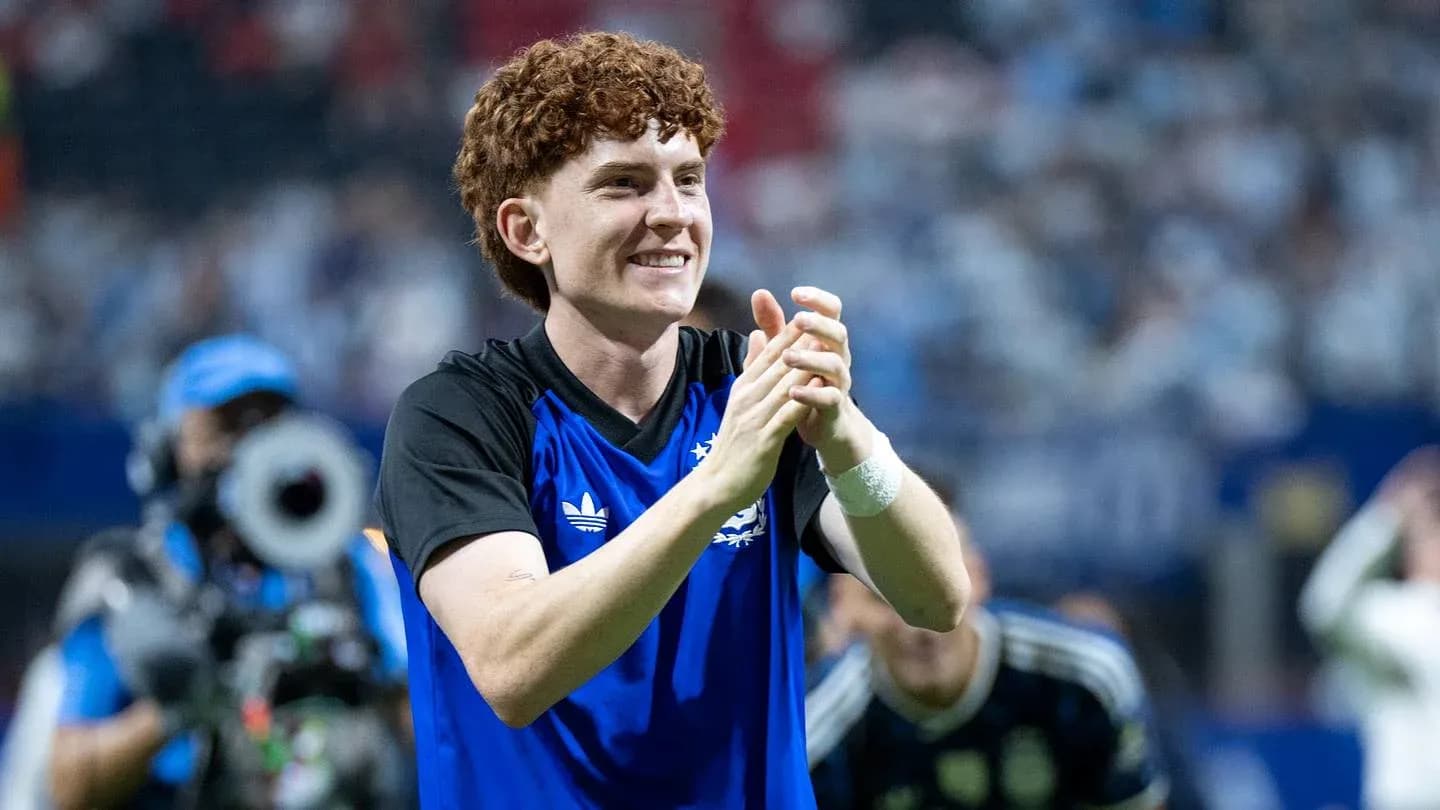
Chelsea finally confirmed on Sunday what had been an open secret for months: Valentín Barco is in the building.
The 22-year-old arrives from Strasbourg as a versatile, high-energy midfielder, yet his signing says as much about the power struggle behind the scenes at Stamford Bridge as it does about the player himself.
A Transfer From the Old Regime
This is not a Xabi Alonso signing. That much is clear.
Chelsea’s new head coach has been upfront about where he wants reinforcements. He pushed hard for Sunderland’s Granit Xhaka and ended up with Brentford veteran Jordan Henderson in midfield. On the left side of defense, he has specifically requested Rayo Vallecano full-back Pep Chavarría, a deal Chelsea are closing in on.
Barco, by contrast, belongs to the recruitment department.
The move was first set in motion back in early April, when Liam Rosenior was still in charge. Reports then suggested Chelsea and Barco had already shaken hands on a summer switch. Two days after Alonso’s appointment in May, Barco publicly said goodbye to Strasbourg even though Chelsea had yet to make anything official. The timing told its own story.
While Alonso may have been consulted for a final thumbs-up during his negotiations with the club, the driving forces were co-sporting directors Paul Winstanley and Laurence Stewart, along with recruitment figures Joe Shields and Sam Jewell. It is their project, their bet.
And they are under real scrutiny. Years of lavish spending have produced only sporadic returns on the pitch. Supporters welcomed Alonso’s arrival not just as a coaching upgrade but as a rebalancing of power—less scattergun recruitment, more joined-up thinking. Barco, then, feels like one of the last echoes of the previous model.
The Player Behind the Politics
Strip away the politics, though, and Chelsea have signed a good footballer.
Premier League fans might remember Barco as the slight, red-haired left-back who struggled to impose himself over seven league appearances for Brighton & Hove Albion in 2023–24. That version is gone.
Strasbourg rebuilt him.
Since landing in France in early 2025, Barco has operated as a dynamic, two-way midfielder—tasked with sparking attacks and shielding the back line in equal measure. He has thrived in that demanding role, showing the engine, bravery on the ball and tactical intelligence to handle heavy responsibility. A big move always felt inevitable once this summer rolled around.
Cynics will say Chelsea’s real motive is to keep another asset under the BlueCo umbrella, to control his trajectory and, by extension, his resale value. There is logic in that argument. But it does not erase the fact that Barco has earned another crack at the elite level.
His greatest selling point is versatility. As a teenager, coaches framed him as a left-back who could step into midfield—the archetypal inverted full-back. At Strasbourg, the picture flipped. He now looks like a midfielder first, one who can shift out to the left when required.
For a manager trying to build a flexible, pressing side, that kind of profile can be gold. Barco can cover at least two positions without the drop-off that often comes with a utility man. He can help Alonso manage injuries, rotations and tactical tweaks across a long season.
Chelsea will not have European football to worry about this year, so the squad will not be stretched to breaking point. The club’s ambitions, though, are obvious. By 2027–28, they expect to be back playing twice a week. That is when a player like Barco, if he settles, can quietly become indispensable.
Alonso’s Puzzle
All eyes now turn to Alonso. How does he use him?
The new manager has already driven deals in the very zones where Barco looks strongest—central midfield and left-back. Henderson’s arrival adds experience and control in the middle. Chavarría, once confirmed, will be a specialist option at left-back tailored to Alonso’s demands.
So where does that leave Barco?
He could emerge as a rotational midfielder, offering energy and vertical passing when Henderson needs managing. He could become the emergency left-sided option when Chavarría is unavailable. Or he could force his way into the XI on merit, reshaping the hierarchy entirely.
For now, there are more questions than answers. But that uncertainty is not unique to Barco. It is part of a wider pattern.
A Troubling Strasbourg Pipeline
Barco is the third player to walk the now-familiar path from Strasbourg to Chelsea. The early evidence on that route is not flattering.
In the summer of 2025, Chelsea signed center-back Mamadou Sarr and immediately sent him back to Strasbourg on loan. He impressed there, became a key figure and frequently wore the captain’s armband. Then, in January, Liam Rosenior arrived at Stamford Bridge and requested a new center-back. Chelsea responded by terminating Sarr’s loan and bringing him back early.
The logic looked sound at the time. On the pitch, it never materialised.
Sarr played fewer than 300 minutes over the next five months. As the season wore on, he drifted out of matchday squads altogether. A promising development arc stalled for no obvious gain.
While that was unfolding, Chelsea were already lining up the next arrival from Alsace. Striker Emmanuel Emegha agreed his move in September 2025 and joined up with Alonso’s squad this summer. He walked into a crowded room.
João Pedro, Nicolas Jackson and Liam Delap are already competing for minutes. Behind them, 17-year-old Dastan Satpayev has turned heads in preseason, even though he cannot complete his permanent move until he turns 18 later this month. Emegha’s path looks anything but clear.
Unsurprisingly, reports now suggest Chelsea are open to offers for him before he has even had a real chance to establish himself.
That is the backdrop Barco walks into: a Strasbourg-to-Chelsea pipeline that has yet to justify itself, a fanbase wary of opaque multi-club strategies, and a manager trying to impose his own vision on a squad he did not entirely choose.
Barco is the latest to make that jump—and the latest to face immediate questions about his role. Whether he becomes a symbol of recruitment’s missteps or the first success story of a recalibrated Chelsea will be decided not in boardrooms, but on the pitch.