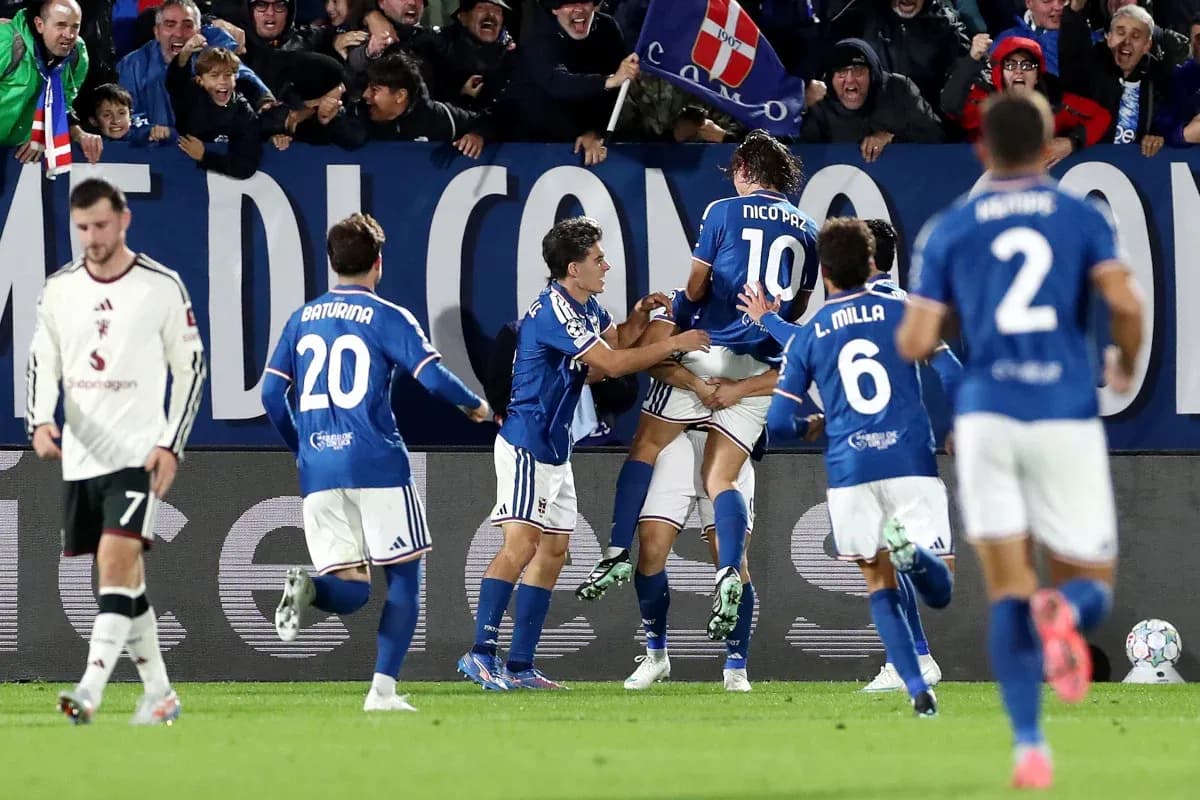
Como 2–0 Sassuolo: A Clash of Tactical Identities
The afternoon on Lake Como ended with the scoreboard reading Como 2–0 Sassuolo, but the story of this Regular Season - 8 clash at Stadio Giuseppe Sinigaglia ran much deeper than the margin. It was a meeting between a side quietly building a European identity and another still searching for a defensive structure that can match its attacking talent.
Heading into this game, the table framed the contrast. Como sat 5th with 17 points from 8 matches, their overall goal difference a healthy +7, built from 14 goals scored and 7 conceded. At home they had been measured and efficient: 3 matches, 2 wins, 1 draw, 4 goals for and only 1 against. Sassuolo arrived in 14th on 8 points, with an overall goal difference of -4 (12 scored, 16 conceded). The split between home and away told the real tale: at home they were unbeaten, but on their travels they had played 5, lost 4, drawn 1, scoring 6 and conceding 12.
I. The Big Picture – Two 4-2-3-1s, one coherent story
Both coaches mirrored each other on the tactical board. Cesc Fàbregas again trusted his preferred 4-2-3-1, the system he has used in 7 of Como’s 8 league outings. J. Butez anchored the back line, screened by a compact defence of Yan Couto, Willy Kambwala Ndengushi, M. Kempf and Kaiki. In front, the double pivot of S. Ricci and M. Perrone provided the platform for a fluid attacking trio of M. Caqueret, L. da Cunha and M. Baturina, all servicing lone striker T. Douvikas.
Alberto Aquilani matched the shape but not the stability. Sassuolo lined up with S. Turati in goal, a back four of I. Van der Brempt, D. Ćaleta-Car, Fali Candé and Rafael Obrador. In midfield, Vasilije Adžić and N. Matić formed the double pivot, with D. Berardi, D. Bakola and B. Domínguez supporting K. Bowie up top. Where Fàbregas’ 4-2-3-1 has become Como’s structural identity, Sassuolo have alternated between 4-3-3 and 4-2-3-1 this season, and that uncertainty showed in the distances between their lines.
Overall season numbers underline the tactical DNA. Como’s attack has been balanced: overall they average 1.8 goals per game, with 1.3 at home and 2.0 on their travels. Defensively they are even more impressive: only 0.9 goals conceded per match overall, 0.3 at home and 1.2 away. They had already collected 2 clean sheets at home before this match, and this 2–0 win extended that shutout habit.
Sassuolo’s profile is almost the mirror opposite. Overall they score 1.5 goals per match (2.0 at home, 1.2 away), but they concede 2.0 overall, with a particularly alarming 2.4 goals against on their travels. They had yet to keep a single clean sheet this campaign, and Como’s measured, patient pressure ensured that statistic remained intact.
II. Tactical Voids – Absences and balance
Both squads came into the fixture carrying notable absences that shaped the bench and the risk tolerance of the coaches.
Como were without T. Chalobah (injury), A. Diao (thigh injury), M. Kean (leg injury), M. Liberali (leg injury) and J. Rodriguez (injury). That cluster of absentees removed some rotation options in defence and attack, increasing the onus on the starting eleven to manage the game’s tempo without burning out. It made the presence of versatile midfielders such as Caqueret and Ricci even more important; they had to control phases of play rather than turning this into a chaotic end-to-end contest.
Sassuolo’s list was just as heavy: D. Boloca and J. Idzes (both muscle injuries), I. Kone (broken leg), F. Leysen and Y. Paz (knee injuries). The spine was thinned, especially in terms of defensive depth and central reinforcement. For a team already conceding heavily away, losing potential stabilisers in the middle and at the back only heightened the fragility of their 4-2-3-1.
Disciplinary trends added another layer. Como’s yellow cards are spread, but there is a noticeable spike from 46–60 minutes, where 27.27% of their bookings occur, and a late-game edge with 18.18% in each of the 76–90 and 91–105 ranges. Sassuolo, by contrast, concentrate their cautions in the heart of the second half: 25.00% between 46–60, 25.00% between 61–75, and 25.00% from 76–90, with another 16.67% creeping into added time. That pattern fits a side often chasing games, stepping late and arriving second to duels.
III. Key Matchups – Hunter vs Shield, and the Engine Room
The headline duel was always going to be T. Douvikas against Sassuolo’s brittle away defence. Douvikas came into the match as one of Serie A’s most efficient forwards this season: 5 goals overall from 8 appearances, with 19 shots and 13 on target, and a strong 7.16 average rating. He had drawn 15 fouls and committed only 4, a centre-forward who not only finishes but also occupies defenders and wins territory.
Against him stood a back line representing a team conceding 2.4 goals per game on their travels, with their heaviest away defeat a 4–2 scoreline. The structural numbers made this a classic hunter vs shield mismatch. Como’s overall goals-for ceiling at home (their biggest home win being 2–0) suggested they would not chase a rout but rather a controlled, high-percentage performance built around Douvikas’ movement between the centre-backs and the channels. The final 2–0 scoreline fit that script perfectly: not reckless, but ruthless when chances arrived.
If Douvikas was the spear, the real battleground lay behind him. Fàbregas built his control panel around S. Ricci, M. Perrone and the creative triangle of Caqueret, L. da Cunha and Baturina. The presence of two Como players among the league’s top assist providers is telling. N. Paz, even starting on the bench, has 2 goals and 2 assists from 7 appearances, with 12 key passes and 89% pass accuracy. Caqueret, starting here, brings 2 assists from 7 appearances, 11 key passes and an 85% pass accuracy. Together they represent a midfield unit capable of both progression and protection.
On the other side, Sassuolo’s standout in the middle has been Vasilije Adžić. With 3 goals and 1 assist in 7 appearances, plus 13 key passes and an 86% pass accuracy, he has been their creative metronome. Yet his responsibility in a double pivot alongside Matić is double-edged: he must both build and shield. Against Como’s layered 4-2-3-1, that dual role was always likely to stretch him.
The match unfolded along exactly those lines. Como’s midfield three behind Douvikas repeatedly found pockets between Sassuolo’s lines, forcing Adžić and Matić to choose between stepping out and leaving space behind, or sitting and allowing Como to dictate. The visitors’ inability to compress those zones gave Caqueret and Baturina time to thread passes into Douvikas and the wide runners.
IV. Statistical Prognosis – Why 2–0 felt inevitable
Following this result, the numbers do not just tell us what happened; they explain why it made sense. Como’s overall defensive record, particularly at home where they now have extended a sequence of conceding only 1 goal in 4 matches, aligned perfectly with Sassuolo’s failure to keep a single clean sheet all season and their habit of conceding heavily away.
Neither side had taken or missed a penalty this campaign, so there was no artificial boost to attacking numbers from the spot. Everything had to be created in open play or from structured situations, and that favoured the side with the clearer system and stronger defensive platform.
Como’s season-long averages – 1.3 goals scored and 0.3 conceded at home – point towards low-scoring, controlled wins. Sassuolo’s away profile – 1.2 scored and 2.4 conceded – suggests that when they travel, the match bends towards their opponents’ preferred tempo. Put together, those curves intersected almost exactly at a 2–0 type outcome: Como’s attack doing just enough, their defence remaining unbreached, and Sassuolo again paying the price for an away structure that cannot protect its talent.
In narrative terms, this was the afternoon when Como’s European ambitions began to feel sustainable rather than romantic. For Sassuolo, it was another reminder that until their shield is reforged, even the brightest sparks of Adžić and Berardi will struggle to change the script on their travels.