Como's Dominance Over Torino at Stadio Olimpico
Under the Turin lights at the Stadio Olimpico Grande Torino, this was billed as a litmus test of identity as much as of form. Torino, ninth in Serie A with 13 points and a goal difference of 0 (14 scored, 14 conceded in total), hosted a Como side that has quietly become one of the league’s most coherent projects, sitting fourth on 20 points with a total goal difference of 9 (17 for, 8 against). It ended with the table telling the truth: Como’s 3–1 away win confirmed their status as a fully formed side, while Torino looked like a work still under construction.
Ignazio Abate doubled down on Torino’s seasonal DNA, rolling out the 3-5-2 that has been his most-used shape. With no clean sheets at home this campaign and an average of 2.0 goals conceded at home compared to 1.4 scored, the choice was bold: three centre-backs, aggressive wing-backs, and a front two designed to press high and hit quickly. Lucas Perri anchored a back three of Saúl Coco, A. Ismajli and P. Comuzzo, with R. Belghali and A. Cacciamani stretching the width. Inside, N. Vlašić, Daniel Bragança and K. Fitz-Jim were tasked with both progression and protection. Up front, G. Simeone worked as the presser and channel runner, with C. Adams – Torino’s leading scorer with 4 league goals – given license to drift and attack the box.
Across from them, Cesc Fàbregas’ Como arrived with a clear blueprint. Their season has been built on control and vertical incision: in total they average 1.9 goals scored per match and only 0.9 conceded, with a particularly sharp away profile of 2.2 scored and 1.2 conceded. The now-familiar 4-2-3-1 was intact: Robert Sánchez in goal, a back four of Yan Couto, Jacobo Ramón Naveros, M. Kempf and Álex Valle; a double pivot of M. Perrone and Luis Milla; and a fluid band of three – L. da Cunha, N. Paz and M. Caqueret – behind lone striker T. Douvikas.
The absences only sharpened the tactical edges. Torino were without N. Fortini, F. Israel, R. Mandragora and R. Rodriguez, stripping Abate of a left-sided organiser and a key midfield metronome. The knock-on effect was clear: Comuzzo had to step into a bigger structural role in the back line, and Bragança was forced to be both first receiver and tempo-setter. For Como, the missing T. Chalobah, A. Diao, M. Kean, M. Liberali and J. Rodriguez removed rotation options and a more direct attacking profile, but not the core of Fàbregas’ positional play. The spine remained intact, and it showed.
Torino actually began like a side determined to rewrite their home narrative. With an average of 1.6 goals scored and 1.6 conceded overall, they are used to living on the edge, and early on the 3-5-2 gave them numbers around the ball. Vlašić drifted into the right half-space, combining with Belghali, whose season as a creator – 3 assists in the league – again saw him push high, almost as a winger. When Torino broke through for the opener before the interval, it felt like the script of a cathartic night: the front two pinning Como’s centre-backs, wing-backs high, and the midfield three compressing the pitch.
But the underlying structure of the game never really tilted away from Como’s plan. Even at 1–0 down at half-time, the visitors’ patterns were visible. The double pivot of Perrone and Milla repeatedly drew Torino’s central trio forward, only to punch passes through the lines into N. Paz and Caqueret. Paz, one of Serie A’s standout midfielders so far with 3 goals and 3 assists, operated like a roaming fulcrum: dropping between the lines, spinning out wide to overload Belghali’s flank, then driving at the half-spaces where Torino’s back three could be isolated.
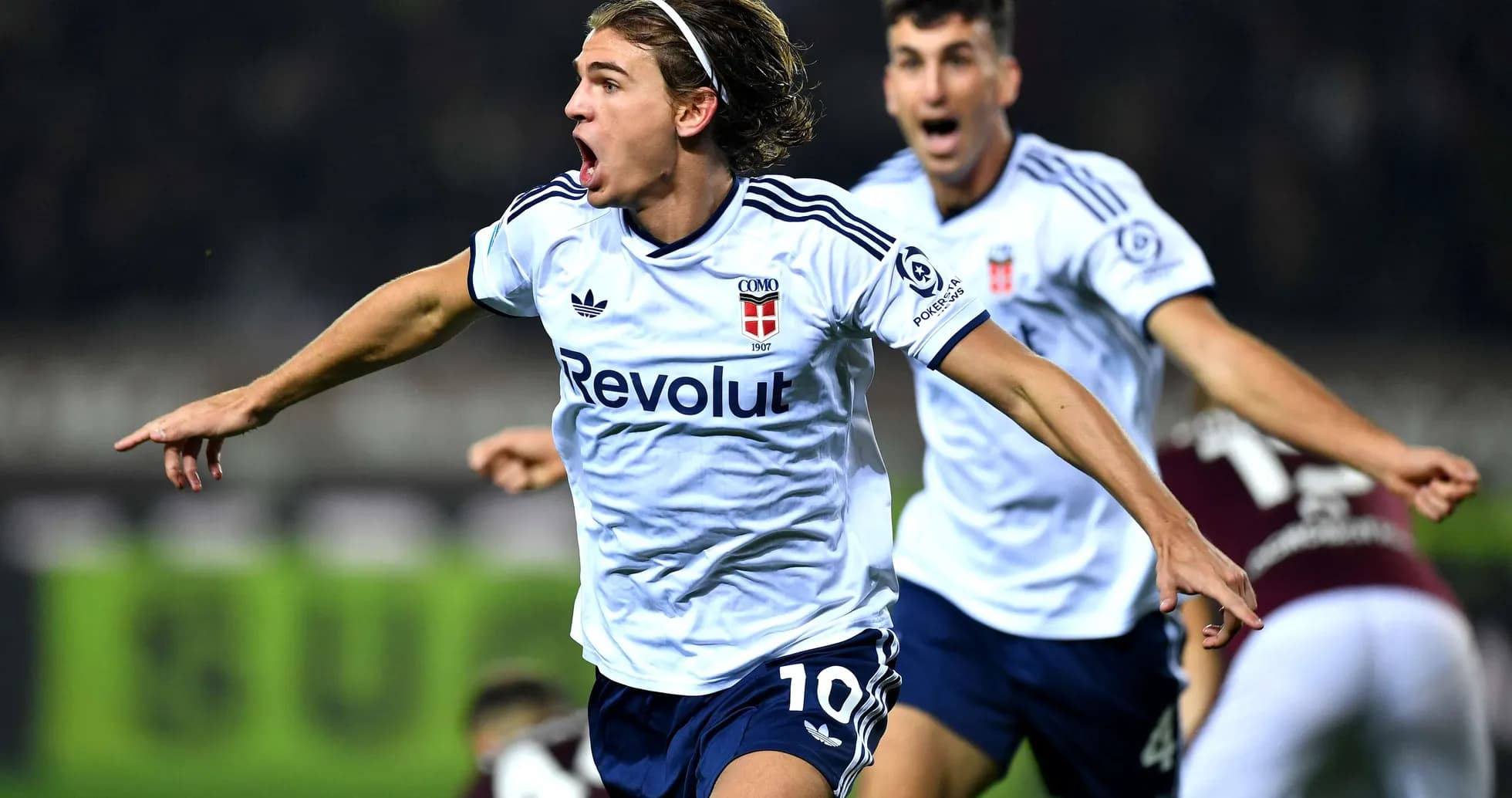
The second half became a lesson in control and punishment. Como’s season-long attacking efficiency on their travels – 13 away goals in 6 matches – finally surfaced. Douvikas, with 5 league goals and 13 shots on target from 20 attempts, played the “Hunter” role to perfection. He constantly tested the channels between Coco and Ismajli, forcing the Torino back line to turn and run. Behind him, Paz and Caqueret formed the “Engine Room” duel with Bragança and Fitz-Jim – and they won it. Caqueret’s intelligence without the ball hemmed in Torino’s build-up, while Paz’s blend of physicality and technique repeatedly broke the first line of pressure.
Torino’s defensive fragility at home – 10 goals conceded in 5 matches heading into this game – intersected brutally with Como’s away ruthlessness. Once Como levelled, the match tilted decisively. The visitors stayed faithful to their 4-2-3-1, but the full-backs pushed higher, turning their shape into a 2-4-3-1 in possession. Yan Couto and Álex Valle pinned Torino’s wing-backs back, robbing Abate’s side of their width in transition. Simeone and Adams, so important to Torino’s pressing identity, became increasingly isolated, chasing passes rather than closing traps.
As Torino chased the game, Abate’s bench options told their own story. He could turn to experience and physicality – C. Biraghi, D. Zapata, P. Pellegri, Z. Aboukhlal – and extra creativity in G. Oristanio and C. Casadei. But each attacking substitution threatened to further unbalance a side already conceding 2.0 goals per home match on average. Como, by contrast, had the luxury of like-for-like rotations: E. Goldaniga and Kaiki to lock down a lead, M. Baturina and S. Ricci to maintain technical control, and J. Addai to stretch a tiring defence.
In the end, Como’s third goal felt like the logical conclusion of the matchup rather than a shock. A team that keeps the total goals against to 8 in 9 matches does not panic easily, and once they had turned the scoreline around they managed the tempo with a calm that reflected both their form – 6 wins, 2 draws and just 1 loss overall – and their tactical clarity. Torino, with 4 wins, 1 draw and 4 defeats in total, again found themselves living at the mercy of fine margins and an open structure.
Following this result, the statistical prognosis for both sides hardens. Torino’s attacking talent – embodied by Adams’ 4 goals and the creative thrust of Belghali and Vlašić – is real, but without a more secure home platform they will continue to oscillate. Como, meanwhile, look every inch a Champions League-chasing side: a stable 4-2-3-1, an elite-level “10” in N. Paz, a reliable finisher in Douvikas, and an away profile that travels. On nights like this in Turin, numbers and narrative align: the more complete team walked away with the points.