Como's Tactical Masterclass Against Manchester United
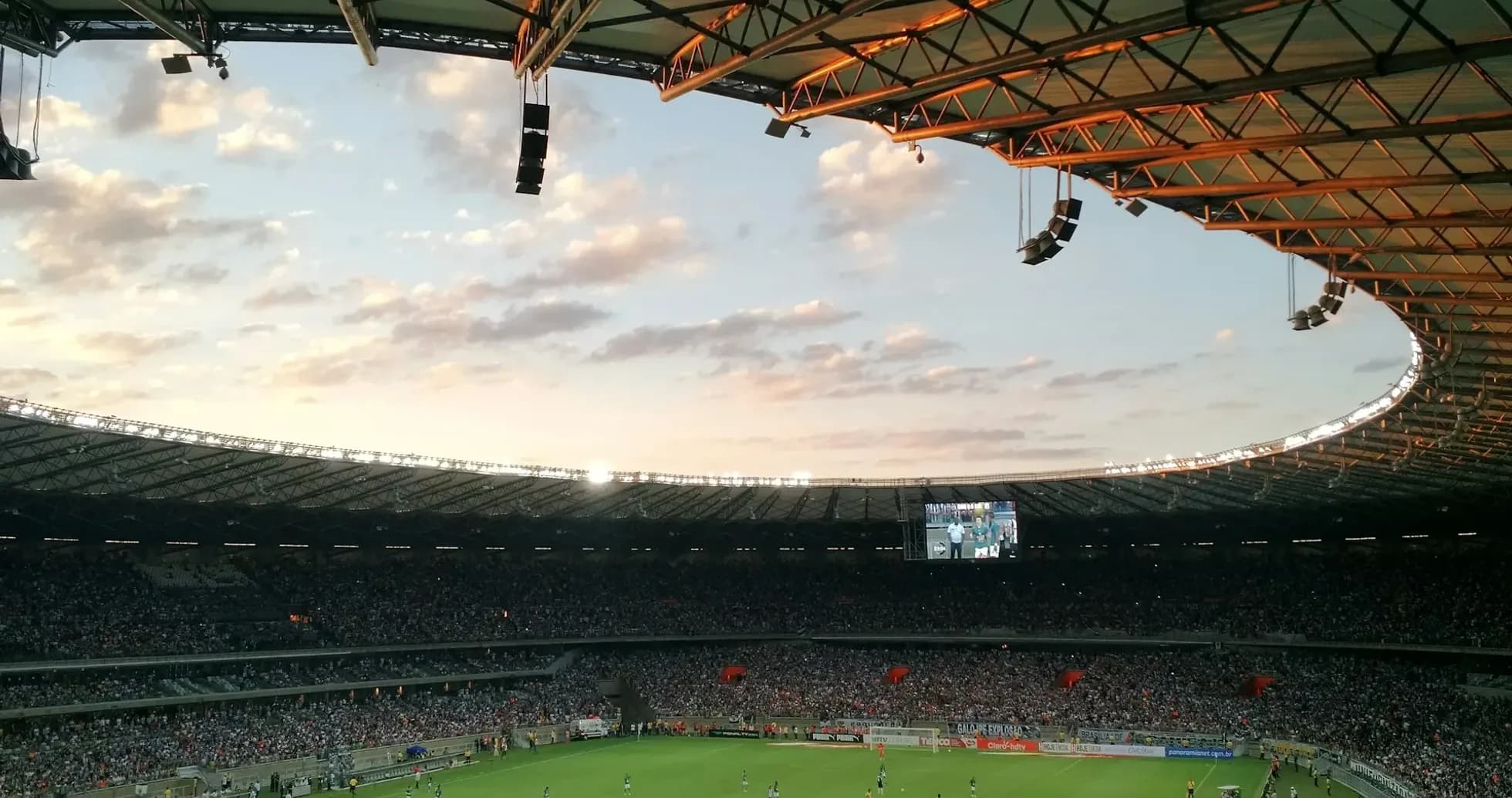
Under the lights of Stadio Giuseppe Sinigaglia, Como’s 4–1 dismantling of Manchester United felt less like an upset and more like a tactical manifesto. In a UEFA Champions League league-stage landscape increasingly defined by pressing schemes and positional play, Cesc Fàbregas has quietly built a side whose structure and bravery with the ball now translate into results. After three matches, Como sit 9th in the overall table with 6 points and a goal difference of +5, having scored 10 and conceded 5 in total. Manchester United, by contrast, are marooned in 20th with 3 points and a goal difference of -1, their 5 goals for outweighed by 6 against.
I. The Big Picture – Two 4-2-3-1s, One Identity
Both teams lined up in a 4-2-3-1, but the systems behaved very differently. Como’s version was expansive and layered. J. Butez in goal had a back four of Yan Couto, Jacobo Ramón Naveros, M. Kempf and Álex Valle. Ahead of them, the double pivot of M. Perrone and Luis Milla acted as both shield and launchpad, allowing a fluid band of three – L. da Cunha, N. Paz and M. Baturina – to roam behind lone striker T. Douvikas.
Fàbregas has clearly leaned into continuity: Como have used this 4-2-3-1 in all 3 Champions League matches. The numbers back the eye test. Overall this campaign, Como have played 3 fixtures, winning 2 and losing 1. At home, they are perfect: 2 wins from 2, with 8 goals scored and only 2 conceded. That translates to a home scoring average of 4.0 goals per game and 1.0 conceded, a ferocious attacking output paired with manageable defensive risk.
Manchester United, under M. Carrick, mirrored the shape but not the cohesion. S. Lammens started in goal behind a back four of Diogo Dalot, M. de Ligt, H. Maguire and N. Mazraoui. The double pivot of M. Mount and Andrey Santos was tasked with knitting defence to attack, with B. Mbeumo, Y. Tielemans and Matheus Cunha supporting Bruno Fernandes as a nominal centre-forward. United have also stuck to 4-2-3-1 in all 3 of their Champions League matches, but the outcomes diverge: 1 win and 2 defeats overall, with a stark split between a dominant home win and fragile away showings.
On their travels, United have lost both games, scoring just 1 goal and conceding 6. That away average of 0.5 goals for and 3.0 against exposes a side that struggles to control games without Old Trafford’s safety net.
II. Tactical Voids – Absences and Discipline
Both squads came into this fixture carrying significant absentees, but the impact was asymmetric.
Como were without J. Addai, T. Chalobah, A. Diao, E. Goldaniga, W. Kambwala, M. Kean, A. Lahdo and J. Rodriguez. The loss of T. Chalobah and M. Kean in particular could have stripped depth from the defensive and attacking cores, yet Fàbregas’ starting XI looked settled. The spine of Butez, Kempf, Milla and Douvikas remained intact, and crucially, playmaker N. Paz was available.
Manchester United’s missing list read like the skeleton of an entire alternative XI: P. Dorgu, A. Heaven, K. Mainoo, L. Martinez, M. Rashford, B. Sesko, L. Shaw and M. Ugarte were all out, with L. Yoro suspended after a red card. The absence of Martinez and Shaw removed left-sided balance and ball progression from the back, while Rashford and Sesko stripped United of vertical threat and penalty-box presence. Without Ugarte or Mainoo, Carrick’s midfield lacked a natural enforcer or tempo-setter, leaving Mount and Andrey Santos to firefight and create simultaneously.
Disciplinary patterns added another layer. Across the campaign, Como’s yellow cards cluster in the 46–75 minute window, with 33.33% arriving between 46–60 minutes and another 33.33% between 61–75. This hints at an aggressive restart after half-time, when their press bites hardest. United’s yellow cards are spread more evenly, but 40.00% fall between 46–60 minutes and 20.00% between 76–90, suggesting a team that often chases games and arrives late into duels. Their single red card, shown to Yoro, came between 61–75 minutes – a dangerous phase where their defensive structure can unravel under pressure.
III. Key Matchups – Hunter vs Shield, Engine Room Battles
The night’s narrative revolved around two duels: Como’s creative trident versus United’s makeshift defensive shield, and the midfield war for control.
N. Paz has been one of the Champions League’s standout creators. Across 3 appearances and 260 minutes, he has 2 goals and 3 assists, with 9 shots (4 on target) and 5 key passes. His 87% passing accuracy, 10 tackles, 2 blocked shots and 5 interceptions paint the picture of a modern No. 10 who works both ways. Against United’s central pairing, Paz repeatedly found pockets between the lines, forcing Maguire and de Ligt into uncomfortable decisions: step out and expose space in behind, or hold the line and allow him to turn.
Behind Paz, the double pivot of Perrone and Milla controlled the tempo. Their calm distribution allowed Como to exploit United’s away frailty – a team conceding an average of 3.0 goals per game on their travels and yet to keep a clean sheet away from home.
For United, Bruno Fernandes was nominally the “hunter” at the tip of the attack, but his natural inclination to drop deep often left the box under-occupied. With only 1 away goal in the competition, United’s attacking patterns lacked penetration once Como’s back four held their line. Dalot and Mazraoui were forced high to provide width, which in turn exposed the channels to Como’s counters.
IV. Statistical Prognosis – What This Result Tells Us
Following this result, the trajectories of these two sides feel clearly sketched. Como’s overall record of 10 goals for and 5 against across 3 games, combined with an attacking high watermark of 4-1 at home, suggests that their underlying chance creation (even without explicit xG data) is robust. They have yet to fail to score in any match, and they have not relied on penalties – none awarded, none missed – to inflate their numbers.
United’s profile is more brittle. Overall, they have scored 5 and conceded 6, but the split between home and away is stark: a 4-0 home win contrasted with a 4-1 away defeat and another loss on the road. Their lone clean sheet has come at home; away, they concede heavily and struggle to create, with one blank already on their travels.
In a league stage where seeding for the 1/16-finals play-offs will hinge on consistency, Como’s structured 4-2-3-1, anchored by the all-action brilliance of N. Paz and the balance of Perrone and Milla, looks sustainable. United, hampered by injuries and suspensions and undermined by a soft away underbelly, will need both personnel returns and tactical recalibration if they are to transform their nominally similar shape into something as coherent as the blueprint Fàbregas has drawn on the shores of Lake Como.