Como's Transformation: From Bankruptcy to Global Brand
The story of Como’s rebirth starts far from the lake’s still water. It starts in Indonesia, with two brothers and a modest €350,000 gamble on a bankrupt club that had long since slipped off Italian football’s main stage.
Robert Budi Hartono and Michael Bambang Hartono, who both died last week, took control of Como in 2019 through one of their holding companies. They did not arrive as opportunists hunting a quick flip. They arrived as billionaires with time, money and a vision – and they dragged a fallen provincial side into the global conversation.
This was never a place built on European dreams.
In the 1980s, Como strung together five straight seasons in Serie A, a respectable run that gave the town a brief taste of the big time. After that, the lights went out. Aside from a fleeting return in 2003/04, the club bounced between the second and third tiers. Relegation from Serie A in 2004 triggered bankruptcy. A second collapse in 2016 saw the club put up for auction like distressed property.
Akosua Puni Essien, wife of former Ghana international Michael Essien, stepped in first, paying €237,000 to rescue the badge. The rescue proved short-lived. Fresh liquidity problems forced her to sell quickly. Como looked destined to remain a cautionary tale of Italian football’s fragile middle class.
Then came the Hartonos.
Through their entertainment agency Sent Entertainment Limited, armed with an estimated fortune north of 40 billion US dollars, they did what rich owners are supposed to do but often don’t: they paid the bills. All of them. Debts cleared, the then fourth-tier club stabilised, climbed, and finally fought its way back into Serie A. Today, Como sit in the top flight with ownership wealth that can rival almost anyone in the division.
The transformation has never been confined to the pitch.
In 2021, former England midfielder Dennis Wise arrived as managing director, handed real power to reshape the club. For three years, until his departure in 2024, he worked with a free hand to build a squad and a structure fit for the owners’ ambitions.
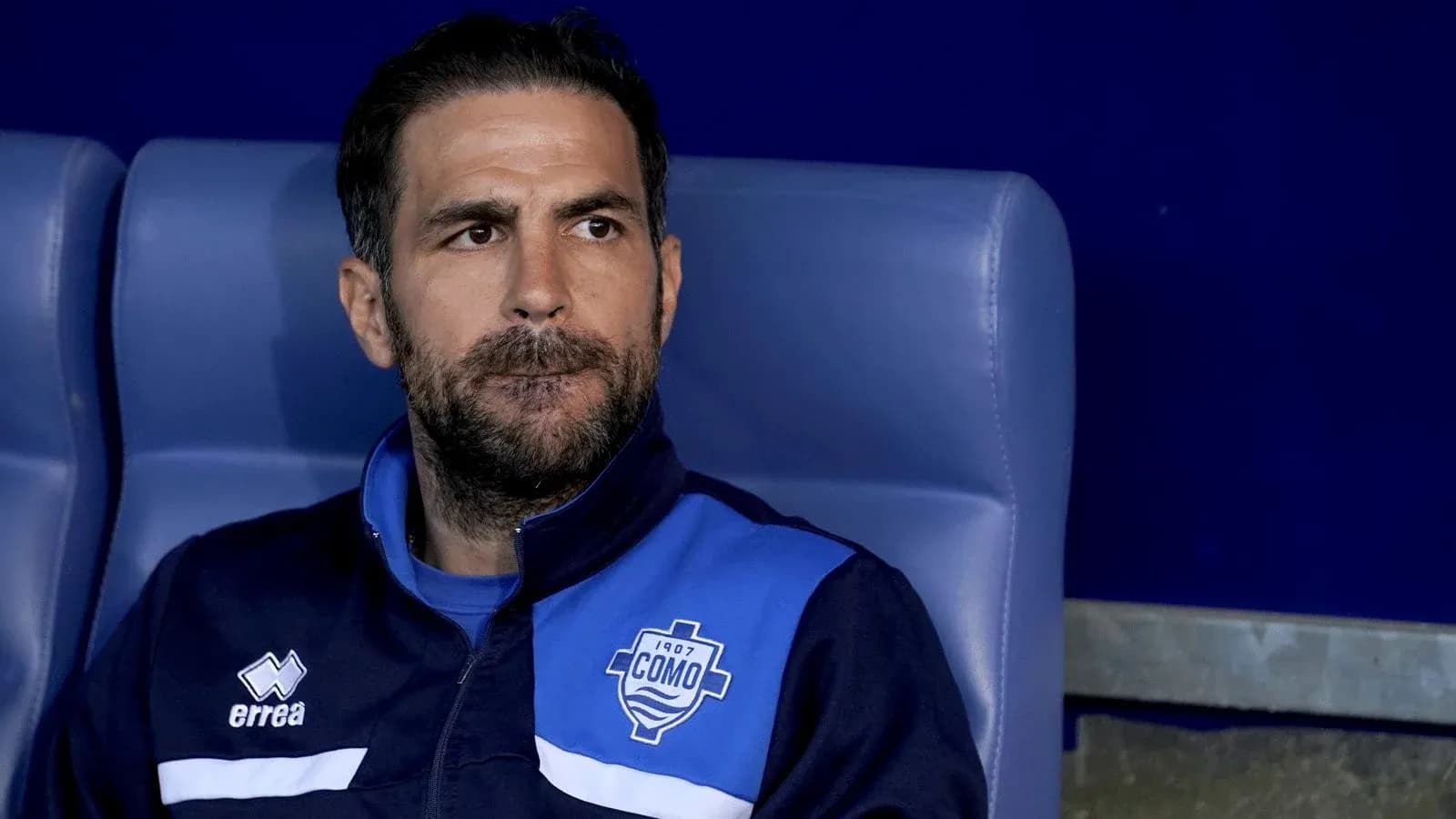
The Hartonos’ contact book soon started to show. Uber, a global heavyweight, signed on as main sponsor for the 2024/25 season – the US company’s first move into Italian sport. In January 2025, Como agreed a strategic partnership with Ajax Amsterdam, one of Europe’s great talent factories. Before that, two modern icons had already been pulled into the project: Thierry Henry as a shareholder, Cesc Fàbregas first as a player, then assistant coach, and since 2024 as head coach.
This is not the usual investor playbook. Or at least, that is the claim.
The Hartonos present themselves not as asset-strippers but as custodians. The stated mission is to lift the club, the city, its residents and the wider region together. Where clubs like RB Leipzig are often accused of using football as a billboard for a product, Como talk about something softer, longer-term, more rooted.
Some of it borders on the theatrical, yet it works. Every newborn in the city’s hospitals receives a Como baby bodysuit. Fourteen local bars are tied into the matchday ritual: if Como win, the guests in those bars are treated to a round of drinks. It is calculated charm, but it is charm all the same. The message is clear – this project belongs to the town, not just to a balance sheet.
The stadium sits at the heart of that vision.
Stadio Giuseppe Sinigaglia, opened in 1927, is one of the most picturesque grounds in Europe, dropped almost directly onto the edge of Lake Como, where the view of the water can steal your attention from the game. It is still owned by the city, though the plan is for the club to acquire it and turn it into private property in the coming years.
Promotion in the summer of 2024 forced urgent renovation work on the near-century-old arena. That was only the start. Capacity currently sits at around 13,600, a modest figure for a Serie A club with global plans. Expansion is on the table, but the owners are thinking beyond seats and concrete.
Their model? Disneyland.
The idea sounds bold, even absurd, until you hear it laid out. The city, the region and the club are to be packaged as one. A lakeside park. A modern stadium. Entertainment options that make the area a destination even when no ball is being kicked.
“What the theme park is to Disney, the football club and the match-day experience are to us. We are fortunate to be in a place where the city itself is a brand: Lake Como is a global brand. It would be foolish not to seize this opportunity – to integrate football into the ecosystem, not as the centrepiece, but as a key element,” club president and Sent CEO Mirwan Suwarso told Italian outlet Calcio e Finanza.
Under this Disney-inspired blueprint, Como 1907 is not meant to become just another cash-rich club muscling into the elite. It is designed as a full-scale, self-sustaining entertainment project with the Lake Como tourism region as the master brand. Football, marketing, merchandising and local identity are to be fused, celebrities courted, the club projected as a global brand with an “experience” at its core.
The contrast is jarring.
On one side, an idyllic small town, steeped in tradition, wrapped around a perfect lake. On the other, a club with owners who talk in the language of global ecosystems, partnerships and master brands.
The risk is obvious: alienation.
Como increasingly looks and sounds less like a typical club from a small Italian town. The primary language on its social media channels is English. Meetings between club officials and representatives of Saudi Arabian clubs have already unsettled sections of the fanbase. The project feels modern, international, polished – and, to some, distant.
On the pitch, the disconnect runs deeper.
For all the talk of helping the region, Como have so far offered little to local football. Not a single player in the current first-team squad comes from the club’s own youth system. Only two Italians, reserve goalkeeper Mauro Vigorito and defender Edoardo Goldaniga, are even on the books.
The numbers are stark. According to Corriere dello Sport, an Italian player has been on the pitch for Como this season for exactly one minute. Goldaniga came off the bench in the dying moments of a 2-1 away win at Fiorentina in September and played 60 seconds. That is it. No other club in Italy has fielded domestic players so rarely or for so little time. Even bottom side Hellas Verona, second-last in that ranking, have racked up 4,137 minutes for Italian players.
So the question hangs over the lake.
Can a club turn itself into a theme-park attraction, a global lifestyle brand and a symbol of local pride all at once – without losing the very soul it claims to protect?