Coventry City's Journey Back to the Premier League
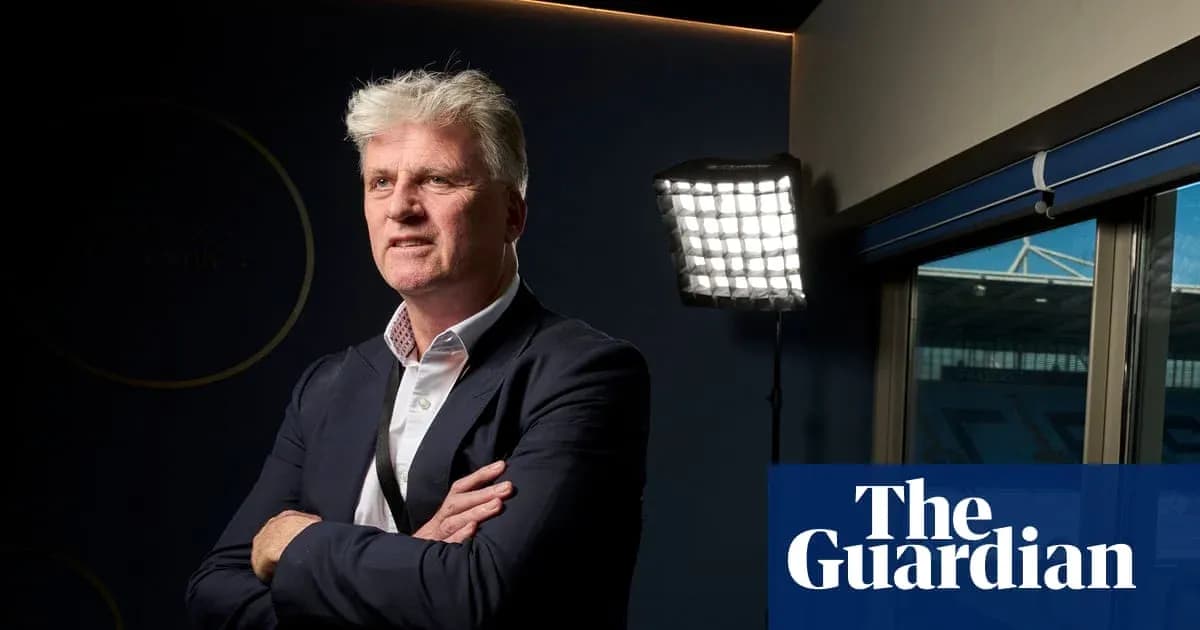
Doug King’s voice still carries the echo of that night at Ewood Park. Promotion sealed, 25 years of exile over, champagne on the carpet in the Blackburn boardroom – and then the man who has poured hundreds of millions into Coventry City slipped off to a Travelodge by a service station on the M65.
“It was … noisy,” he says, pausing for the right word. All night, through the thin walls: “We are Premier League.”
For a club that has spent the past two decades fighting for its very existence, the soundtrack could not have been more apt.
From service stations to open-top buses
In the weeks since, King has felt less like an owner and more like Coventry’s master of ceremonies. The biggest party came on Monday: an open-top bus rolling out from Jimmy Hill Way, the road named after the manager who first took the club into the top flight in 1967.
This time, the story was his. When Coventry were crowned champions last month, King drank straight from the trophy. The lid came off. He kept going.
“I didn’t think the lid would come off, so we had to make the most of that,” he says, grinning.
The celebrations are the noisy end of a plan that was supposed to be more patient. A mathematical engineering graduate who made his money trading grains and petroleum, King took full control of Coventry in January 2023 with a five-year target: reach the Premier League. Within months, he was already betting on it.
He offered 5,000 fans a premium five-year “Premier League package”, with a free season ticket if promotion arrived during that stretch and they kept renewing. A long play, he thought.
“If you did one year and said: ‘Well, they’re never going to get there,’ then you missed out.”
They got there in 18 months.
Near-misses, heartbreak – and Lampard
Coventry had flirted with the top before finally smashing the door down. Last season’s playoff semi-final defeat by Sunderland still stings. Lucas, one of King’s five children, could not bear to watch the corner that Dan Ballard headed in at the death. He covered his face with his tie. Seconds later, season over.
“That hit hard, that last-minute kick in the face. It was like an earthquake, the ground was just shaking: ‘Oh my God, everyone’s going to be devastated.’”
The club regrouped. Frank Lampard arrived. Eighteen months later, the former Chelsea midfielder has his first promotion as a manager and Coventry have their ticket back to the elite.
Lampard’s appointment was not a romantic nod to a big name. It was a calculated move by an owner who wanted to be right in the middle of the action.
From day one, King has fronted up. No more so than when he sacked Mark Robins, the manager who had dragged Coventry from League Two to the brink of the Premier League, only to fall in a penalty shootout. Many owners would have ducked the cameras. King walked straight towards them.
“In business, I have delegated major projects to teams, to CEOs, where I’d been a bit disappointed,” he says. “You delegate, you have your big, fat budget, they get on with it, and then you hear the bad stuff too late. For me, this was too important for that. This was my moment to be all over it.
“I wanted to make a contrast to the previous incumbents, the hedge fund [Sisu] in Mayfair: ‘We’ve got some leadership here, this is what we’re gonna do.’”
Owning the ground, owning the future
If promotion is the emotional high, the strategic turning point came earlier, in August, when King signed off on a £50m deal to buy the CBS Arena. For years, Coventry had been tenants in their own home, tossed between landlords and lease agreements, occasionally homeless, frequently uncertain.
That ended with one signature.
“A big moment to just close the chapter of the club and its ground, once and for all,” King says.
The football responded. On the day the deal went through, Coventry beat QPR 7-1. A statement scoreline on a statement day.
“It was fitting, really: ‘OK, everything’s together now, the team’s really good, let’s see where we can take it.’”
King has made it his mission to ensure the club feels like more than a balance sheet. He is visible, approachable, and – crucially for supporters who have lived through years of distance and distrust – he looks like he is enjoying it.
He belts out The Enemy’s “We’ll Live and Die in These Towns”, the song that has become Coventry’s unofficial anthem. The Coventry band performed it pitchside in November and again on stage at War Memorial Park during the title parade.
“It was way more special than I thought it would be – it just felt very intimate and very real,” King says. “And I think we want to do different things. I don’t want to be boring. I think a club has to stand for more than just the products necessarily on the pitch.”
The accessible millionaire
Supporters have responded in kind. They chant his name. Two fans even turned up dressed as him – lanyards, sky-blue ties, bouffant wigs – and tried to talk their way into the boardroom.
“I did give them a shoutout as I was walking around,” King laughs. “They tried to blag themselves into the boardroom, they had the credentials on, but I’m way more handsome than them …”
He knows how rare it is for a modern owner to feel this close.
“Maybe you can be intimidated, you know: ‘The owner, the big owner.’ Listen, I’m a human being. I’ve earned some money. I’ve decided to deploy it into a project, which is a dangerous thing to do, actually, for your wealth. I should feel accessible. If it isn’t going well, say you don’t think that was very good, no problem.”
This is not his first brush with elite sport. As a teenager, golf was his obsession. He captained Loughborough University and then carried the bag for Ronan Rafferty at the 1986 Dunhill Cup at St Andrews.
Rafferty, who would later win the European Tour Order of Merit and play in the Ryder Cup, lined up for Ireland against Spain. His opponent: Seve Ballesteros, then the dominant force in Europe.
“Can you imagine? I’m on the old course caddying against Seve, who was No 1 in Europe: ‘OK, better not make any mistakes today.’ And we hammered him. I say we, I felt like it was we. Ronan shot 67 and Seve was grumpy and finished with 74.”
That taste of the top end of sport – the scrutiny, the pressure, the fine margins – now feeds into his work at Coventry.
Lampard, shockers and second acts
King met Lampard not in a training ground office but in Pall Mall, central London. He wanted to know the man as much as the manager. What reassured him was not the medals, but the people Lampard brought with him.
“I was happy that he was coming in with people that he trusted, because I think coming in on a solo mission and seeing what you’ve got is trickier,” King says of assistants Joe Edwards and Chris Jones. “Because whenever you come in with his reputation and who he is, most people will tiptoe around the tulips. It’s always the way, right? Are you going to get proper feedback?
“I like that he came in with a close-knit team that he’d been successful with, and they could counter and balance him and he felt comfortable in that. I had no doubt he would do well, but I have been impressed with him and how it’s gotten under his skin.”
Lampard arrived with scars. Sacked by Everton inside a year, then a short, awkward “babysitting” spell back at Chelsea. For King, that was not a red flag. It was a recommendation.
He recently admitted he likes “people who have had a few shockers”.
“I look at those things more as a positive. He will have had to handle some pretty dysfunctional messaging, let’s put it like that. Those sorts of things make you uncomfortable, but you have to find solutions to get by. So he’s been in areas that make you grow as a leader, as a motivator, as a coach.”
Lampard’s contract runs to next summer. Asked whether he is moving to extend it, King chooses his words carefully.
“Listen, it’s worked well. He put himself back into the arena and everybody sort of said: ‘OK, it’s Frank again, let’s see what happens here. He will probably near-miss it or it won’t go well,’ so there was quite a bit of pressure on him.
“He felt confident with his team that he could get clarity, motivation, focus, to take the club towards some form of success. Did he think we would be champions 18 months later? I don’t think so. Nor did I.”
The Premier League problem
The parties will stop. The reality of the Premier League will not. Budgets, recruitment, infrastructure, survival. The grind is coming.
“People might go: ‘If you finish 17th, it’s all good, and you go again.’ Yeah, OK, but maybe I want to look at different things: can we be a bit better?” King says.
He has studied the recent success stories. Bournemouth. Brentford. Brighton. Clubs that stepped up and refused to play the tourist.
The template gives him belief.
“I like doing what I say we’re going to do. I haven’t said what we’re going to do in the Premier League because I haven’t formulated exactly how I’m going to attack it. But, clearly, it would be to try and stay in there, build momentum to get into the top half and, yeah, once every blue moon, maybe have a nibble into heading into playing in different countries.”
He knows the risks. He knows the stakes. And he knows the accountability sits with him.
“As the leader of Coventry City, I will work it all out and I’ll put together a strategy and if it’s an absolute shocker, then I guess I’ll take the blame.”
For now, the noise of that Travelodge night still rings in his ears. “We are Premier League.” The chant has stopped echoing off the service-station walls and started bouncing around the CBS Arena.
The party planner has had his moment. The architect steps in now.