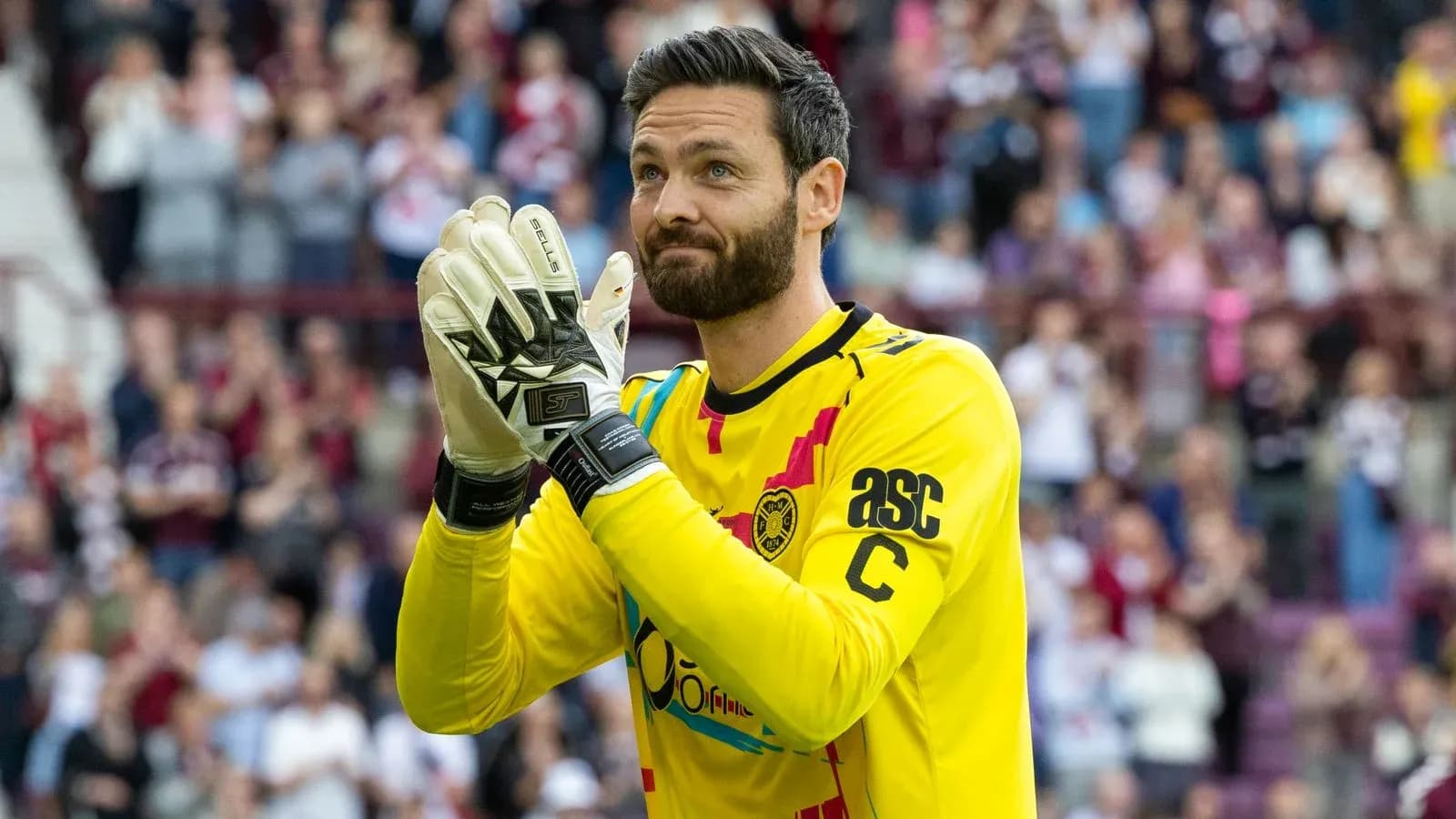
Craig Gordon: The Resilient Keeper Who Defied Odds
Craig Gordon has spent a quarter of a century defying logic, medicine and, at times, gravity. At 43, the Hearts and Scotland goalkeeper has finally called time on a remarkable playing career that stretched across 25 years, 760-plus games and more comebacks than most professionals dare to dream of.
He walks away with 84 Scotland caps, 15 major trophies and a legacy built as much on resilience as on reflexes.
From Gorgie dreamer to record-breaker
Gordon’s story began in 2001 with Heart of Midlothian, the club he supported as a boy. By 2004 he was Scotland’s No 1, the first of those 84 international appearances arriving while he was still in his early twenties.
The first major medal came quickly. In 2005/06 he helped Hearts lift the Scottish Cup, a landmark moment that set the tone for a career that would become decorated and demanding in equal measure.
By 24, he had already done enough to be inducted into the Hearts hall of fame in 2007, the youngest player ever granted that honour. That same year, English football came calling. Sunderland paid £9m to take him south, a British record fee for a goalkeeper at the time. It was a statement: this was not just Scotland’s best; this was a keeper to sit among the elite.
In 2010, he produced the moment that would follow him everywhere. A staggering, contorted stop against Bolton was later voted the best save in Premier League history. For a while, Gordon looked like a man with the world at his fingertips.
The body breaks, the will doesn’t
Then came the darkness. Ankles, arms, knees – one injury after another. His time at Sunderland unravelled under the weight of repeated setbacks and surgeries. Eventually, the contract ended and so, it seemed, might his career.
He drifted out of the spotlight and into rehab. For around two years, he didn’t play. At one point he struggled to walk without pain, a cruel fate for a man whose livelihood depended on explosive movement. Coaching entered the picture as he fought a condition serious enough to threaten everything he had built since that first Hearts debut.
Most players do not come back from that. Gordon did.
Celtic and a second peak
His recovery led him to Celtic, and with it, a second act that would have felt far-fetched in any dressing-room tale. At Celtic Park he re-established himself as a dominant presence, a goalkeeper who commanded his box and his back line with the authority of a man who knew how close he had come to losing it all.
The honours flooded in. Six Premiership titles. Five League Cups. Three Scottish Cups. He became a cornerstone of one of the most successful periods in the club’s modern history, a constant presence behind rotating squads and changing managers.
For many, that would have been a natural place to bow out. Gordon chose something more personal.
Home again – and another brutal blow
When his Celtic contract expired, he went back to where it began. Hearts welcomed him home, and he repaid them with performances that belied his age. Even in his late thirties and early forties, he remained a match-winner, his positioning and reading of the game compensating for any lost spring.
Then Christmas Eve 2022 arrived. A double leg break, the kind of injury that ends careers, not just seasons. At his age, the verdict from the outside world felt obvious.
But Gordon’s career has never followed the obvious script.
More surgery. More rehab. More lonely hours in the gym. And then, once again, he returned. Back in goal for Hearts. Back in the Scotland squad. Back on the pitch in his forties, defying time as comfortably as he once defied strikers.
He even played his part in Hearts’ title push last season, a campaign that went to the final day of the Premiership season before slipping away. At 43, he was still in the national conversation, still in the Scotland squad for the World Cup, still relevant in a sport that rarely waits for anyone.
“I have lived my dreams”
When the announcement finally came, it did not arrive with fanfare but with reflection. In a video released by Hearts, Gordon laid out, in his own words, the simple truth of a boyhood dream fulfilled.
“I've never wanted it to end, but end it must,” he said. “I have lived my dreams and for that, I'm so thankful.
“Everyone has dreams. Mine were probably no different to most kids – play for my club and my country. Heart of Midlothian and Scotland. Improbable? Perhaps. Impossible? Absolutely not.
“Hard work, sacrifices, setbacks. Step by step, dreams become reality. From supporting Hearts to playing for Hearts. Years of hard work can never fully prepare you. You want to do yourself proud, you want to do your family proud, you want to do the fans proud.”
He allowed himself a smile at the thought of those long years with Scotland.
“I'm not much of a singer, but I improved a little after 84 renditions of the national anthem. The biggest names, at the biggest stadiums, on the biggest stages – I've savoured every moment of it.
“[I'm] thankful for my team-mates and coaches pushing me all the way. Thankful for my opponents for spurring me on. Thankful for the medical staff who have worked with me throughout the years. Thankful to my loved ones for their support.
“Now the gloves are finally off and I bid farewell to my playing career. You, the fans, have given me everything, and it has been a privilege to represent you.
“I hope you've enjoyed it as much as I have. From the bottom of my heart, thank you.”
A career measured in more than medals
The numbers tell one story: over 760 games for Hearts, Celtic, Sunderland, Cowdenbeath and Scotland; 15 major honours; a place on the Scottish FA’s international roll of honour; a Premier League record transfer; the league’s greatest save.
The real measure lies elsewhere. In the willingness to start again when he could not walk without pain. In the choice to return home and lead Hearts as captain and symbol. In the stubborn refusal to let a double leg break write his final chapter.
Now, finally, Craig Gordon steps away. The gloves are off. The legacy is fixed.
Scottish football will find another No 1. It may be a long time before it finds another career quite like his.