NWSL's Historic Night at Citi Field: Gotham FC Triumphs Over Washington Spirit
Ten years ago, a National Women’s Soccer League match at a baseball stadium meant trouble. It meant a shrunken pitch squeezed into a minor-league ballpark, players furious, the league’s own stars calling it “shocking and embarrassing.” It was a symbol of how far the NWSL still had to travel.
On Wednesday night in Queens, the symbolism flipped.
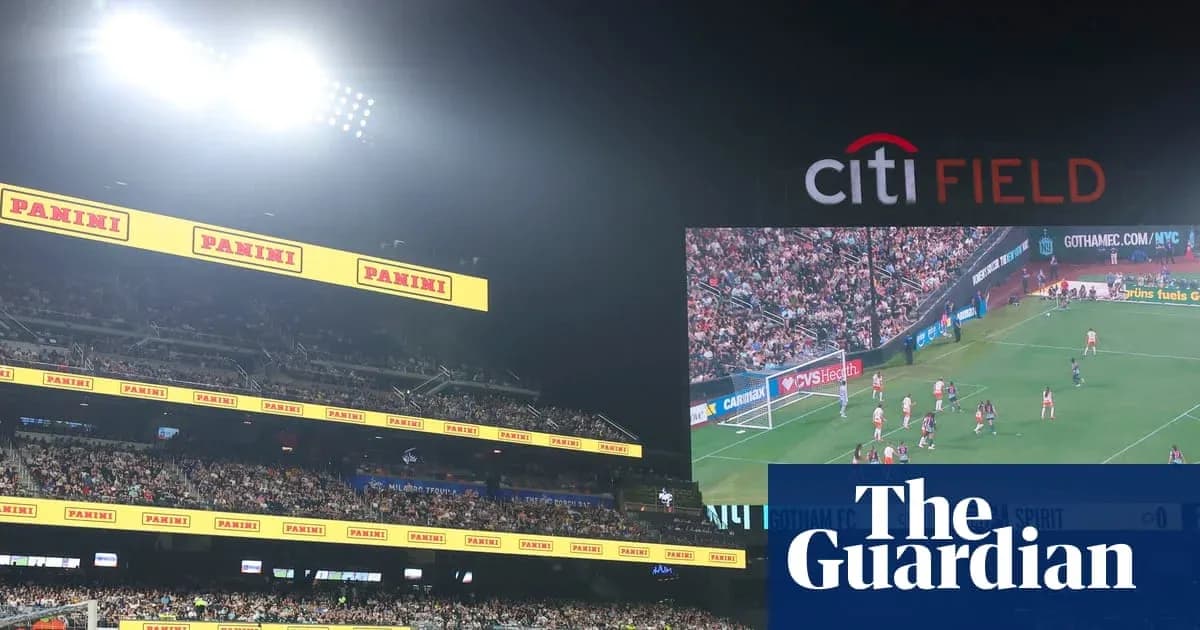
At Citi Field, home of the New York Mets, Gotham FC edged the Washington Spirit 1-0 in front of 42,175 fans – the second-largest crowd in league history and the biggest ever for a women’s sporting event in New York City. A decade after that infamous tiny-field debacle, a ballpark game had become a showpiece.
A blockbuster in the Queens haze
The scene was both spectacular and surreal. The NWSL had just emerged from a month-long pause for the men’s World Cup, and this fixture – the so-called Queens Classic – felt like a deliberate statement about where the league sees itself now.
San Diego still sit atop the table, but Gotham’s win pulled them level on points with both the Spirit and the Portland Thorns, with Washington holding second on goal difference. These are not just any rivals. Over the past three seasons, Gotham and Washington have shared two league titles (both Gotham’s), two runner-up finishes (both Spirit’s) and three additional trophies in other competitions. Last year they met in the final. This had the air of a sequel.
The air itself, though, was a problem.
A heatwave pushed temperatures into the high 80s and 90s Fahrenheit, with a heat index over 100. Smoke from Canadian wildfires drifted south, leaving New York under an air quality alert. As the sun sank behind the upper deck, Citi Field sat in an orange-brown haze, the smell of smoke hanging over the stands. It looked like a postcard from another planet.
The league has postponed games for poor air quality before, and it has also been hammered for playing on in dangerous conditions, most notably last year when a nationally televised Orlando Pride–Kansas City Current match went ahead in extreme heat that sent more than a dozen spectators to the hospital.
This time, the numbers sat in the gray zone. The air quality index hovered above 150 – “unhealthy” by Environmental Protection Agency standards, but below the NWSL’s 180–200 range for a possible delay and the 200-plus mark for postponement. The compromise: two hydration breaks in each half.
Spirit coach Adrián González made no secret of his frustration, arguing the constant pauses killed the rhythm, even as he accepted they were necessary. Trinity Rodman echoed the players’ dilemma.
“I think on both sides, we were just like, ‘Damn, another break, another break, another break,’” she said. “If we have to have a hydration break every 15 minutes, then we shouldn’t be playing the game, and that’s my opinion. … But at the end of the day, there’s 40,000 people, it’s a whole event. So it is really tough. I think it was a really hard situation for everybody to work around.”
The tension between spectacle and safety is now a recurring theme in a league growing faster than its infrastructure.
Lavelle’s moment, ESPN’s miss
Inside that haze, the football still found a way to cut through.
In the 37th minute, Rose Lavelle did what Rose Lavelle does. The Gotham playmaker, who decided last year’s final, drifted into space and bent a gorgeous curler beyond the Spirit keeper for the only goal of the night. One flash of technique, one swing of her left foot, and 42,000 people erupted.
Television viewers, though, got a muddier picture. The match aired in primetime on ESPN, but the network had split the screen for an interview just as Lavelle struck. The broadcaster and sideline reporter stumbled over each other as they tried to call the goal in real time, a jarring reminder that the presentation still hasn’t quite caught up with the product.
On the field, the stars were everywhere. The crowd leaned heavily Gotham, but Trinity Rodman’s No 2 jersey dotted the stands. She was electric in bursts, as she usually is, taking five shots and constantly threatening, yet she never found the finish to silence the stadium.
The loudest roar of the night came later, in the 63rd minute, and it had nothing to do with the scoreboard. Sam Kerr stepped onto an NWSL pitch again.
The Australian striker, back in the league after six-and-a-half years at Chelsea, made her Gotham debut and triggered a wave of nostalgia. She had been the face of the club back when it was still Sky Blue FC, piling up goals to become the NWSL’s all-time leading scorer while dealing with off-field chaos and playing in front of crowds that sometimes struggled to reach 3,000.
This, for her, was a very different kind of homecoming.
“I feel so spoiled to play at this club, because we keep bringing in incredible players,” Lavelle said, nodding to a transfer spree that has delivered Kerr, Ireland captain Denise O’Sullivan and Norwegian midfielder Guro Reiten in the space of a month. Rodman admitted she couldn’t resist a quip in the middle of it all.
“I went up to her during a corner and said, ‘Welcome back, but chill,’” she joked.
From Sky Blue’s struggles to subway ads
When Kerr left Sky Blue in 2018, the headlines were not about record crowds or marquee signings. They were about a club barely hanging together: poor results, training grounds without running water, minimal resources. The organization felt stuck in a different era.
That version of the club now feels like ancient history.
Gotham have rebranded, retooled and reimagined themselves. The trophies and playoff runs tell part of the story. The rest is in the details. Last week, the club announced a permanent move into New York City beginning in 2028, at the planned Etihad Park just around the corner from Citi Field.
The buildup to this Queens Classic looked like a major-league marketing campaign. Subway ads. Promotions across the city. A $15 ticket offer organized by Mayor Zohran Mamdani. It worked: the club says 70% of ticket buyers were “new fans.”
“It was really special just to see how many people were there that that was their first Gotham game,” midfielder Jaedyn Shaw said.
The opponent made the night’s symbolism even sharper. Washington have walked a similar path, rebuilding from the bottom and leaning into ambition in a league whose structure does not always reward it.
“In many ways, this is like a full-circle moment,” NWSL commissioner Jessica Berman said at half-time. “We know that with investment, if you build it they will come, and this is a proof point for that.”
She had the numbers to back it up. The Citi Field crowd more than doubled the total attendance across Gotham’s entire 12-match home slate in their inaugural 2013 season. League-wide, the past 12 months have brought new records in attendance, TV viewership and expansion fees. Ballparks such as Wrigley Field and Oracle Park, once symbols of compromise, have become stages for record-breaking nights.
Progress with sharp edges
Not everything about Wednesday was polished. Players and coaches from both sides acknowledged the pitch at Citi Field was serviceable but hardly ideal. It was not the tiny, farcical surface of 2016, but no one would call it pristine.
“That’s showbiz, baby,” Lavelle said, half-laughing, half-resigned.
Those four words captured the NWSL’s current reality. This is a league chasing big stages, big numbers, big moments – sometimes in environments that still feel improvised. It is a competition simultaneously celebrating its 14th season and grappling with the basics: player welfare in extreme conditions, broadcast decisions that respect the game, facilities that match the ambition.
On Wednesday, the balance tipped toward success. Gotham took a vital win in a tight title race. The Spirit, even in defeat, showed why they remain a force. The league showcased its stars in front of a crowd that once would have been unthinkable.
And yet the dissonance remained: a record-setting night played in unhealthy air, chopped up by hydration breaks, with its lone goal partially obscured on national television.
Maybe that’s what growth looks like in real time – messy, imperfect, impossible to ignore.
As the players walked off into the humid New York night, Spirit veteran Andi Sullivan tried to put it into words.
“It’s pretty cool when you’re out there and you realize that this is your job,” she said, “and that this is what your dreams looked like, or maybe what they haven’t looked like along the way.”
The NWSL’s dreams have clearly changed. The question now is whether the league can build fast enough, and safely enough, to keep up with the size of the crowds now showing up to watch.