Cremonese vs Torino: Tactical Battle Ends in Goalless Draw
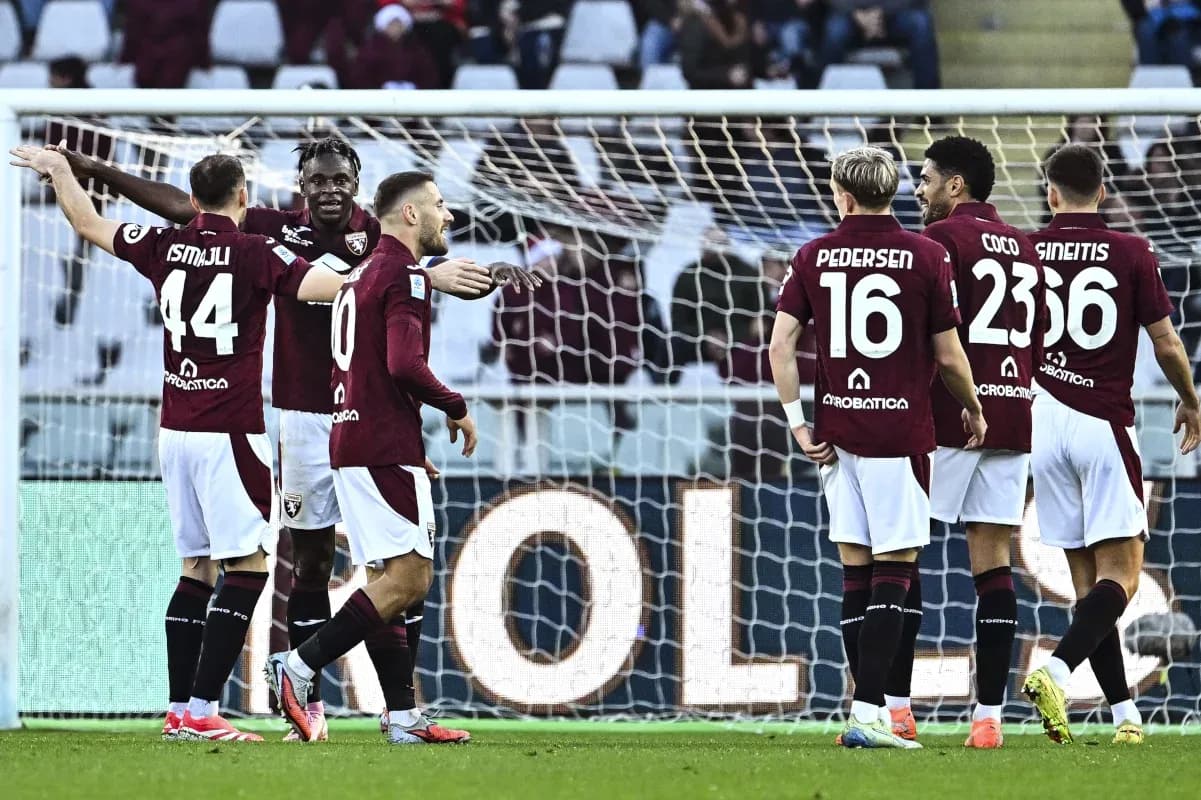
Cremonese and Torino played out a goalless but tactically clear contest at Stadio Giovanni Zini, with the home side’s territorial and possession dominance never quite converting into a decisive edge in the box. In a Serie A Regular Season - 33 fixture refereed by Michael Fabbri, Cremonese imposed a structured 4-4-2 against Torino’s 3-4-1-2, finishing with 65% possession, 14 shots to 4, and a 0.77 to 0.16 advantage in expected goals. Yet the scoreboard stayed at 0-0, underlining Torino’s compact low block and last-line discipline, and Cremonese’s lack of final-third incision despite control of rhythm and territory.
The match’s scoring narrative is defined more by what did not stand than by what did. The key attacking flashpoint came on 64', when Federico Baschirotto thought he had broken the deadlock for Cremonese, only for VAR to intervene and cancel the goal. That single intervention encapsulated the afternoon: Cremonese’s set-piece and penalty-area pressure created moments of apparent breakthrough, but structural or infringement details repeatedly undercut them.
Disciplinary control was largely on Torino’s side of the ledger. Cremonese finished without a single card, reflecting both their dominance of the ball and a relatively measured counter-press that did not spill into persistent infringement. Torino, by contrast, collected three yellow cards in a short, telling spell as Cremonese chased the winner.
At 78', Saúl Coco was booked for a foul, the first caution of the game and a symptom of Torino’s increasing need to disrupt Cremonese’s central combinations as fatigue set in. Two minutes later, the pressure and defensive strain were visible in quick succession: on 80', Enzo Ebosse received a yellow card for a foul, immediately followed in the same minute by Alieu Njie also going into the book for a foul. That cluster of cautions underlined Torino’s reactive posture in the final phase, repeatedly forced into late interventions to stop Cremonese’s progress between the lines and into the channels.
Substitution Patterns
Substitution patterns confirmed the tactical story and the coaches’ reading of the contest. Marco Giampaolo’s first structural shift arrived on 60', when D. Okereke (IN) came on for J. Vandeputte (OUT), and A. Zerbin (IN) came on for R. Floriani (OUT). This double change freshened both flanks, aiming to convert wide dominance into more direct penetration and one-v-one threat. The VAR-cancelled Baschirotto goal four minutes later suggested the adjustment was immediately disruptive to Torino’s defensive stability.
On 73', Giampaolo introduced M. Payero (IN) for A. Grassi (OUT), injecting a more vertical, progressive profile into central midfield to complement the wide changes and push Cremonese’s possession higher and faster through the middle. The final attacking recalibration came on 84', when M. Djuric (IN) replaced A. Sanabria (OUT), adding a more classic target presence to attack Torino’s box with crosses and second balls, and T. Barbieri (IN) came on for S. Luperto (OUT) in the same minute, giving additional energy and overlapping potential from the back.
Leonardo Colucci’s substitutions were primarily about defensive resilience and countering legs. On 68', L. Marianucci (IN) came on for G. Maripan (OUT), and A. Njie (IN) replaced G. Simeone (OUT), a combined move that both refreshed the back line and altered the front line’s transition profile, with Njie offering more running threat into space. On 76', C. Biraghi (IN) came on for R. Obrador (OUT), and F. Anjorin (IN) replaced N. Vlasic (OUT), reinforcing the left side defensively while adding a fresh link player to help Torino escape pressure. The final Torino change at 90' saw S. Kulenovic (IN) introduced; the leaving player is not specified in the data, but the intent was clearly to provide a late outlet and defensive-first striker profile to press and hold the ball up as Cremonese pushed numbers forward.
Defensive Structures
From a structural standpoint, Cremonese’s 4-4-2 was textbook in its dominance phase. With E. Audero making just 1 save all match, the Defensive Index for the home side was built on prevention rather than emergency interventions: Torino were restricted to 4 total shots and only 1 on target, with just 2 efforts inside the box. The Baschirotto–Luperto pairing, shielded by W. Bondo and A. Grassi initially, effectively squeezed space between the lines, while full-backs F. Terracciano and G. Pezzella helped lock Torino into their own half by holding high positions and supporting wide overloads.
Torino’s 3-4-1-2, by contrast, morphed into a 5-4-1 for long stretches without the ball. A. Paleari’s 4 saves, combined with the side’s low xG conceded of 0.77, highlight a compact block that largely forced Cremonese into low-quality shooting positions despite their 8 shots inside the box. The back three of Coco, Maripan, and Ebosse, later supported by Marianucci and Biraghi, stayed narrow and deep, conceding possession (35%) but protecting the central lane and the space in behind.
Statistical Overview
In possession, Torino struggled to connect their front three of Vlasic, Simeone, and Adams due to Cremonese’s organised mid-block and pressing triggers from the double pivot. With only 278 total passes at 76% accuracy, compared to Cremonese’s 495 passes at 84%, Torino’s Overall Form in build-up was clearly inferior, relying on sporadic transitions rather than sustained sequences.
Statistically, the verdict is consistent with the eye test of a one-sided territorial contest ending level. Cremonese’s 65% possession, 14 shots, 6 corners, and 0.77 xG show a side structurally superior but lacking the final detail to turn control into goals. Their goalkeeper’s 1 save and zero cards underline a strong Defensive Index: they rarely allowed Torino into dangerous positions and defended without resorting to persistent fouling.
Torino’s 0.16 xG, 4 shots, and single corner reflect a minimal attacking footprint, but their 4 saves from Paleari, 3 yellow cards, and 12 fouls tell the story of a team that accepted suffering in a low block and survived. Both teams’ goals prevented values sit at 0, suggesting that while Paleari had more work than Audero, neither goalkeeper was asked to perform extraordinary interventions beyond the shots faced. In the end, the data paints a clear picture: Cremonese’s Overall Form and structural dominance were superior, but Torino’s defensive organisation and resilience earned them a point their attacking output alone did not justify.