AS Roma Dominates Fiorentina in 4-0 Victory
Under the Rome lights at Stadio Olimpico, this was billed as a clash of trajectories: AS Roma, fifth in Serie A and chasing Europa League security, against a Fiorentina side hovering in 16th, still glancing nervously over its shoulder. Following this result, the table underlines the gulf that the pitch had already exposed. Roma’s 4-0 win was not a freak storm; it was the logical extension of a season in which their structure, intensity and attacking clarity have steadily sharpened, while Fiorentina’s fragility has remained stubbornly unresolved.
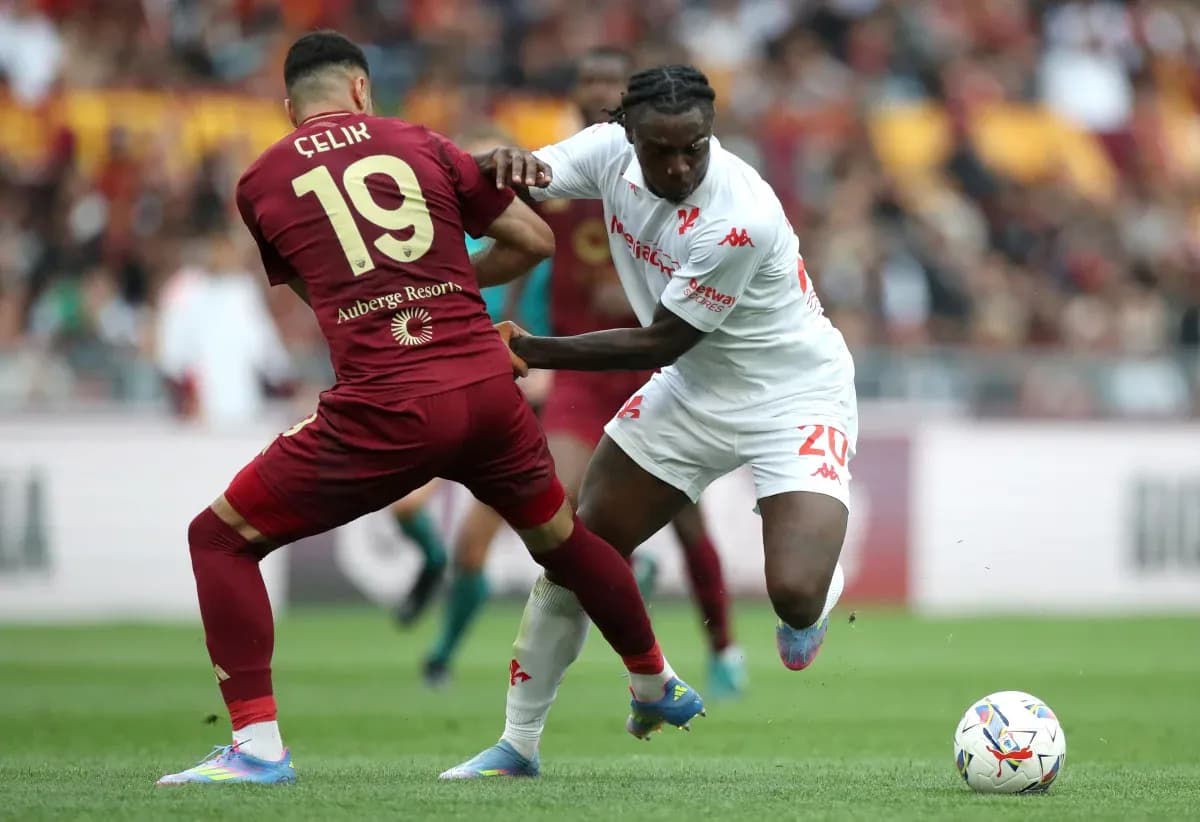
Roma came into the night with a clear identity. Across the campaign they have played 35 league matches, winning 20 overall, and the spine of that success has been their home form: 12 wins from 18 at the Olimpico, with 31 goals scored at home at an average of 1.7 and only 10 conceded at an average of 0.6. The 3-4-2-1 that Piero Gasperini Gian has leaned on in 27 league games was once again the platform: M. Svilar behind a back three of G. Mancini, E. Ndicka and M. Hermoso, with Z. Celik and Wesley Franca as wing-backs, and a fluid band of M. Soule, B. Cristante and D. Malen knitting and tearing at the Fiorentina back line.
What made the performance so emphatic was how Roma turned a potentially disruptive absentee list into a statement of depth. A cluster of attacking absences – A. Dovbyk (groin injury), E. Ferguson (ankle injury), B. Zaragoza (knee injury) and the creative heartbeat L. Pellegrini (thigh injury), plus N. El Aynaoui suspended for yellow cards – could have blunted them. Instead, the responsibility shifted. Soule, already one of Serie A’s leading creators with 5 assists and 43 key passes this season, stepped into the half-spaces with authority, while Malen, Roma’s leading scorer with 11 league goals and 2 penalties converted, occupied and stretched the Fiorentina centre-backs relentlessly.
Opposite them, Paolo Vanoli’s Fiorentina arrived with a very different emotional weight. Sixteen in the table, with 8 wins, 13 draws and 14 losses overall, they have been defined by fine margins that too often tip against them. Their goal difference of -11 (38 scored, 49 conceded) tells a simple story: there is enough attacking talent to stay in games, but not enough defensive control to dictate them. On their travels they have been particularly porous, conceding 29 away goals at an average of 1.6 per game, and this match only deepened that pattern.
Vanoli’s choice of a 4-3-3 felt like a nod to his most-used structure this season, but also a gamble against Roma’s numerical superiority between the lines. D. de Gea started behind a back four of Dodo, M. Pongracic, L. Ranieri and R. Gosens. The midfield trio of M. Brescianini, N. Fagioli and C. Ndour was tasked with compressing Roma’s central channels, while the front three of J. Harrison, A. Gudmundsson and M. Solomon were meant to threaten in transition.
The tactical voids on Fiorentina’s team sheet were as significant as Roma’s. In attack, they were without their top scorer M. Kean (8 league goals, 2 from the spot, sidelined by a calf injury) and R. Piccoli (muscle injury), stripping them of penalty-box presence and depth. L. Balbo’s injury and N. Fortini’s back problem reduced options further. That meant Gudmundsson, who has 5 goals, 4 assists and a reputation as a volatile match-winner – and one of Serie A’s red-carded forwards this season – had to carry a disproportionate creative load, often isolated against a back three that thrives on contact.
If this was a story of hunters and shields, Roma’s were simply sharper. Malen, with 40 shots and 24 on target this season, attacked the channels between Pongracic and Ranieri, forcing Fiorentina’s most card-prone defender into constant decisions. Pongracic leads the league’s yellow-card charts with 11 cautions, a symptom of a defender who defends on the edge. He has been a blocking machine – 23 blocked shots this season – and a reliable distributor with 1,806 passes at 91% accuracy, but against Roma’s movement his aggression became a liability rather than a weapon.
Behind Malen, Soule and Cristante exploited the seams between Fiorentina’s lines. Soule’s season-long profile – 918 passes at 83% accuracy, 89 dribbles attempted with 32 successful – was mirrored in the way he repeatedly received between Fagioli and Brescianini, turning to face a retreating back four. Cristante, nominally a forward in the 3-4-2-1, acted as a late-arriving runner, pinning Brescianini and preventing Fiorentina’s midfield from stepping out.
In the engine room, Roma’s central duo of N. Pisilli and M. Kone outworked and outmanoeuvred Fagioli and Ndour. Roma’s season-long defensive averages – 0.8 goals conceded overall, with 16 clean sheets in total (10 at home) – are not just about the back three; they are about how aggressively the midfield compresses space after loss. Fiorentina, by contrast, have failed to score in 10 league games overall, 7 of them away, and that impotence resurfaced here as Harrison and Solomon were forced wide and deep, with little support arriving in the box.
Discipline added another layer to the narrative. Roma’s yellow-card distribution shows a spike from 46-60', 61-75' and 76-90', each window accounting for 23.08% of their bookings, while their two red cards this season have come between 46-75'. Fiorentina, meanwhile, live dangerously late: 25.00% of their yellows arrive between 76-90', and both of their red cards this season have come in that same 76-90' window. In a match that Roma effectively killed by half-time with a 3-0 lead, this difference in emotional control mattered. Roma could afford to manage the tempo; Fiorentina, chasing shadows, were always at risk of their late-game volatility surfacing.
Following this result, the statistical prognosis for both sides hardens. Roma’s overall goal difference of +23 (52 scored, 29 conceded) looks every bit the profile of a Europa League side with Champions League ambitions. Their xG profile is not provided here, but the volume and quality of chances implied by their home scoring rate and Malen’s shot numbers suggest this 4-0 was no overperformance; it was a clinical expression of a team whose attacking patterns are well-drilled and whose penalty record – 4 taken, 4 scored overall – reflects composure in decisive moments.
Fiorentina, by contrast, resemble a team whose underlying numbers are dragging them towards a reckoning. Conceding 49 overall while scoring 38, with only 8 clean sheets in total and a tendency to crumble away from home, hints at an xG-against column that is consistently too high. Their perfect penalty record (6 scored from 6) is a rare bright spot, but it cannot mask structural issues in open play.
In narrative terms, this match felt less like a twist and more like confirmation. Roma, even without key names, have a clear script and the cast to execute it. Fiorentina, shorn of their main striker and short on certainty, remain trapped between systems, too open to protect a fragile defence and too blunt to consistently punish opponents. At the Olimpico, that combination was always likely to end one way – and 4-0 felt, if anything, like a fair reflection of where these squads stand.