Cucurella’s Tattoo, Neuer’s Retirement, and Chelsea’s Transfer Dominance
Marc Cucurella has never exactly blended into the background, but his latest choices push him even further into cult-hero territory.
After having the face of Spain coach Luis de la Fuente tattooed on his elbow, the Chelsea full-back has marked the moment with a fresh haircut. The new look caps a summer in which Cucurella has doubled down on his identity: unapologetically expressive, fiercely loyal to the national setup, and unafraid to wear his footballing life on his skin.
It is not a standard tribute. Players often ink motivational slogans, family portraits, religious symbols. Cucurella has gone straight for the man on the touchline, a permanent nod to the coach who has backed him on the biggest stage. The haircut is the lighter touch on top of a serious statement: he is all-in on this era of his international career.
Les Bleus rebrand: a new crest for an old powerhouse
While Cucurella was in the barber’s chair, France were in the boardroom.
On Wednesday afternoon, the FFF revealed a new logo for the France national team, another turn in the long visual history of Les Bleus. The crest has shifted repeatedly over the decades, tracking the country’s footballing evolution from post-war hopeful to modern superpower.
The cockerel remains the heart of the identity, but each redesign nudges the story on: sharper lines, bolder outlines, subtle tweaks that mirror a team expected not just to compete, but to dominate. The latest version lands at a time when France’s talent pool looks as deep as ever and expectations are sky-high. The shirt may change; the pressure never does.
Mbappé and Zidane: one frame, two eras
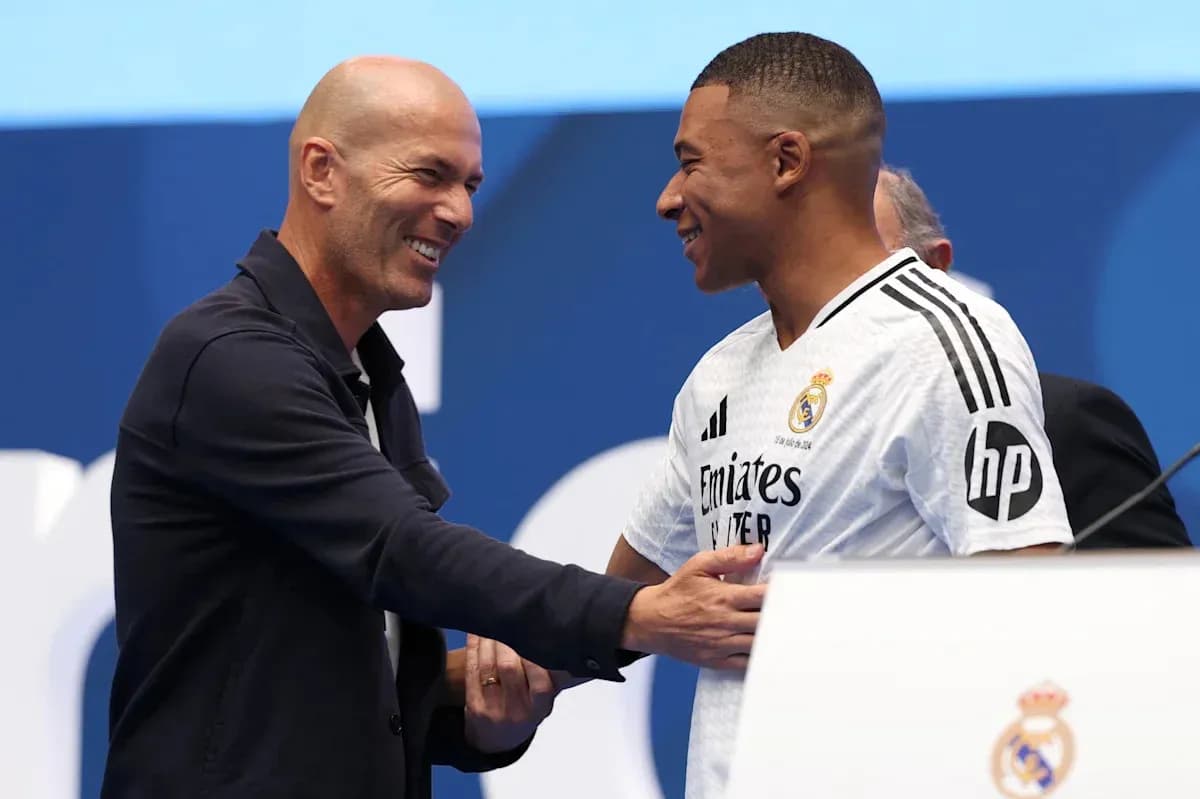
When Kylian Mbappé and Zinedine Zidane share a screen, French football history condenses into a single image.
An archival video has brought the two icons together again, sparking the familiar debate: are these the two greatest players in the history of the France national team? Zidane, the conductor of 1998 and 2000. Mbappé, the jet-heeled spearhead of a new generation, already a World Cup winner and still far from the end of his prime.
The footage is more than nostalgia. It is a bridge. Zidane’s elegance, Mbappé’s explosive directness, both wrapped in the same shirt, both redefining what it means to be the face of Les Bleus. For a country obsessed with its footballing royalty, it is a reminder that the throne rarely stays empty for long.
Neuer sets his final date
In Germany, a giant has drawn a line in the sand.
Manuel Neuer has confirmed he will retire from professional football at the end of the 2026-27 season, giving a definitive end point to one of the most transformative careers in goalkeeping history. The Bayern Munich legend did not just keep goal; he reimagined the position.
From sweeping 40 yards off his line to initiating attacks with the calm of a playmaker, Neuer became the template for the modern goalkeeper. His decision sets a three-season countdown at Bayern and, more broadly, in European football. Every appearance from now on carries a different weight. Every save, every misstep, every trophy chase feeds into the closing chapter of an era.
Chelsea, the €100m specialists
Across the continent, Chelsea continue to bend the transfer market to their will.
The London club now stand alone as the team with the most transfers worth over €100 million in football history: five such signings, a staggering number that underlines both their ambition and their volatility. Real Madrid are poised to close the gap with a fourth nine-figure deal, expected to be the signing of Yan Diomandé, but Chelsea remain out in front in this particular arms race.
Each €100m move carries risk. Chelsea have embraced that risk more than anyone. Their strategy is clear: stack elite talent, accept turbulence, and trust that volume and upside will eventually tilt the balance in their favour. It is football as high finance, played out under Stamford Bridge’s floodlights.
A blank shirt, by design
And then there is the other side of Chelsea’s business model: restraint, at least on the front of the shirt.
For the fourth consecutive season, the Blues will start the campaign without a shirt sponsor. In an era when every inch of kit real estate is monetised, the absence is striking. This is not a failure to sell; it is a deliberate stance from BlueCo’s leadership.
The ownership is prepared to wait, holding out for a more lucrative, long-term deal rather than locking in a partnership that undervalues the club’s global reach. The result is a clean, sponsorless front that feels almost retro in a hyper-commercial age, even as it is driven by hard-headed calculation.
From Cucurella’s elbow ink to Neuer’s ticking clock, from France’s new crest to Chelsea’s quiet shirt and noisy spending, the game keeps reshaping itself in big and small ways. The question now is which of these decisions will age like a classic tattoo—and which will look like a haircut gone wrong.