Roberto de Zerbi's Tough Stance at Tottenham: The Future of Lucas Bergvall
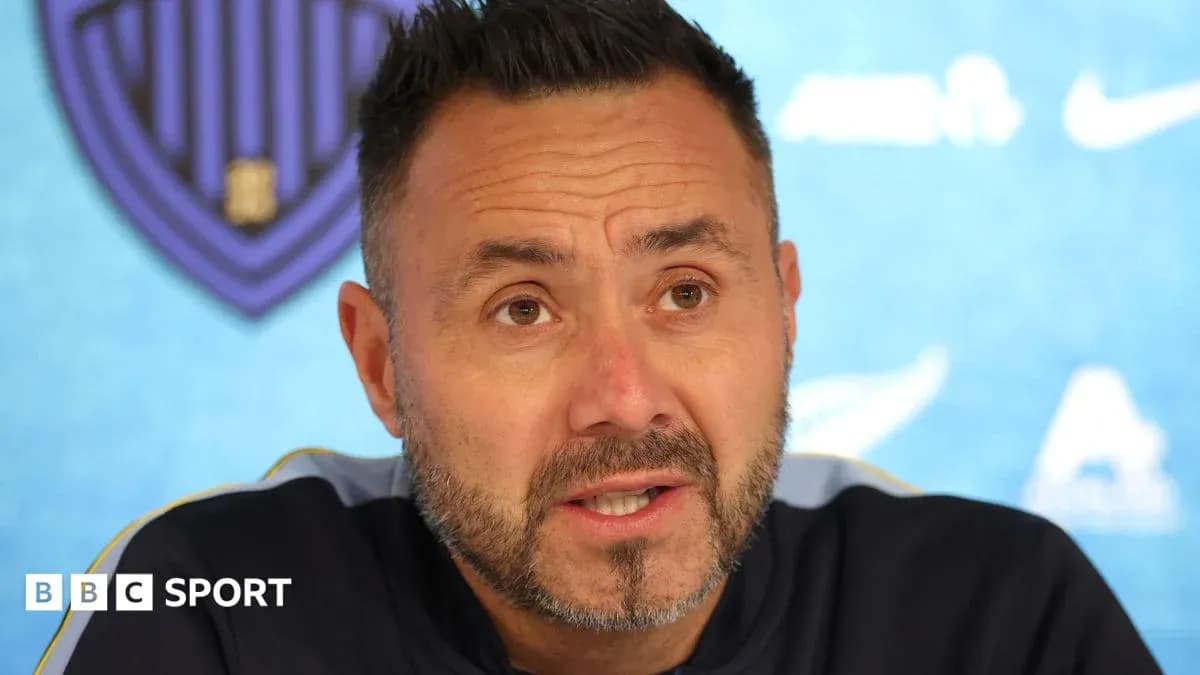
Roberto de Zerbi has never been one for half-measures. He walked into a fractured Tottenham dressing room in March, dragged the club away from the relegation trapdoor, and laid down a simple rule. It still stands.
If you’re not proud to wear the shirt, you can go.
That message echoed again in New Zealand, where Spurs are preparing for a pre-season friendly against Auckland FC. This time, it landed squarely in the middle of the debate over Lucas Bergvall’s future.
De Zerbi’s line in the sand
Tottenham have already turned down a £38m bid from Nottingham Forest for the Sweden midfielder, with Forest ready to return at around £45m. Bergvall, signed from Djurgarden in 2024 and widely regarded as one of the brightest talents of his generation, finds himself at a crossroads before his Spurs career has truly begun.
De Zerbi did not duck the issue.
He repeated that anyone not happy, anyone not proud to stay, “has to leave”. Not negotiate. Not linger. Leave.
For him, the modern game is decided by something far less tangible than tactics or data. Motivation. The hunger to walk out at Tottenham Hotspur Stadium with something to prove. The Italian is convinced it separates those who merely play from those who decide matches, whether in the Premier League or on the World Cup stage.
Bergvall and the midfield squeeze
The problem for Bergvall is not just philosophical. It is brutally practical.
The 20-year-old started De Zerbi’s first match in charge, a 1-0 defeat at Sunderland, but was pushed to the fringes thereafter, restricted to four substitute appearances. Now the club have gone out and spent heavily in his area of the pitch.
Sandro Tonali has arrived from Newcastle United in a £100m deal. Mateus Fernandes has come in from West Ham for £85m. Two heavyweight signings, two more obstacles between Bergvall and a starting place.
De Zerbi made no attempt to disguise the scale of the competition. By the end of the window, he expects “two players for each position”. In other words, no guarantees for anyone, least of all a young midfielder still learning the rhythm of English football.
He has yet to sit down with Bergvall, but that conversation is coming. When it does, it will shape not only the player’s future but the structure of Tottenham’s midfield for years.
If Bergvall stays, De Zerbi says he will be happy. If not, the decision passes to sporting director Johan Lange and chief executive Vinai Venkatesham. Once a player chooses to go, the coach made clear, “it’s not my business after the decision to leave”.
The message is ruthless, but it is clean. No grey area, no halfway house.
A squad rebuilt, but not finished
While Bergvall weighs up his options, Tottenham’s rebuild under De Zerbi is accelerating.
Tonali and Fernandes are only part of a wider reshape. At the back, Jan Paul van Hecke, Andy Robertson and Marcos Senesi have been added to give Spurs a different profile in defence: more aggression, more control, more depth.
De Zerbi, though, is not satisfied. Not yet.
He wants the attack completed. Another couple of signings, maybe more, maybe fewer, but enough to give him the variety and firepower he believes a serious Premier League side requires. For all the investment already made, the window, in his eyes, is still very much open.
The structure is becoming clear: two players for every role, internal competition driving standards, no passengers. Those who embrace it stay. Those who don’t, move on.
Kudus close, Kulusevski cautious
Injuries have complicated his plans, especially out wide.
Mohammed Kudus, recovering from a thigh problem, has stayed in London while the squad tours New Zealand. De Zerbi expects him to be ready to rejoin full training once the team returns. His importance was underlined without fanfare: “another important player”, another attacking weapon almost back in the manager’s hands.
Dejan Kulusevski’s situation is more delicate. After an entire season lost to a serious knee injury, Spurs will not rush him. The club want detailed analysis, careful steps, no unnecessary risks. First for the player, then for the team.
The caution speaks volumes. Tottenham know what a fully fit Kulusevski can offer; they also know that one wrong move could undo a year of rehabilitation.
Xavi Simons and the reality of pain
If anyone inside the camp understands that fear, it is Xavi Simons.
The attacking midfielder did not dress his story up. He called the first four days after tearing his anterior cruciate ligament in April “the worst days of my life”. This was not the usual measured injury update. It was raw.
He couldn’t sleep. He barely ate for a week. The pain left him vomiting and dizzy. He missed the 2026 World Cup, a stage that seemed built for his talent, and was left instead with surgery scars and questions.
His description of his body’s reaction – “what happened?” – cuts through the usual noise around elite footballers. Behind the transfer fees, behind the tactical debates, there is still a human being dealing with trauma and uncertainty.
Now, though, he says he is in a good place. Happy again. That matters to De Zerbi as much as any medical report. Motivation and mindset, once more, at the heart of Tottenham’s story.
A club on edge – by design
Tottenham under Roberto de Zerbi are not being built for comfort. They are being built on tension: places under threat, standards demanded, futures decided quickly.
Bergvall’s next move will be a test case. Does a gifted 20-year-old fight his way into a crowded, expensively assembled midfield, or seek minutes elsewhere? Does Tottenham cash in, or bet on his talent in a squad that no longer guarantees him anything?
For De Zerbi, the answer is simple. Be proud to stay, or be brave enough to go.
Either way, Spurs are moving, and under this manager, nobody will be allowed to stand still.