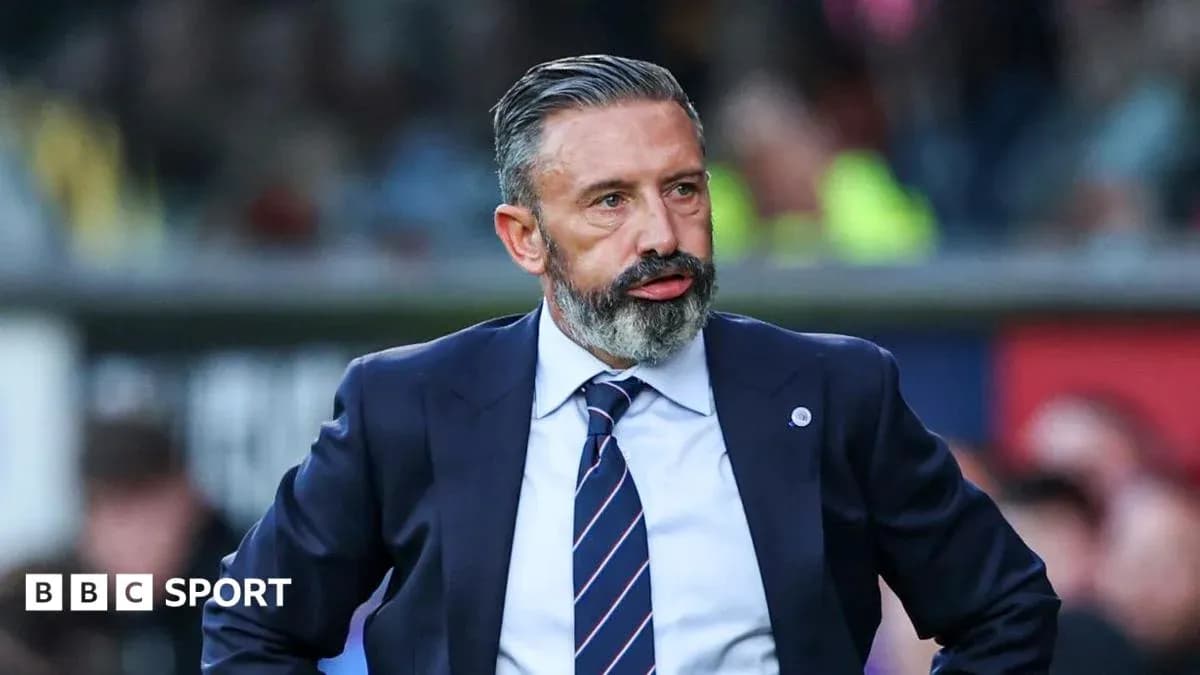
Derek McInnes Starts Rangers Tenure with Draw at Dundee United
Derek McInnes’ first steps as Rangers manager did not come with fireworks. No grand unveiling performance, no early statement of intent. Just a 1-1 draw at Dundee United that felt naggingly familiar, yet sounded very different.
A year ago, Russell Martin tore into his Rangers side after an opening-day draw at Motherwell. Same outcome this time, different voice, different message. McInnes walked out of Tannadice talking about patience, process and the long road ahead rather than rage and recriminations.
“It’s one game,” he told Sky Sports, almost as a line in the sand. He made it clear the past is not his concern. The future is.
Stuttering start to a new era
The new era began with the same old problem: Rangers fell behind and looked unsure of themselves.
Lachlan Rose punished them in the first half, Dundee United’s sharpness exposing a team still learning each other’s names, never mind each other’s movements. The gaps Andy Halliday would later criticise were there from early on – lines stretched, distances wrong, a backline that never truly looked compact.
McInnes had thrown in several of his new pieces from the start. Ivor Pandur in goal. Ben Godfrey at centre-back. Cammy Devlin and Lawrence Shankland, both familiar to him from Hearts, asked to set the tone. It was a bold selection, a clear attempt to stamp his identity quickly.
The performance rarely matched the intention.
Rangers improved after the break. They had to. Thelo Aasgaard dragged them up the pitch, demanded the ball, and eventually delivered the equaliser their second-half pressure merited. For a spell, Dundee United were penned in, the away end finally with something to cling to.
The pressure should have flipped the game. It never quite did.
Rangers’ dominance felt fragile, their control more hopeful than convincing. When Jesse Randall broke clear late on and lifted a tame finish straight at Pandur, McInnes’ side were a poor decision away from starting the season with defeat.
“It’s disappointing – we’ve dropped a couple of points, but we weren’t good enough to get all three,” McInnes admitted. No excuses, no sugar-coating. Just a blunt assessment of a team that flickered rather than burned.
Patience, not panic
Outside the technical area, the reaction was cooler than the scoreline might suggest.
Former Rangers striker Steven Thompson urged calm on BBC Radio Scotland. A point away from home. A difficult venue. An opening night in August, not a title decider in April. He stressed what McInnes himself hinted at: this is a work in progress that cannot be judged on 90 minutes at Tannadice.
“At this point in the season, there’s no knee-jerk reaction,” Thompson said. The real verdict, he argued, must wait until McInnes has the players he wants and the training time he needs.
McInnes echoed that theme. The message was clear: this squad is incomplete, this system unfinished. Summer signings Dan Neil and Ross McCrorie came off the bench, more evidence of a rebuild still very much in motion. The manager did not hide from that reality. He leaned into it.
“We’ve got to have more trust in what we’re doing, keep our shoulder to the wheel and do simple things better,” he said. The basics first, the flourish later.
Not everyone was as forgiving.
Halliday, speaking on Sportsound, went straight for the tactical jugular. “No matter how many defenders you play with, the main fundamental is being compact, and I thought Rangers were the furthest thing from compact,” he said. On a night when Aasgaard stood out in blue, Halliday felt the best individuals on the pitch wore Dundee United colours.
His verdict cut through the noise: “Rangers are a work in progress… but it certainly wasn’t the start they were looking for.”
Gaps at the back, missing spark out wide
The problems are not hard to spot.
Godfrey limped off with a hamstring issue, adding an immediate headache to a defensive unit already in flux. Olwethu Makhanya’s visa situation clouds Thursday’s Europa League qualifier away to Jagiellonia Bialystok. Recruitment at the back is no longer just desirable; it is urgent.
Yet McInnes’ sharpest concern lies further forward.
Djeidi Gassama started on the left but was withdrawn at half-time, his impact minimal. Rangers ended the game with Mohamed Diomande and Aasgaard tucking in, the width evaporating just as the match opened up into the kind of stretched, broken play that cries out for a winger who can isolate a full-back and go past him.
McInnes did not dance around the issue.
“I thought second half as the game got stretched, we had opportunities to play in the spaces and we need people with the ability to go past defenders,” he told Sky. He wants a winger who can frighten teams, flip the rhythm of a match, put opponents on the back foot and feed the strikers who, as he put it, are “all dependant on service”.
Right now, that player is not in his squad. Not yet.
Rangers are working to change that. McInnes was adamant they “know what we want” and are pushing to bring in the kind of wide threat that can turn one point into three on nights like this.
A long road from Tannadice
So the Derek McInnes era begins not with a roar, but with a reminder of how far Rangers still have to travel.
A new goalkeeper, a reshaped spine, a manager with a clear idea of what he wants and a team still some distance from delivering it. A point away from home, a warning shot about their current level, and a transfer to-do list that grows longer with every scan of Godfrey’s hamstring and every replay of Randall’s late chance.
There was no panic in McInnes’ voice, no hint of alarm from those urging patience. But the demands at Ibrox are not gentle, and they do not soften with time.
If this is the baseline, how quickly can he raise it?