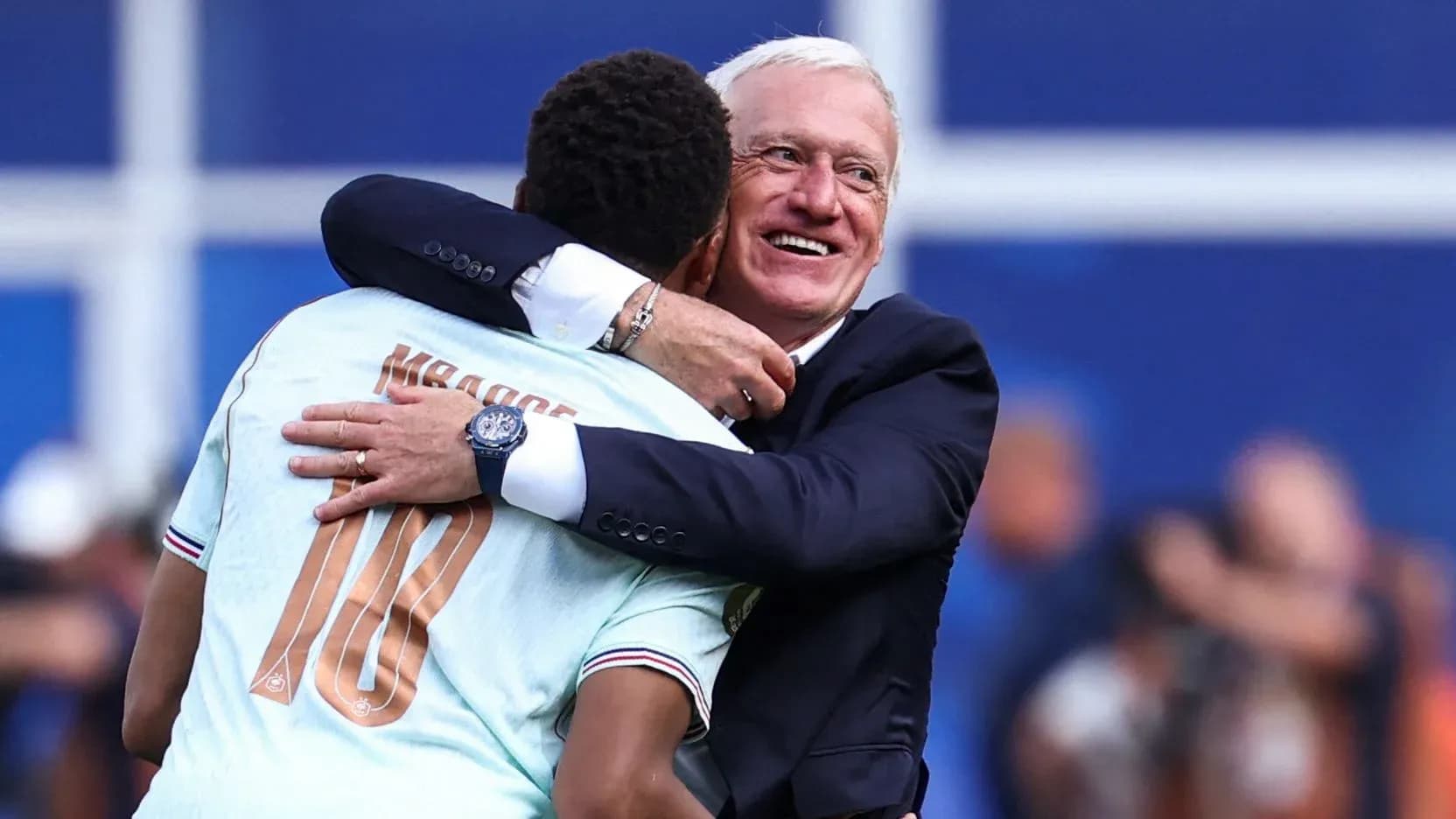
Didier Deschamps Leads France to Third Consecutive World Cup Semi-Final
Didier Deschamps walked into the interview area with the look of a man who has seen this stage before and fully intends to see it again.
Three World Cup semi-finals in a row with France. For most nations, it would be a once-in-a-lifetime peak. For Deschamps, it is framed as the logical consequence of a squad he trusts and a standard he refuses to lower.
“It seems logical and natural,” he told M6, almost matter-of-fact. “I have great players. It’s good.”
Mbappé’s knock and the late changes
The main concern in the immediate aftermath was not the milestone, but the state of his captain. Kylian Mbappé, again decisive after earlier frustration, finished the game with a minor ankle issue that briefly set French hearts racing.
“Kylian had a slight ankle issue; he was feeling some pain,” Deschamps explained, offering clarity rather than alarm. There was no drama in his tone, just a calm confirmation that his star forward had been managing discomfort.
He then lifted the lid on his late substitutions, which had raised a few eyebrows as the game tightened.
“Manu [Kone] took a blow to the knee and had cramps. But Warren [Zaire-Emery] made a very, very good impact when he came on, so that’s great. Everyone needs to feel ready. And those who aren't playing are still fully behind the rest of the group.”
That last line is pure Deschamps. The France coach has built his reign on hierarchy, trust, and a squad that understands its roles. Fringe players are not afterthoughts; they are weapons to be deployed when the game demands a different rhythm. Zaire-Emery’s entrance, full of energy and conviction, underlined exactly that.
A complicated night, a familiar destination
France did not glide into the last four. They stumbled, regrouped, and then pushed through.
“It was complicated today,” Deschamps admitted. “Missing the penalty and the chances we didn’t convert makes things difficult. Kylian reacted well and scored. We are exactly where we wanted to be.”
That sentence captures the night. A missed penalty, wasted chances, tension rising. Then Mbappé, under scrutiny as always, responds in the way elite forwards do: by deciding the game. The pressure that had been building around him for weeks eased, at least for one evening, with a single decisive moment.
The coach, though, quickly turned the page. The target is not a semi-final. The target is the trophy.
“We are going to recover well and watch our next opponent [on Friday, either Spain or Belgium],” he said, already looking ahead, already planning. No celebration without calculation.
Emotion in France, focus in the bubble
Outside the stadium, the achievement reverberates. A third straight final four on the world stage is not routine, no matter how calmly Deschamps speaks about it. Back home, the country is living every kick.
“That’s the beauty of sport and football: we create emotions and we share them,” the former defensive midfielder reflected. “I imagine there is a lot of passion back in France, even if we are inside our own bubble here.”
That “bubble” is deliberate. Deschamps wants his players insulated from the noise, not detached from it. They know what it means, they just cannot afford to be consumed by it.
“The players have a duty to do everything they can to go as far as possible. This is an important step, and we are in the final four once again.”
Duty. Step. Again. His choice of words is telling. There is pride, but there is also a clear reminder: history is not finished, it is only being set up.
France stand once more on the edge of another World Cup final, led by a coach who treats extraordinary consistency as the baseline and a captain playing through pain to keep them there. The question now is not whether this team belongs at this level.
It is how far this group, under this manager, can push their era of dominance before the cycle finally breaks.