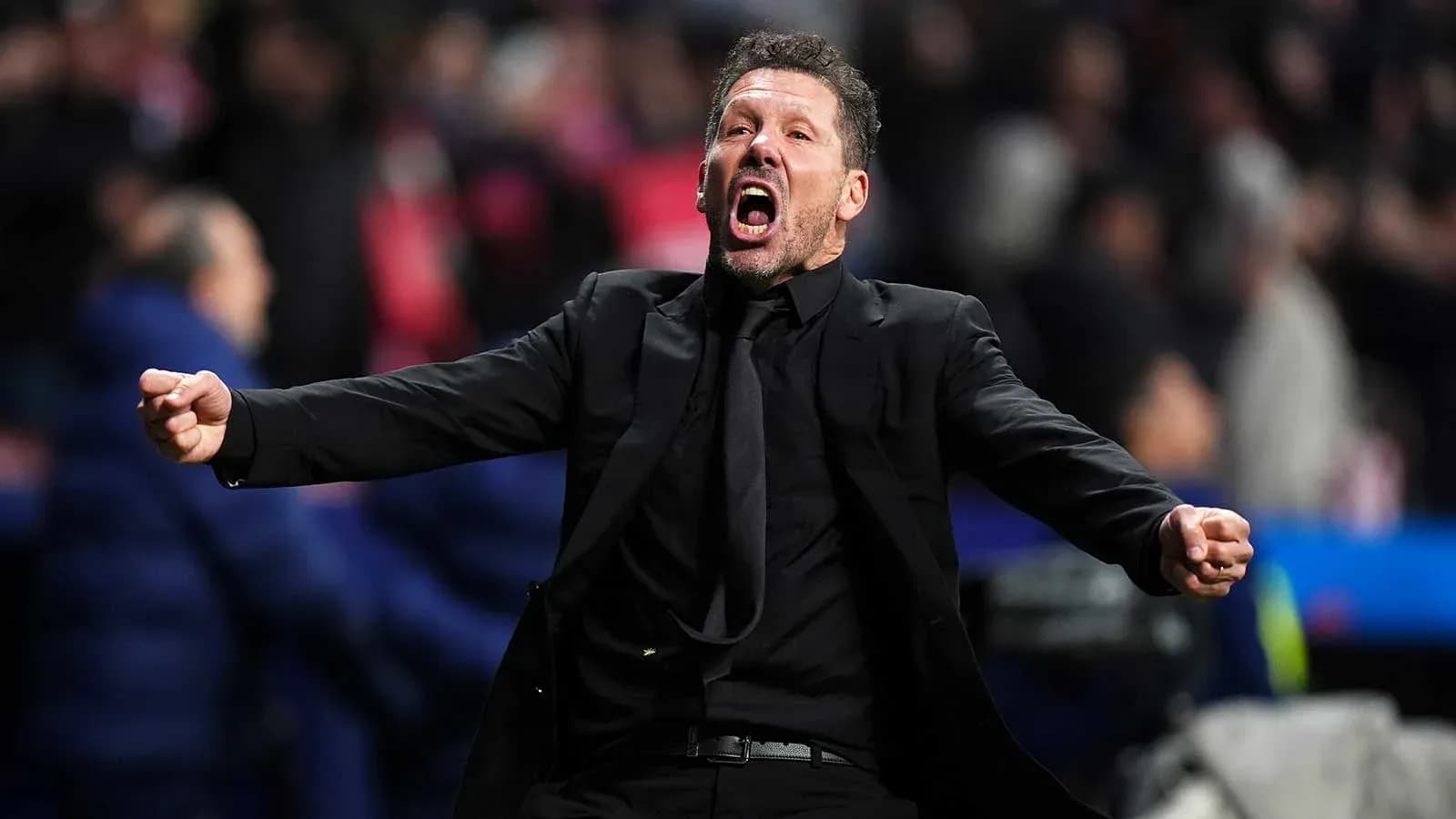
Diego Simeone: 15 Years of Pressure and Pursuit at Atlético Madrid
Diego Simeone has never been one for pretty speeches. He deals in edges, in pressure, in the hard truth of winning or losing. And after 15 years at Atlético Madrid, the weight of that truth is heavier than ever.
The Argentine sat down and stripped away the mythology around his football. The talk of style, of aesthetics, of purism. For him, it all comes back to the same, blunt objective: victory.
Every coach, he argued, is chasing exactly that. The rest is noise.
The sarcasm surfaced when the subject turned to attacking romantics. Could the purists keep their swashbuckling ideals intact at other clubs, he wondered, without conceding a flood of goals? It was a pointed question, and it hung there, aimed at a wider debate than just Atlético’s.
The weight of 15 years
If Simeone once thrived on that debate, he no longer sounds like a man who enjoys the fight in quite the same way. He admitted the responsibility has grown, doubled even, over the years.
“All this weight I feel now after 15 years, I did not feel it in the first three or four seasons,” he confessed.
Back then, he said, he felt free. Winning was a joy, a thrill. Today, it feels different. It feels like relief.
“We are suffering because we have taken the club to a place where we have become more exposed and under enormous pressure,” he explained.
This is the paradox of Simeone’s Atlético. The higher he has lifted them, the less margin for error he has left himself. The club that once celebrated competing now lives under the strain of expectation.
Fighting giants with no margin for error
He spoke openly about the reality of competing in Spain. Atlético, he stressed, cannot drift, cannot coast, cannot live off moments.
Real Madrid and Barcelona, he said, can.
“One goal is enough for them to win, because Mbappé or Lamine Yamal might appear suddenly and score,” he said. For Atlético, it is different. “For us, giving our maximum effort is not enough to win, because Barcelona and Real Madrid are rarely below their level at the same time.”
That is the landscape he has worked in for a decade and a half: two giants with stars who decide games in an instant, and a third force that must play at full throttle just to keep up.
Silence on Julián Álvarez, focus on control
When the subject of Julián Álvarez arose, Simeone stepped away from the spotlight. No comment on negotiations, no hint on the forward’s stance over a possible move to Barcelona, no fuel for a story that already burns hot enough.
Álvarez has become one of the central figures in the Atlético squad, yet Simeone chose not to touch the topic. Instead, he steered the conversation to familiar ground: defensive structure, responsibility, the never-ending duel with Real Madrid and Barcelona.
That silence did not feel accidental. It looked like a calculated decision to keep his distance from the storm around his young forward — whether it is about fitting the system, his future role, or the possibility of him wearing a rival’s shirt.
Rebuilding the wall
Looking ahead to the new season, Simeone’s message to the Atlético fans carried reassurance and a clear demand.
“The club is making relentless efforts, and there is still plenty of time until the first of September,” he said, backing the work of the board.
“I trust that the management of the Madrid club will provide me with the tools needed to compete, as it has always done.”
Then came the key technical request. No frills, no disguise.
“I would like us to regain the defensive solidity we lost, because last season, especially in the Champions League, we produced a very poor defensive performance.”
For a coach whose identity has been built on organisation, aggression, and control without the ball, that admission cut deep. Atlético reached the Champions League semi-finals, but Simeone was not interested in the romantic version of that story.
“We reached the semi-final, so imagine how we had to attack, something no one appreciates because we are Atlético Madrid,” he said, a sharp reminder that his team is often judged by stereotypes, not by the reality of how they play.
He also sent a clear message to his midfield: they must score more. The burden cannot fall solely on the forwards if Atlético are to keep pace with the superclubs they chase.
Griezmann, genius and gratitude
The hard edges softened when the conversation turned to Antoine Griezmann. Here, Simeone dropped the armour and spoke like a man grateful for a rare footballing bond.
“I'm very fortunate. We built a wonderful relationship, my daughters are friends with his children, I've had the chance to work with a genius, I feel deeply moved when I talk about him.”
In an era of short cycles and fleeting loyalties, the connection between coach and star forward has become one of the pillars of Simeone’s second great Atlético side. It is football, but it is also family, and he did not hide how much that matters to him.
Not chasing statues, chasing time
As for his own future, Simeone dismissed any idea that he is driven by the records of Arsène Wenger or Sir Alex Ferguson. Longevity, for him, is not about building a monument.
He spoke instead about energy. About humility. About the willingness to keep showing up and absorbing the pressure that comes with what he has built.
His real target is more precise: closing the gap between league titles. Before he arrived in 2011, Atlético had waited 18 years to be champions of Spain. Under him, that drought shrank to seven years between the 2014 and 2021 titles.
The next step is obvious. The question now is not whether Simeone can still suffer for Atlético. It is how quickly he can turn that suffering back into another La Liga crown.