Diomande: Real Madrid's New Vertical Threat
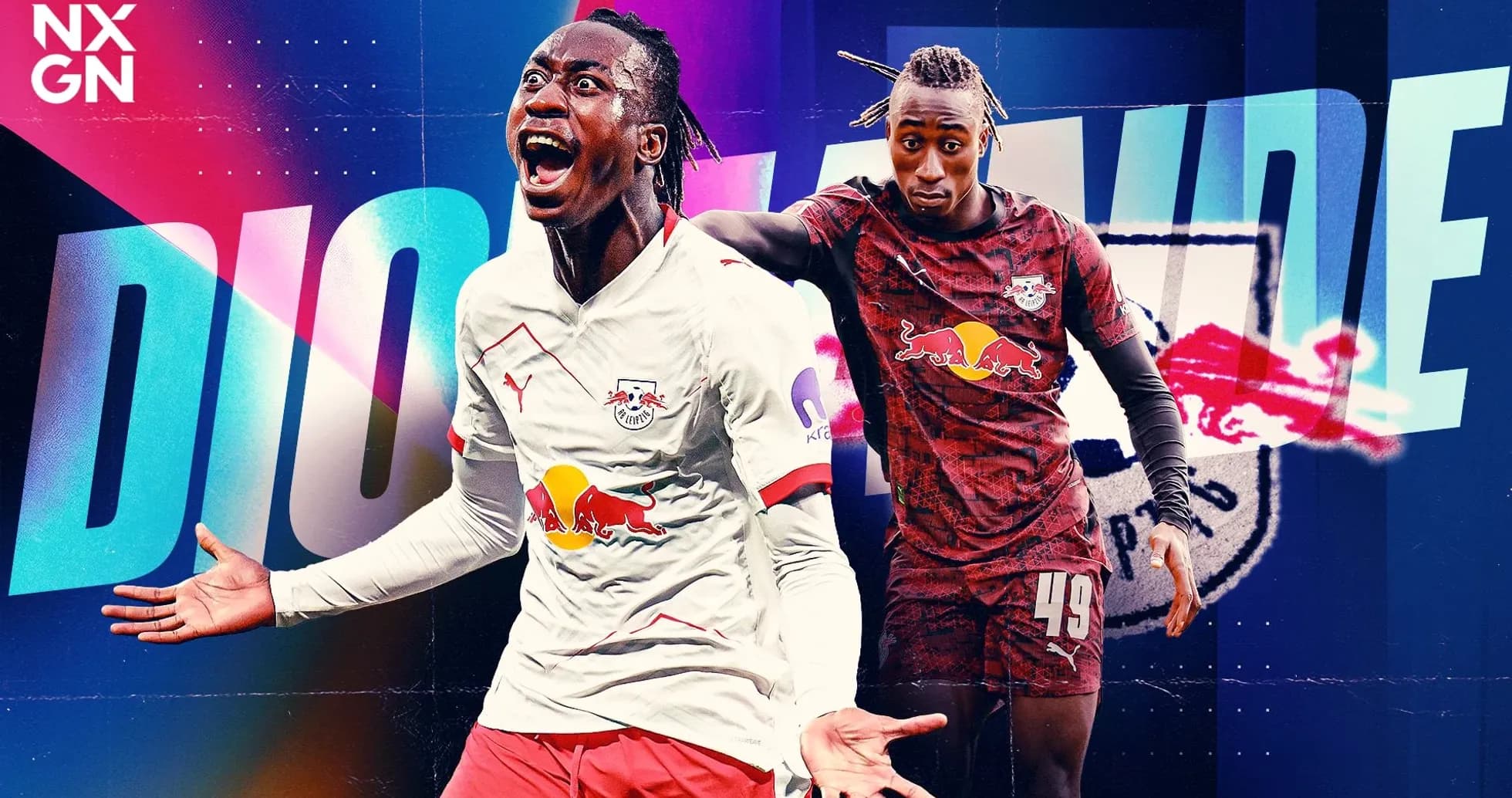
Real Madrid have chased wingers of every shape and style in the post-Cristiano era, but Diomande arrives cut from a different cloth. He is not Vinicius, gliding and stitching attacks together with pauses and feints. He is something far more direct. A straight line drawn at full speed.
What defines him is impact. Vertical, ruthless impact.
The numbers paint the outline, the pitch fills in the colour. At the last World Cup he was clocked at 34.7 km/h – blistering by any standard, even if it sits just behind Kylian Mbappé’s 37.6 km/h. You feel that speed in how he plays: sharp, precise, always looking to attack the space in front of him rather than dance around it.
And then there is the dribbling. In the Bundesliga last season, Diomande completed 118 successful dribbles from 213 attempts. That’s almost double the tally of the league’s next-best dribbler, Michael Olise, who finished with 65 from 149. Those are not the numbers of a winger who just hugs the touchline and recycles possession. Those are the numbers of a player who lives off confrontation.
Right or left, he goes at you. The question is how.
The Right Wing: Relentless Engine
Diomande is naturally a right-sided player, and Leipzig used him that way. The split is clear: 1,591 minutes on the right, just 478 on the left. That bias matters, because it explains why his right flank game looks so refined, so patterned.
On the right, he often starts wide, chalk on his boots, receiving the ball to feet. He doesn’t rush it. He draws his marker out, sizes up the duel, and if the picture isn’t right, he resets and tries again. It’s a cautious aggression, the kind of play that wears a full-back down over 90 minutes.
Playing on his natural side, he looks to stretch the pitch, explode to the byline and then pull the ball back. He doesn’t rely on endless stepovers or tight-angled tricks. He beats defenders with power, with a sudden change of pace, with the simple brutality of a body that accelerates faster than theirs.
Cutting inside from that flank is different. His diagonal runs towards the centre don’t have the same surgical precision as a naturally left-footed winger like Olise. His left foot is still more tool than weapon. It served him well enough last season, producing several goals when he shifted the ball onto it late on the edge of the box, but you can see the difference. He tends to lean on it in those long, winding carries where momentum does half the work.
Yet this is where his game has found an edge. When defences sink deep and wall off the outside lane, Diomande doesn’t run out of ideas. He has created what feels like his own “escape route”: dragging defenders across, then attacking the front or weak side of the box with a cross. He bends the shape of the back line until it breaks.
The data on the right is emphatic. Per 90 minutes there, he:
- Attempts more dribbles (4.41 vs 3.23 on the left)
- Completes more crosses (0.91 vs 0.67)
- Plays more passes into the box (2.21 vs 1.48)
- Fires off more shots (1.7 vs 1.48)
- Generates higher expected goals (0.21 vs 0.16)
He also loses the ball more often (2.21 vs 1.48), a natural by-product of someone constantly forcing the issue.
This is the right-sided Diomande: a winger who manufactures chances through volume, repetition and pressure. He keeps coming, keeps driving, keeps forcing defenders into decisions they don’t want to make.
The Left Wing: Controlled Chaos
Shift him to the left, though, and something changes. The minutes drop, the freedom rises.
With fewer appearances on that side, you might expect a more conservative version of the player. You get the opposite. Diomande looks bolder, looser, more expressive when he starts on the left and leans on his weaker foot.
He still receives the ball wide, but not as frequently. Instead, he shows up more often where it hurts: inside the box. The numbers back that up – 7.8 touches in the opposition area per 90 on the left, compared to 6.51 on the right. Those are striker zones, not just winger zones.
Out there, he stops obsessing over the outside lane. He doesn’t rely as much on bulldozing past his man. His right foot becomes the blade. From the left he can cut inside to shoot or whip a cross, and that option gives him the courage to play more directly. You can see it in his dribbling: he trusts it more, backs himself to beat players and drive into the heart of the pitch.
Two metrics jump off the page. On the left, despite fewer minutes, his expected goals rise to 1.17 (from 0.84 on the right) and his expected assists climb to 0.43 (from 0.21). The left flank doesn’t just let him create; it turns him into a chaos agent.
On the right, he builds pressure. On the left, he detonates it.
Even in limited time, a pattern repeats: his movement away from the ball. Diomande has turned what could be a limitation – operating on his weaker side – into a weapon. He drifts into tight pockets with his back to goal, tempts contact, then escapes with a quick lay-off and a one-two. The moment the ball leaves his foot, he’s gone, bursting into the space behind. With that acceleration and grass in front of him, he becomes almost impossible to contain.
Work Without the Ball
For all the talk of dribbles and sprints, Diomande’s value without the ball might be what most appeals to a coach who demands intensity.
His defensive work barely shifts whether he plays right or left. What stands out is his energy, the way he presses the instant possession is lost. He doesn’t just harry; he wins.
Among Bundesliga forwards with at least 1,000 minutes, he led the league in ball recoveries with 148. He ranked second in pass interceptions (16) and fourth in successful tackles (19). Those are midfielder numbers dressed up in a winger’s body.
At set pieces, he keeps things simple, holding his position, waiting. The moment his side win the ball, he snaps to life. Transition is his playground.
On the counter, he often takes up a central lane, ready to spring. That’s where his dribbling turns lethal, especially when he can race into the space behind a defence rather than receive to feet. One pass, one stride, and he is already accelerating into the kind of gaps that once belonged to Cristiano Ronaldo and Ángel Di María in a different Real Madrid era.
The Old Madrid Weapon, Reloaded
Under José Mourinho, Madrid’s counterattack became a global reference point: three touches, 70 metres, goal. Diomande carries the raw material to revive that weapon in a modern form. Speed in open field. Relentless pressing. A dribbling profile that can bend defensive lines from either side.
The debate now is not whether he fits that identity. It’s where you unleash him.
Do you pin him to the right, where he grinds teams down with volume, crosses and constant surges? Or do you flip him to the left, where he drifts into the box, tilts the pitch inside and turns games into a storm of shots and cut-backs?
Real Madrid know what those spaces look like. The question is simple, and anything but trivial: will Diomande carve them open from the right flank, or tear through them from the left?