Dusan Vlahovic: £30m Free Agent Still Without a Club
By late July, the free-agent market is usually picked clean. The smart operators move early, the stragglers scramble, and the better players who’ve been released already have a new badge on their chest or at least a contract on the table.
Yet the most valuable free agent of this summer is still training alone.
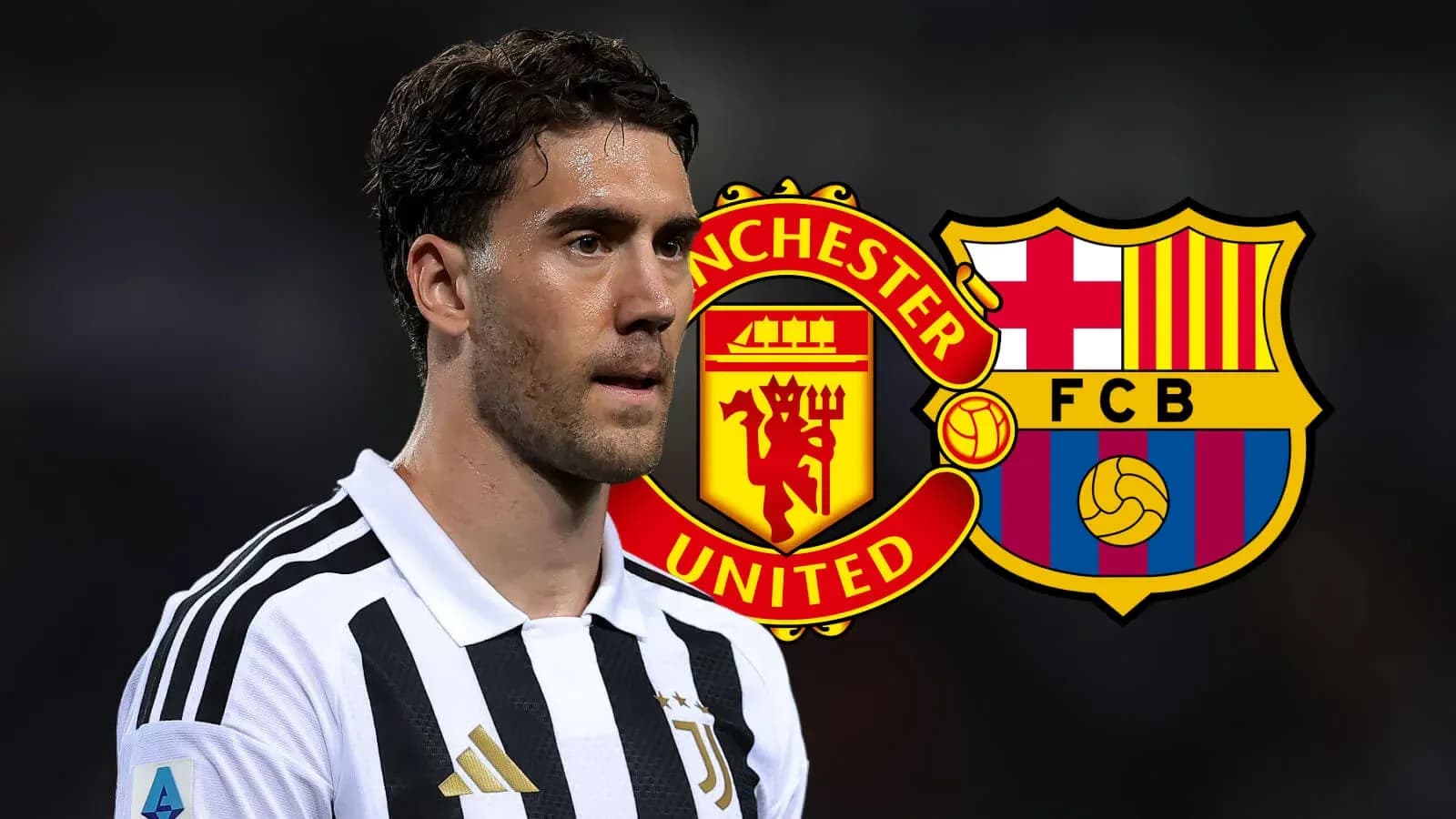
Dusan Vlahovic, 26 years old, eight full Serie A seasons behind him, no club.
A striker in his prime, without a team as August looms. It feels wrong, almost like a clerical error in the transfer market.
A £30m free agent with no takers
Vlahovic has just closed the book on four-and-a-half turbulent years at Juventus, after three-and-a-half at Fiorentina. That’s a body of work most forwards would happily frame: six straight seasons hitting double figures, a reputation as a penalty-box bully, and a highlight reel that shows goals with both feet, towering headers, and the occasional vicious free kick.
Transfermarkt still values him at around £30m, the priciest free agent left on the shelf. On paper, that should make him irresistible. On the phones of sporting directors across Europe, he is anything but.
There are links, of course. There always are. Manchester United’s name has been thrown into the conversation. Barcelona’s too. But these are whispers, not negotiations. No agreements, no medicals booked, no private jets waiting on the runway.
For a player of this profile, the silence is deafening.
Good, but not what he was meant to be
The problem with Vlahovic is not that he’s bad. It’s that he was supposed to be brilliant.
At Fiorentina, he looked like the next great No 9 off the Balkan production line. Arsenal chased him. Juventus committed up to €80m to bring him to Turin just as he turned 22, convinced they were buying their goalscorer for the next decade.
He hasn’t collapsed. He just hasn’t exploded.
His best full season for Juventus brought 18 goals in 2023-24. Last season, he managed only 10. Across his time in Turin he averaged about 15 goals a year. Respectable. Solid. But not the 20-plus machine Juve thought they were signing.
That gap – between “good” and “elite” – is precisely where the doubts live. He can lead the line, hold the ball up, run in behind, carry it on the break. He can finish. Yet his link-up play can be clunky, his pressing inconsistent, his form streaky. Coaches know what he can do; they’re less sure how often he’ll actually do it.
There is still time for him to grow, but not as much as there once was. And it is hard to develop when you don’t have a club.
Paid like a star, producing like a nearly man
The biggest obstacle, though, sits on the wage slip.
Last season Vlahovic was not just Juventus’ top earner; he was the highest-paid player in all of Serie A. Twenty-two players on lower salaries outscored him.
His pay packet reflects the player people thought he would become. His output reflects the player he is now.
That mismatch scares the superclubs. When his name was put to Barcelona – a team openly hunting for a striker – the hesitation was immediate. Not because they don’t need a No 9, but because they’re not sure he’s the right one to justify that level of commitment.
Clubs a tier below, the ambitious rebuilders and fallen giants – the bracket where Manchester United currently sit – face a different dilemma. They could afford him. They might even talk themselves into needing him. But how far do you go, financially, for a forward who might never quite reach the ceiling he was once tipped for?
Even Juventus, who know him better than anyone, baulked. According to Tuttosport, Vlahovic wanted €8m a year, roughly £132,000 per week. For a club trying to reset its wage structure, that was a step too far.
“With these figures, he won’t remain in Italy, so it is only fair and legitimate that he is seeking a different type of salary,” said Giorgio Chiellini, now a Juventus director and once Vlahovic’s teammate. The logic is clear. So is the impasse.
Pride, compromise and the ticking clock
There is a way out. It is as simple, and as complicated, as swallowing pride.
Drop the demands. Accept that the market no longer sees you as an €8m-a-year striker. Prove everyone wrong from there.
Reports suggest Vlahovic is prepared to bend, but selectively. He would ask for less from a Barcelona than from a Besiktas, one of the other names hovering around the conversation. The logic is obvious: take a cut for a superclub, hold firm for a lesser stage.
From the club side, though, that calculation cuts both ways. If they compromise on wages, are they also compromising on quality? Are they paying “almost elite” money for “almost elite” performances?
The irony is brutal. There are only so many truly top-tier strikers in the game, and even fewer that clubs are willing to sell. That scarcity should make someone like Vlahovic – good, proven, free – increasingly attractive as the window drags on and anxiety rises.
Yet here he is, unattached, as pre-season friendlies give way to competitive fixtures.
Waiting for the panic buy
The calendar offers him one small advantage. As a free agent, Vlahovic can sign after the transfer window shuts. He does not have to beat the deadline. Theoretically, he can wait everyone out.
In reality, a striker of his age and ambition should be desperate to get going, to join a squad, learn a system, and hit the ground running. Every week he spends in limbo is a week lost in a career that was meant to be surging, not stalling.
Sooner or later, a club will panic. An injury, a misfiring forward line, a boardroom tired of watching chances go begging – something will break. The phone will ring. The question is not whether Vlahovic will get another chance at the top level. It’s what version of him will show up when he does.