Egypt Achieves Historic World Cup Knockout Win Against Australia
Under the roof of the Dallas Cowboys’ vast arena, with 70,000 voices ricocheting off the steel and glass, Egypt finally walked through a World Cup door that had always seemed bolted shut.
They did it the hard way. They did it on penalties. And they did it with Mohamed Salah in tears.
Egypt hold their nerve from the spot
Tony Popovic played his last card in the most brutal of lotteries, sending on veteran goalkeeper Mathew Ryan purely for the shootout. It was a bold, late gamble. It unravelled almost immediately.
Harry Souttar, usually so assured, strode up first for Australia and lashed his penalty high into the stands, the miss swallowed by a wall of whistles from the Egypt end. The Socceroos were behind before the contest had even settled into its rhythm.
From there, five takers in a row found the net. Salah, who had limped into this knockout tie on the back of a hamstring strain and a subdued 90 minutes, walked up with the weight of a nation and the history of seven African titles on his shoulders. His response was ice-cold, a textbook finish that barely rippled the net.
Australia clung on, hoping for a slip. It came from an 18-year-old. Lucas Herrington, thrown into the glare of a World Cup shootout, stepped up and crashed his kick against the bar. The sound was as cruel as it was final.
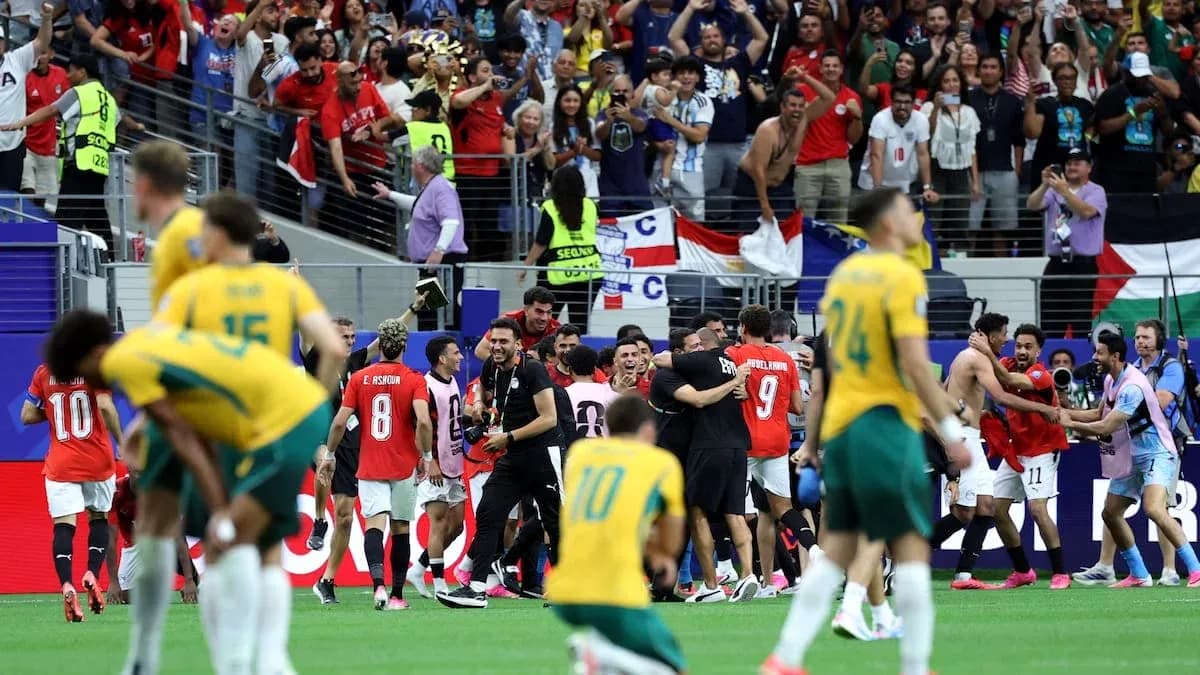
Abdelmaguid then took the long walk. One strike to send Egypt through, one strike to end Australia’s resistance. He rolled it home with calm precision, sparking wild Egyptian celebrations and leaving Salah, usually the picture of control, in tears of joy as Australian players slumped to the turf.
Egypt had their first ever men’s World Cup knockout win. Australia’s hearts were broken.
An early blow and a familiar struggle
The evening had started with a jolt. Egypt, who had only just claimed their first World Cup win in the group stage against New Zealand, looked tentative at the back but ruthless in front of goal.
With less than five minutes gone, Cristian Volpato almost tore up the script. The attacker, who switched allegiance from Italy to Australia on the eve of the tournament, rattled the top of the crossbar with a fierce effort. It was a warning, not a breakthrough.
Slightly against the run of play, Hossam Hassan’s side then landed the first punch. Nestory Irankunda lost his man at the far post, Karim Hafez delivered the cross, and Emam Ashour – unmarked and unhurried – buried his header after 13 minutes. His second goal of the tournament, and a dagger to a team that had scored only twice in the group phase.
For a shot-shy Australia, the onus was suddenly on them to chase the game in a knockout tie they had never previously won at a men’s World Cup. The vast crowd hummed, Egypt’s fans sensing something historic, the Socceroos searching for rhythm.
They created little. Their first effort on target came 10 minutes before half-time, Aziz Behich driving forward from full-back only to fire tamely at Mostafa Shoubir. The Egypt goalkeeper, son of former national team keeper Ahmed who played at the 1990 World Cup, gathered comfortably.
The half ended with another setback for Australia. Jordan Bos, one of the quickest players at the tournament and a key outlet on the flank, was left in a heap after a flying challenge from Rabia. He could not continue and Kai Trewin replaced him at the break, a significant blow to Australian plans.
Salah, the 34-year-old talisman and former Liverpool superstar, barely flickered in that opening period. Hamstring strain, tight marking, and a scrappy, attritional game kept him on the edges of the contest.
Australia hit back as tension tightens
Seconds after the restart, Egypt should have tightened their grip. Omar Marmoush, the Manchester City attacker, slid in at close range and somehow pushed the ball wide. It felt like a miss that might haunt them.
The punishment arrived soon enough. Egypt’s coach had warned about Australia’s physicality, and the equaliser came from exactly that source. An in-swinging Socceroos free-kick was whipped into the box, bodies crashed together, and Mohamed Hany – under pressure and facing his own goal – could only glance a header past Shoubir.
It was his second own goal of the tournament. For Australia, it was a lifeline. For Egypt, a familiar sense of jeopardy.
From that moment, the game tilted into a nervous, fractious battle. Both sides knew the stakes. Neither had ever won a men’s World Cup knockout match. Every loose touch drew a roar, every tackle a howl.
Salah stayed largely on the margins but still flickered into life when it mattered. Deep into added time at the end of the 90, he helped knit together a move that ended with Ramy driving goalwards. Patrick Beach, Australia’s keeper up to that point, flung himself across his goal to make a superb save and drag the tie into extra time.
Extra time, then the cruel finish
Egypt finished normal time on top and carried that momentum into extra time. Salah finally found a pocket of space, cutting in to shoot on his weaker right foot, only to blaze over. It felt like a sign: this game was heading for penalties whether anyone liked it or not.
Neither side could find the decisive touch in the final half hour. Legs tired, minds tightened, and the prospect of a shootout loomed larger with every clearance and miscontrolled pass.
When the whistle went, Popovic made his move, summoning Ryan in a last roll of the dice. The decision underlined the stakes, the trust in experience, the belief that one save might rewrite history.
Instead, the night belonged to Egypt’s takers and to a group of players who refused to blink. Souttar’s miss set the tone, Herrington’s misfortune sealed Australia’s fate, and Abdelmaguid’s winner carved Egypt’s name into a new line of World Cup history.
Salah, who had drifted through long stretches of the match, walked away with tears streaming down his face and a country roaring his name. Australia walked away with the familiar ache of a near-miss and a lingering question: when the next chance at a knockout breakthrough comes, will they be ready to take it?