Egypt Secures Historic World Cup Win Against Australia
In Dallas, under the heavy heat and even heavier stakes, Egypt finally stepped through a door that had always been locked to them. A first-ever World Cup knockout victory, dragged out of a tense, scrappy round-of-32 tie against Australia and sealed in a penalty shootout that will live long in Egyptian football history.
The scoreline will say 1-1 after extra time, 4-2 to Egypt on penalties at Dallas Stadium. It barely scratches the surface.
A breakthrough, 32 years in the making
For long stretches, this was not a classic. It was tight, anxious, almost claustrophobic. Both sides knew what was at stake; both played like it.
Egypt struck first. In the 13th minute, Emam Ashour timed his run and his leap to perfection, meeting a cross with a firm header that snapped past the goalkeeper and ignited the Egyptian end. One chance, one ruthless finish. A goal that seemed to release decades of frustration.
Australia absorbed the blow and went to work. They didn’t panic, they probed. Set pieces, crosses, long diagonals aimed at the towering figures in the box. Egypt, compact and disciplined, tried to pick their moments on the break.
The pressure finally told early in the second half, but in the cruelest way for Egypt. Mohamed Hany, attempting to clear, diverted the ball into his own net 10 minutes after the restart. In an instant, the lead was gone, the match reset, and a night that had threatened to become straightforward for Egypt turned into a test of nerve.
From there, the game frayed. Tackles flew in, passes went astray, both teams wrestled with fatigue and fear. Extra time brought more tension than chances. Neither side found the clarity or composure to settle it from open play.
So it went to penalties.
Penalties, and a nation holds its breath
Shootouts are football’s cruel lottery, but Egypt approached this one with a steel that suggested something more deliberate. They had waited too long for this stage to let it slip from 12 yards.
Hossam Abdelmaguid stepped up for the decisive kick. Before him, Australia had blinked. Harry Souttar missed. Lucas Herrington missed. Two heavy, shuddering blows to Australian hopes.
Abdelmaguid rolled in the winning spot-kick with the calm of a man taking a goal-kick in training, not sealing a World Cup knockout win. The net rippled, the stadium erupted, and Egyptian players sprinted in every direction, some collapsing, some leaping, all of them fully aware of what they had just done.
Egypt, at last, into the last 16. A date now awaits with Argentina or Cape Verde. A new frontier.
A victory with a wider echo
What followed on the pitch said as much about the night as the football itself.
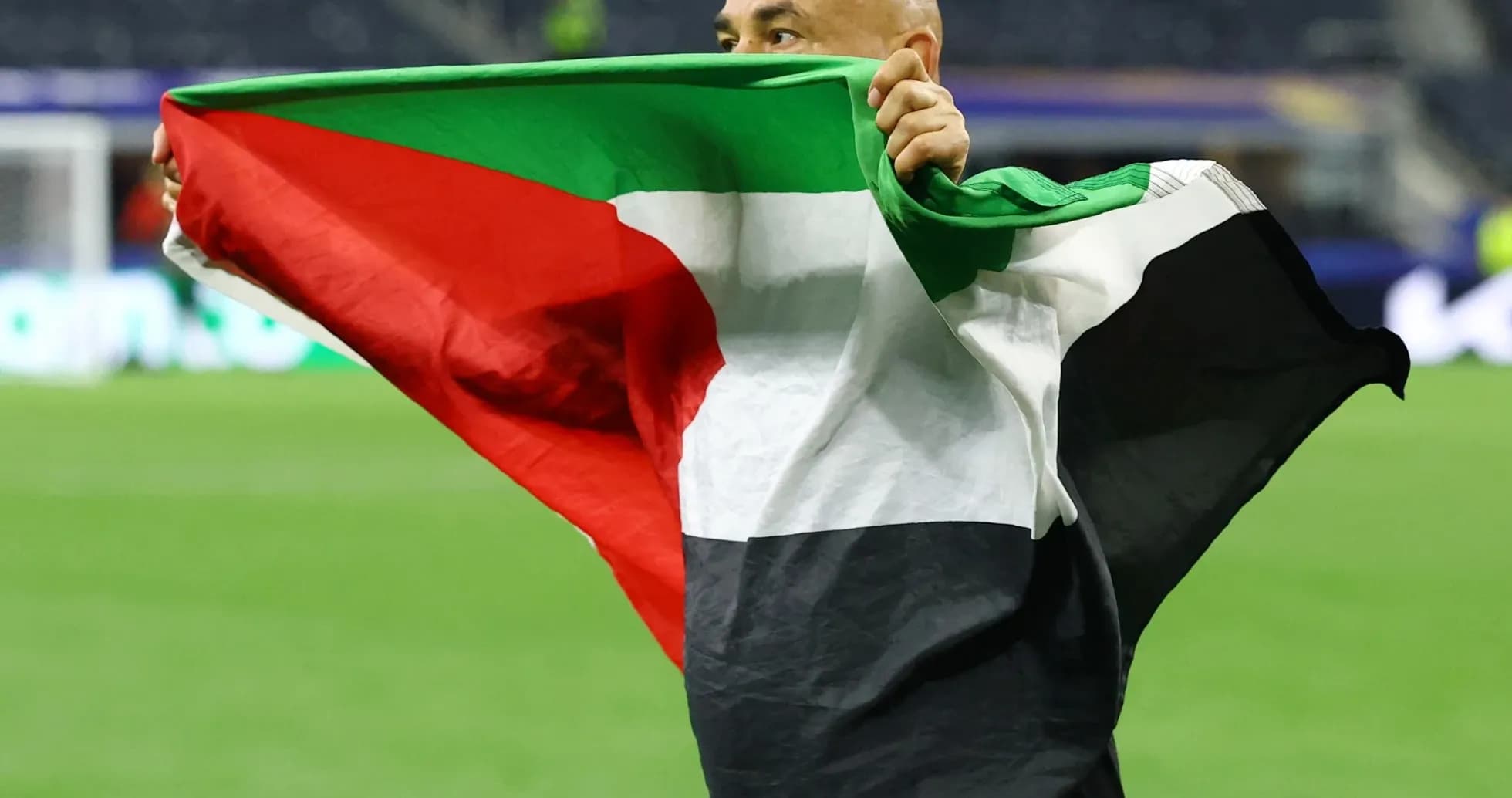
Head coach Hossam Hassan walked out carrying both the Egyptian and Palestinian flags. Around him, his players dropped to the turf in prostration, a collective gesture of thanks and release. This was not just about a football match; it was about identity, solidarity, and a region watching together.
Speaking afterward, Hassan made the dedication clear.
“May God grant them [the Palestinians] victory, may God have mercy on their martyrs,” he told reporters. “I’m saying to them: I’m dedicating this victory to the Egyptian people and Palestinian people, those kind and honourable people.”
The reaction was immediate and emotional across the Arab world, but nowhere more so than in Gaza.
From a besieged strip scarred by bombed buildings and makeshift tents, Palestinian fans poured onto social media to share in the moment. Gaza-based Tamer Nahed wrote on X that he was following this World Cup with a level of excitement he had never felt before. Egypt’s win, he said, had brought thousands out from tents and shattered homes to watch together.
Faces painted with Egypt flags. Children smiling in front of rubble. Crowds gathered around screens, cheers cutting through the ruins. For a few hours, football gave people a brief, defiant slice of normality.
“Faces lit up with smiles, cheers filled the air, and it felt as if everyone had decided to give themselves a moment of life despite everything surrounding them,” Nahed wrote.
The images from Gaza told the same story: people huddled around a broadcast, flags raised against a backdrop of destruction, celebrating a team that had chosen to carry their flag on the world’s biggest stage.
Tension off the pitch
This was not the only confrontation involving Egypt on the day.
Hours before kick-off, members of the national team were involved in an altercation with police at their Dallas hotel, a clip that quickly went viral online. According to the Egypt national team, a Dallas police officer pushed team director Ibrahim Hassan and player Trezeguet as they tried to take a photo with a fan.
The Dallas Police Department later said the situation had been resolved at the scene. No further action followed, and the incident did not spill into the match itself, but it added another layer of edge to an already charged occasion.
A new chapter, and a heavier shirt
By the time the stadium lights dimmed and the stands began to empty, the magnitude of Egypt’s achievement was still sinking in. Their first World Cup knockout game. Their first World Cup knockout win. A shootout survived. A continent and a cause embraced.
Now comes the hard part. Argentina or Cape Verde await in the last 16, and with this victory, the Egyptian shirt will feel heavier, not lighter. Expectations have shifted. The world has taken notice.
But for one night in Dallas, and for countless people watching from Cairo to Gaza, that weight felt like pride.