Eichhorn Chase Reveals Dortmund’s Transfer Fault Lines
Fabian Eichhorn has not kicked a ball in the Bundesliga yet, but he is already reshaping power lines in Germany’s transfer market – and inside Borussia Dortmund.
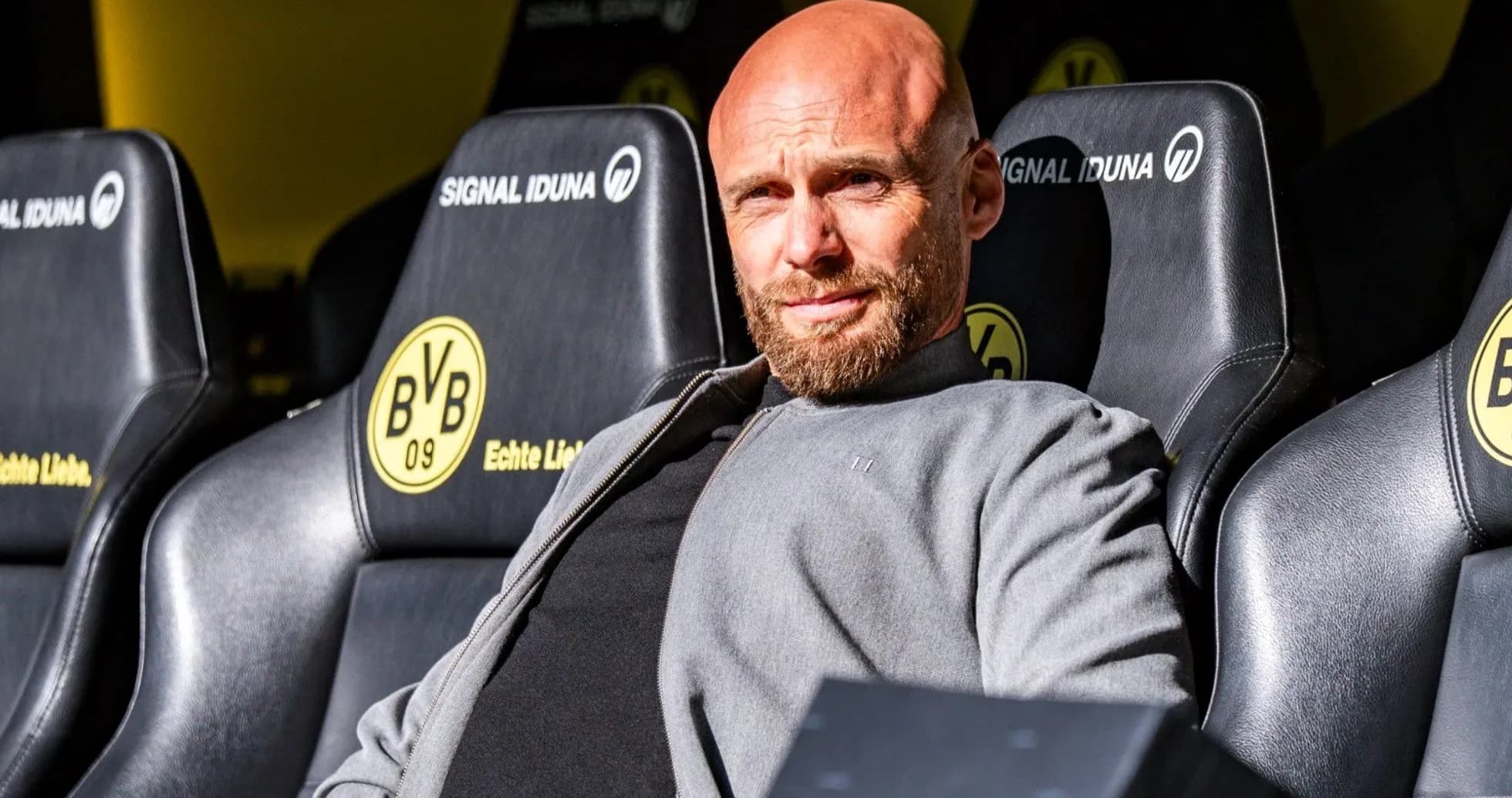
According to Sport Bild, former sporting director Sebastian Kehl had his doubts about signing the 16-year-old defensive midfielder. Ole Book, his successor, does not. For Book, Eichhorn is the headline act of next summer’s window, the player around whom he wants to stamp his authority on BVB’s future.
The key moment came in April. Book and Eichhorn sat down for a face‑to‑face meeting, a conversation that, by all accounts, changed the tone of the entire pursuit. Dortmund’s chances of landing one of the most sought‑after teenagers in German football reportedly rose sharply after that encounter.
From scepticism to seduction
The shift is striking because, not long ago, the mood around Dortmund and Eichhorn looked very different. Bild had reported that the Berlin midfielder was unimpressed by BVB’s results‑driven, less imaginative football under Niko Kovac. For a young playmaker who thrives in possession and tempo control, that mattered.
Book’s intervention altered the picture. The same club Eichhorn had viewed as too rigid and pragmatic suddenly appeared, in his eyes, as an attractive next step. Not because the football has transformed overnight, but because the sporting project was laid out with clarity and conviction.
For Book, that meeting was more than a sales pitch. It was a chance to correct what many inside the club see as a glaring error from the previous regime.
The Fabio Silva lesson
Sport Bild frames it bluntly: Kehl never once met Fabio Silva in person before sanctioning a move worth nearly €23 million from Wolverhampton Wanderers last summer. When the Portuguese forward turned up for his medical, he did so with a recently operated adductor. Club staff were stunned. The transfer went through anyway.
Silva has since shown flickers of quality, but little more. He is a super‑sub, an impact option, not the starter Dortmund hoped would challenge or even supplant Serhou Guirassy. Missed chances, limited minutes, and rumours that he wanted to leave BVB after just a few months have turned that deal into a cautionary tale.
Book appears determined not to repeat it. With Eichhorn, there is no distance, no anonymity. The new sporting boss is front and centre, selling a vision directly to the player and his family.
Berlin’s anchor, not a stopgap
Eichhorn’s situation at his current club could hardly be more different from Silva’s at Dortmund. At Berlin, the U17 Germany captain has already become a cornerstone.
This season has not been straightforward. A serious syndesmotic ligament injury sidelined him for nearly three months. A red-card suspension added to the frustration. When he has been available, though, coach Stefan Leitl has built his midfield around him.
Berlin missed promotion again, but Eichhorn’s performances cut through the gloom. He anchored the centre of the pitch, dictated rhythm, and provided a rare bright spot in an otherwise stuttering campaign.
The contract reflects how highly he is rated: it runs until 2029. Yet the key detail is the release clause. For a fixed €12 million, he can walk away this summer. In today’s market, that figure is a flashing green light for Europe’s elite.
No stepping stones, no compromises
What makes this chase more complex is not just the competition, but the player’s own stance. Sport Bild reports that Eichhorn and his family are approaching the decision with unusual composure for a teenager. They are not looking for a stepping‑stone club.
Any move this summer must tick two boxes: regular Champions League football and immediate, meaningful minutes. Not promises, not vague pathways. Actual game time in a side that competes at the highest level.
That rules out a loan back to Berlin. It also makes a season parked at a mid‑table Bundesliga outfit unlikely. Eichhorn does not want to be a project; he wants to be a piece of the puzzle from day one.
One major market is off the table already. Financially dominant English clubs cannot enter the race because of Brexit regulations that prohibit them from signing players under 18. Eichhorn will not reach that age until July 2027. The Premier League can watch, but not act.
Germany’s giants circle
With England sidelined, the battlefield is domestic. Bayern, Dortmund, RB Leipzig and Bayer Leverkusen are locked in a fierce race. Eintracht Frankfurt, once seen as a dark horse, has slipped out of serious contention.
For a long stretch of this window, Leverkusen were widely viewed as favourites. The Werkself have two major selling points.
- First, style. Their dominant, possession‑heavy game is tailor‑made for a technically assured holding midfielder. For a player who wants the ball and responsibility, Leverkusen’s blueprint is hard to ignore.
- Second, the Ibrahim Maza factor. The former Hertha talent joined Leverkusen last summer and has progressed exactly as planned. Eichhorn and Maza are said to be in close contact, and the younger man has watched his friend’s development closely. It is one thing to be impressed by a club’s philosophy from afar; it is another to see someone you know thriving inside it.
Just as Leverkusen seemed to be edging ahead, Bayern pushed back into the frame.
Bayern’s pull, Kompany’s promise
Bayern Munich can offer what no other German club can: the full weight of a European superpower. Trophies, Champions League nights, a global stage – the usual arsenal. This time, though, they have something else to lean on.
Vincent Kompany’s recent work has undercut the old argument that young players struggle to break through on the banks of the Isar. Over the past two years, his sides have played with more fluidity, more bravery in possession, and a greater willingness to trust emerging talent than Bayern have shown in some time.
According to recent reports, Eichhorn remains “on Bayern’s list” for the coming season. Internally, they are said to “definitely” want him and view him as “a player for the future”. For a 16‑year‑old who demands both Champions League football and real minutes, that combination of present prestige and future planning carries serious weight.
Dortmund’s gamble
This is the backdrop against which Ole Book is trying to pull off his first major coup at BVB. He is fighting not only Bayern’s aura and Leverkusen’s football, but also Dortmund’s own recent image – a club that has too often stumbled in the market, from medical surprises to misjudged roles.
Eichhorn will not choose based on sentiment. He and his family have made that clear through their demands: no stopovers, no half‑measures, no glorified academy year in a senior squad.
For Dortmund, for Bayern, for Leverkusen and Leipzig, the question is brutally simple: who can look a 16‑year‑old in the eye and convincingly promise both the ball and the biggest stage?
Whoever answers that best will not just win a signature. They may secure the heartbeat of their midfield for the next decade.