England's World Cup Concerns Grow After Defeat to Japan
Thomas Tuchel wanted clarity. He got that — and a few headaches to go with it.
Eight weeks out from naming his World Cup squad, the England manager watched his patched‑up side lose 1-0 to Japan at Wembley, a result that did more to expose fault lines than to confirm solutions.
This was supposed to be the sharper of England’s two friendlies. The plan was clear: a 35-man group split across two camps, a second-string outfit against Uruguay on Friday, then a stronger core restored for Japan. Instead, the squad list turned into a casualty report.
Declan Rice and Bukayo Saka withdrew. John Stones followed. Harry Kane was in the stands with a minor injury. Jude Bellingham stayed on the bench. By kick-off, Tuchel’s “A” side looked suspiciously like another experimental XI.
Mitoma strikes, England stall
The Euro 2024 runners-up saw plenty of the ball. They just did very little with it.
England dominated possession but moved it too slowly, too predictably. The patterns were there, the penetration was not. Japan, well-drilled and disciplined, waited for their moment — and when it came, Kaoru Mitoma took it.
His first-half strike, a composed, clinical finish, settled the game and delivered Japan a first-ever win over England. It also underlined a brutal truth: this England side, even one missing stars, can still be out-thought and out-fought when the tempo drops.
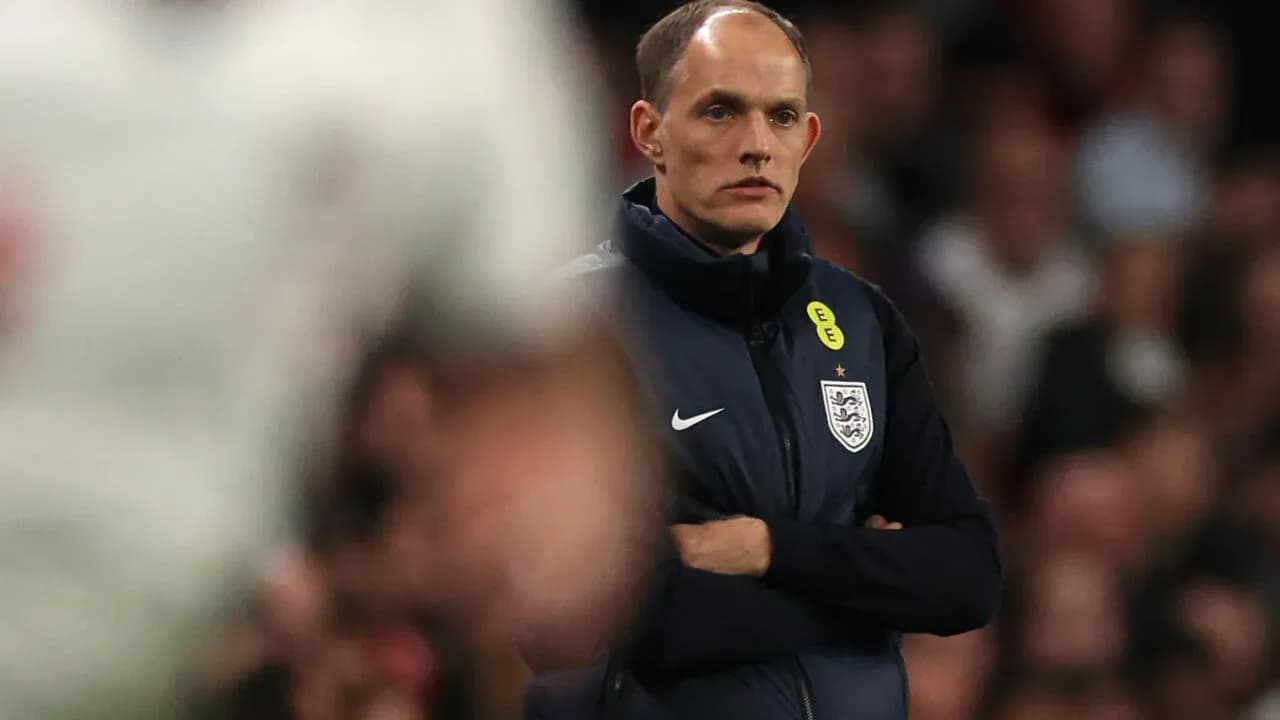
Tuchel cut a frustrated figure, but he did not hide behind the scoreline. He pointed straight at the calendar.
“We knew that we had a tough exam to play for in this window because our players are heavily invested in club football, they're heavily invested in European football and in the physically toughest league that there is,” he said, noting the toll of a season reaching its peak.
He stressed the quality of the opposition, too.
“We played against two top-20 teams, well-drilled, very good opponents, who arrived in the best line-up. We had seven, eight injuries who had to leave camp. It's not an excuse, it's just an explanation why things are not perfectly smooth and maybe perfectly on the highest level that we expect.”
The message: context matters. The concern: the clock is still ticking.
Kane’s shadow over the attack
If one theme dominated this international window, it was absence. Specifically, the absence of Harry Kane.
England’s captain has been extraordinary for Bayern Munich this season, with 48 goals in 40 matches. Those numbers are not just impressive; they are structural. Teams are built around that kind of output.
Tuchel tried to road-test alternatives. Dominic Solanke started one game, Dominic Calvert-Lewin the other. Both worked, both ran, both offered flashes. Neither came close to replicating Kane’s presence.
“Bayern Munich in the absence of Harry Kane has not the same threat,” Tuchel said. “No team in the world has the same threat. It's just normal.”
Normal or not, it leaves England walking a tightrope. Kane is irreplaceable, and this camp only reinforced that reality. If he is fit in the United States, England look like genuine contenders. If he is not, the drop-off is stark.
Bellingham rises without playing
Oddly, one of the big winners of the week never set foot on the pitch against Japan.
Jude Bellingham watched from the bench as England laboured in the final third. His absence was deafening. The Real Madrid midfielder’s ability to drive a game, to change its temperature in a single surge, suddenly felt priceless.
In his place, Aston Villa’s Morgan Rogers was given a chance to audition for the No 10 role. He showed glimpses — a touch here, a turn there — but nothing sustained enough to suggest Bellingham’s grip on that position is under any real threat.
Phil Foden and Cole Palmer, both tasked at various points with adding edge and invention, never quite caught fire either. Across the two games, neither did enough to slam the door on rivals for a starting berth when the World Cup begins.
Midfield, defence, and the unanswered questions
Rice’s withdrawal hurt England more than Tuchel might have liked to admit. The midfield lacked its usual anchor, its reference point.
The upside came in the form of Elliot Anderson. The Newcastle midfielder did enough to suggest he can be a credible partner for Rice in the engine room, showing he belongs at this level. That, at least, will have encouraged the England manager.
The picture behind them is less settled. Marc Guehi and Ezri Konsa endured some shaky moments against Japan, yet both remain strong candidates to start against Croatia in Dallas on June 17. They are in the frame by merit, but also by necessity, with the pecking order at centre-back still not fully locked in.
Left-back is even more open. No one in this camp nailed it down. For a team with ambitions of going deep into a World Cup, that is not a trivial loose end.
Clarity, but not comfort
Tuchel insisted the camp had value, even if the scorelines — a 1-1 draw with Uruguay and defeat to Japan — were underwhelming.
He described himself as “bullish” and spoke of “more clarity” over his squad. The performances may not have thrilled, yet they gave him information: who can cope, who needs more time, who might be a risk when the stakes rise.
Still, the next two months will test his nerve.
“It will be scary to watch TV on the weekend because from now on every muscle injury can mean that a player misses out,” he admitted.
He was adamant, though, that these friendlies will not define England’s World Cup.
“This camp will not define us and we have two months to digest it, to take the learnings, to nominate our squads, to get the players back healthy,” he said. “Hopefully they stay healthy, we have the full choice and then we will pursue our dream from June.”
The dream is clear: a first World Cup since 1966. The path, right now, is anything but.