England's World Cup Journey: A Quiet Milestone
Here’s the awkward truth for England: it still probably isn’t coming home.
Strip away the noise, the songs, the flags taped to pub windows, and the numbers are blunt. It is far more likely England leave this World Cup in fourth place after defeats to Argentina and France than stride out of Atlanta having beaten Lionel Messi and then Spain to lift the trophy.
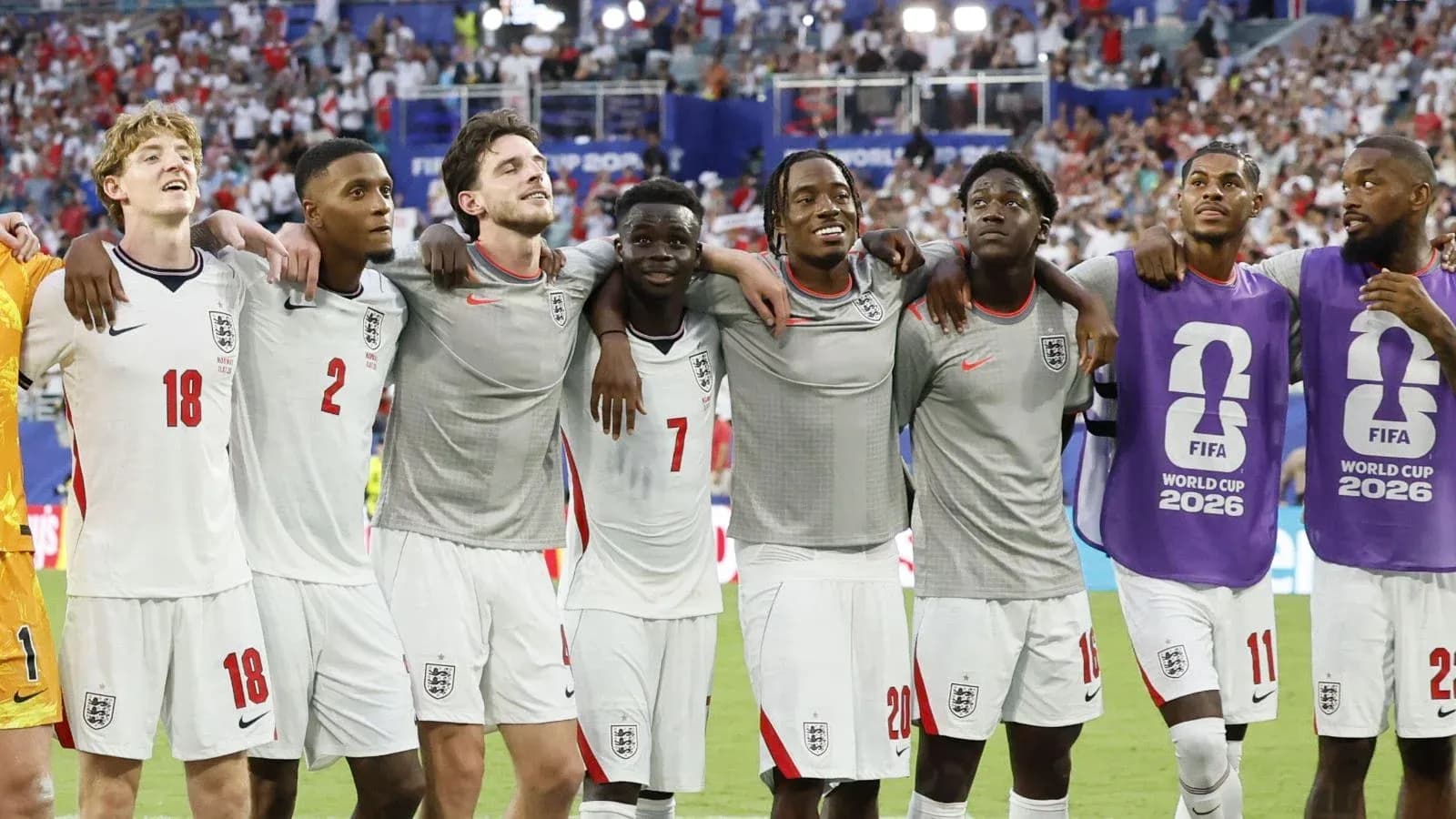
And yet, almost regardless of what happens against Argentina tonight, this is already England’s second-best men’s World Cup of all time.
That line has not really landed, has it?
England’s quiet milestone
The default England World Cup script is familiar: a quarter-final exit, a sense of something slightly undercooked, and the coronation of a national scapegoat who must shoulder the failure until the next tournament. This time, that story has been ripped up.
They have gone further than most expected. They have done it outside Europe, in conditions that historically trip England up. Objectively, that matters. Reaching a semi-final away from your own confederation is a heavier lift than doing it on broadly home soil. This is already the deepest run England have ever made at a World Cup outside Europe.
It doesn’t quite feel like that. The performances haven’t always convinced. There have been flat spells, awkward spells, long spells where you wondered if they were about to slide back into that familiar pattern.
But then, look around. No one has glided through this tournament. Spain were dreadful against Cape Verde. France were shambolic for an hour against Senegal and then again for the entirety of their semi-final. Argentina, for all the aura and the Messi mystique, have been blessed with a relatively forgiving knockout path.
England’s flaws are simply magnified. You see every miscontrol, every sideways pass, every anxious spell because you are watching with your heart in your throat. If you’re English in England, or Scottish in Scotland, or – the toughest gig of all – Scottish in England, you live it in high definition.
Strip away that emotional zoom, and the picture shifts.
Hard to humiliate
There is another, less-discussed facet of England’s tournament record: they almost never get hammered.
Embarrassing exits? They’ve had a few. Humiliating nights against teams they really should beat? Also on the list. But genuine thrashings at major tournaments, the kind where the result is beyond doubt long before the final whistle? Almost unheard of.
Ignore the third-place play-off – and everyone should, because it is a ghost fixture that exists purely to torment tired legs and bruised egos – and since 1988 England have lost just one major tournament match by more than a single goal.
One.
Even that outlier, the 4-1 defeat to Germany at the 2010 World Cup, carried its own caveat. England were outclassed, yes, but the game would have been 2-2 at half-time had the officials not missed a goal so obvious it effectively shoved football down the road towards goal-line technology and the era of forensic officiating.
Think about the scale of that record. Since the start of the 1990s, England have failed to qualify for only two major tournaments. They have played in 17. They have not won any of them. And yet only once have they been genuinely routed.
This team does not tend to collapse. It does not tend to go under. It is why, short of a total dismantling by Messi and company, this World Cup will remain England’s second-best run, whatever happens next.
And they do not look like a team about to be dismantled.
The path and the noise
Of course, no England run is complete without a debate about the “easiness” of the route. This time, the complaints have been loudest from north of the border.
Scotland’s frustration is understandable. Knocked out of the same tournament four times, forced into a group with Brazil and Morocco, they have every right to feel bruised. But the argument that England have somehow been carried on a cushion of kind fixtures misses how seeded draws actually work.
If you sit in a lower pot, you are supposed to get sharks in your group. That is the deal. The seeded sides who end up with another top-10 nation alongside them, as Brazil did, are the unlucky ones. The likelier outcome is what England received: a group without another official top-10 team.
And those rankings, so often derided, suddenly become holy scripture when used to knock England’s progress. At the time of the draw, Croatia were ranked 10th. Panama were the highest-ranked team England could have drawn from pot three, behind only Norway – who were blocked from being grouped with both England and Croatia anyway.
So yes, England have yet to face a side officially ranked in FIFA’s top 10. That’s a quirk of the system, not a conspiracy. Croatia sit on that border. Mexico at the Azteca are a top-10 level test in all but name. And nobody, hand on heart, can say there are 10 better international teams than Norway right now.
The bracket has not magically opened up for England. They won their group, earned a third-placed opponent in the last 32, and met Mexico in the last 16 exactly as the seedings suggested. The semi-final line-up – the top four seeds all making it – tells its own story about how little chaos this tournament has actually served up.
Norway’s win over Brazil, achieved by being simply the better-drilled, more coherent side, stands as one of the few genuine jolts. Paraguay tugging down Germany’s lederhosen was another. England? They have just walked the road that was always in front of them.
Glory, even in failure
Now comes the hard part. Argentina, with their tournament scars and stubborn streak, then potentially Spain, with the slick cohesion of an elite club side.
The odds are not kind. To beat both would require England to scale heights they have only touched in flashes.
But if this ends in defeat, it will still be a different kind of England failure. Not the familiar, self-inflicted stumble. Not the quarter-final that fades into the same old montage. Something grander. Something heavier.
Glorious failure is still failure. It still hurts. It still lingers.
Yet in 60 years of hurt, there has never been an England failure quite like the one that might be coming now.