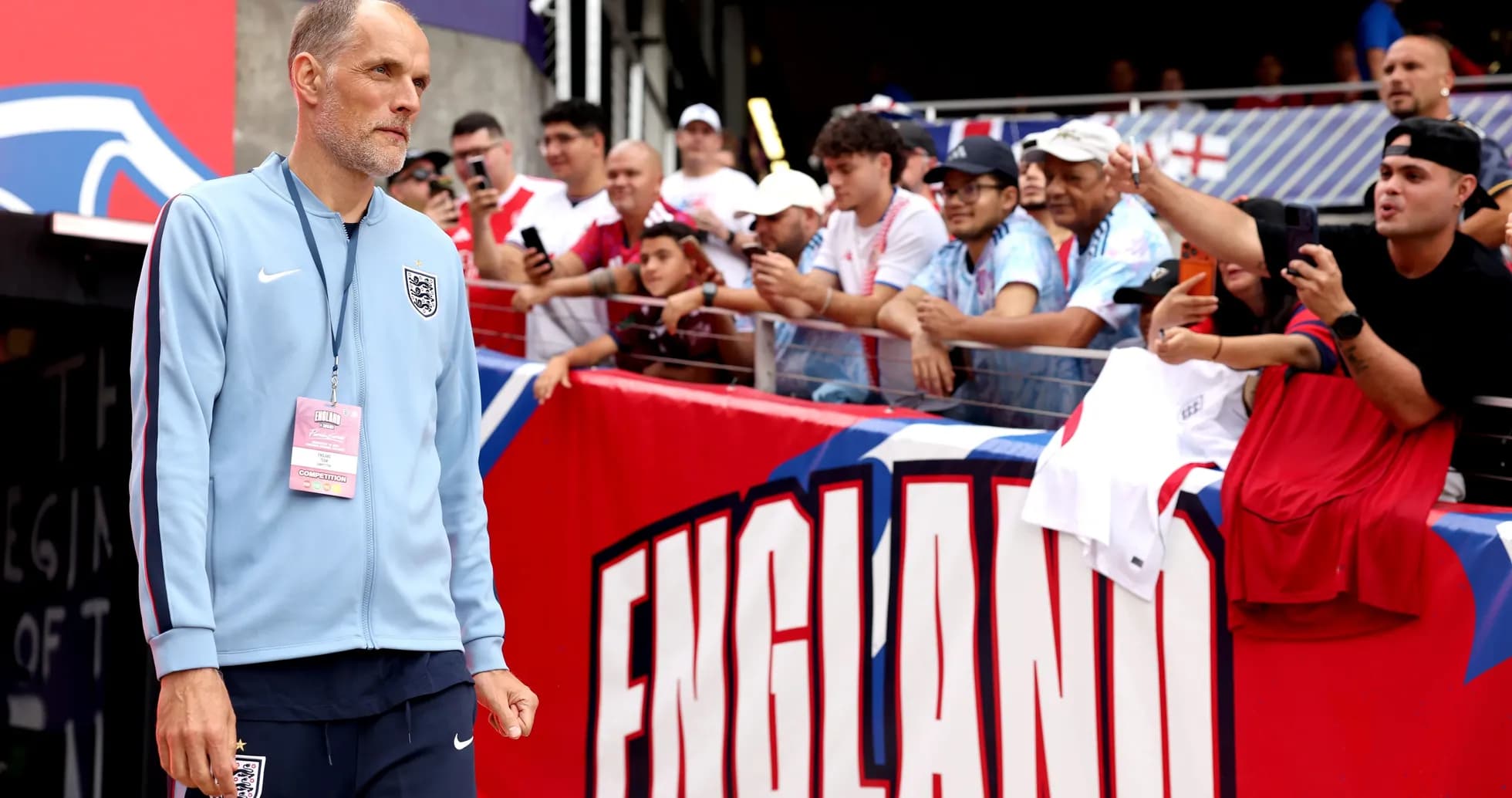
England's World Cup Momentum Builds in Florida
England’s World Cup machine is already humming. In the Florida heat, under skies that had just been ripped open by thunderstorms, Tuchel’s side put together the sort of calm, ruthless display that makes tournament rivals sit up a little straighter.
The kick-off in Orlando slipped back an hour while lightning cracked overhead. When the game finally started, England brought the storm onto the pitch instead.
Declan Rice struck first, setting the tone for a night of control and authority. Anthony Gordon, fresh from sealing his move to Barcelona, added a penalty with the kind of icy composure that suggests the stage won’t daunt him this summer. Late on, Ollie Watkins climbed to nod in a header that underlined the gulf between the teams and wrapped up a comfortable win.
Three goals, no injuries, and a statement of intent.
This was England’s ninth straight victory away from home or on neutral turf, a record run that now feels less like a quirk of form and more like a defining trait of Tuchel’s tenure. His team travel well. They handle disruption. They impose their structure.
The most encouraging sight came just behind the forwards. Jude Bellingham, wearing the number 10 shirt, glided through the lines with a sharpness that will soothe any lingering concerns about his readiness. He linked play, pressed with aggression, and constantly offered himself as the pivot for England’s attacks. In a friendly that could easily have drifted, he made it feel serious.
Tuchel, speaking after the final whistle, sounded every bit the coach who believes his group has turned a corner. He praised the tactical discipline, the unity, the way his players translated the pre-match meeting onto the pitch. For him, this was not a loose rehearsal. It was a marker.
England’s shape shifted and flexed around the ball. Gordon and Noni Madueke, operating from wide areas, repeatedly tore at a stretched Costa Rican back line. Gordon’s direct running and willingness to attack the inside channels drew fouls and panic, one of which brought the penalty he converted. On the opposite flank, Madueke’s sharp feet and constant movement forced defenders to backpedal, opening pockets for Bellingham and Rice to exploit.
The pressure eventually broke Costa Rica. England didn’t just dominate; they dictated the rhythm, slowing and quickening the game at will. When Tuchel talks about cohesion and brotherhood, this is what he means: a team that moves as one, each player trusting the next phase of the pattern.
He knows, though, that all of this is just the prelude. The friendly glow of Orlando will soon give way to the unforgiving glare of a World Cup. Tuchel acknowledged the tension that is coming, the way the air changes once the first ball is kicked in anger. It is, he said, the kind of pressure that makes him feel alive.
The schedule now tightens. England head back to West Palm Beach for another training block and a behind-closed-doors strategy match against Miami FC, a controlled environment where Tuchel can fine-tune pressing triggers, set-piece routines, and the rotations around Bellingham in the final third. It is the last chance to experiment before the real thing.
After a brief breather, the squad will fly to their main base in Kansas City, where the focus narrows and the noise around them will only grow louder. Six days from now, in Dallas, they open their World Cup campaign against a rugged, battle-tested Croatia side that knows how to drag opponents into deep water.
England leave Florida with momentum, clarity, and a clean bill of health. The friendly phase is over. The question now is simple: can a team that looks this composed in the calm still play with the same authority once the World Cup storm truly breaks?