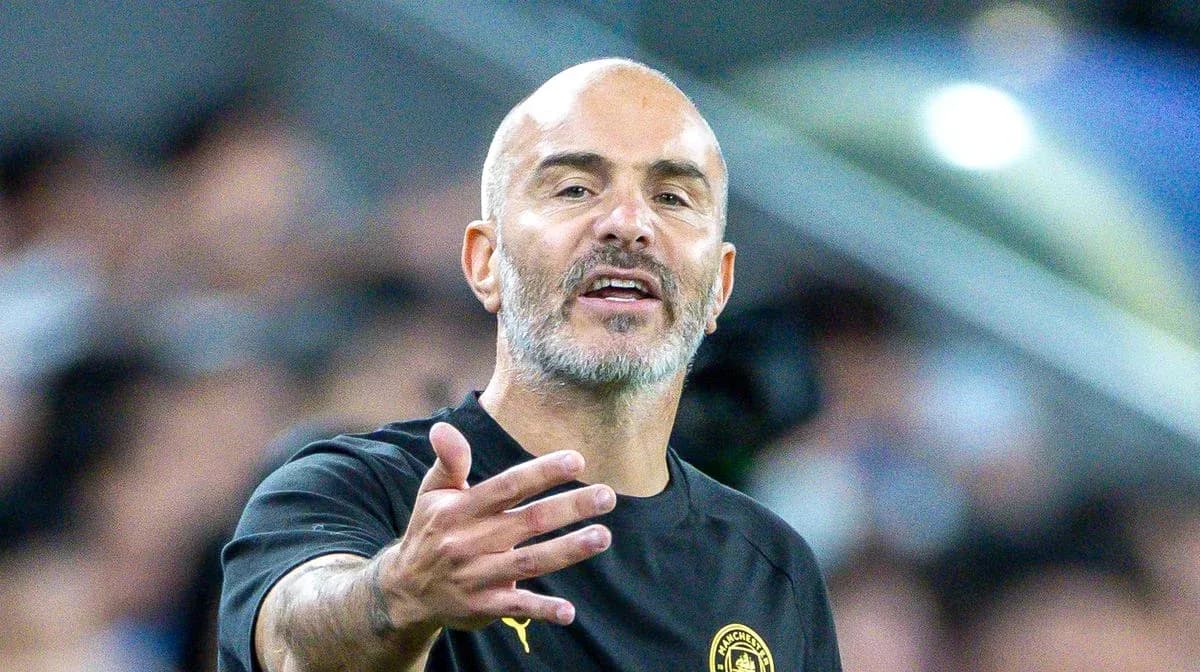
Enzo Maresca Reinvents Captaincy at Manchester City
Enzo Maresca has been in the Manchester City job only a short time, but one thing is already clear: this will be his dressing room, his rules.
The Italian has decided there will be no democratic ballot for the armband this season. No slips of paper, no quiet lobbying, no players’ vote. The captaincy, and the leadership group around it, will be hand‑picked from the manager’s office.
It is a sharp break from the culture that developed under Pep Guardiola, who had allowed the squad to choose its own leaders before intervening himself last summer. Maresca is cutting through that. He wants control, he wants clarity, and he wants a very specific profile at the heart of his leadership team.
One of those demands is simple: at least one of his captains must be English.
Dias poised to inherit the armband
With Bernardo Silva gone to Real Madrid, the expectation inside the club is that Ruben Dias will be the man to inherit the main armband. The Portugal defender was already a dominant voice in the dressing room and came close to the role last year before Guardiola halted the players’ vote.
Dias has since batted away interest from elsewhere and committed himself to City’s next chapter. Now, with Maresca tightening his grip on the squad’s hierarchy, the 27‑year‑old stands as the obvious standard‑bearer for the new regime: vocal, demanding, and already a reference point for younger players.
Behind him, the picture is less settled. Erling Haaland and Rodri were the only other formal members of the leadership group last season. Barcelona’s move for Rodri has created another potential hole at the top of the pyramid, and Maresca intends to fill it with players who fit his vision rather than simply those with the loudest voices.
English core in focus
This is where the new manager’s criteria bite. Maresca wants an English presence among his captains, a local spine to a globally assembled squad. The obvious candidate has already raised his hand.
Phil Foden has spoken openly this week about his responsibility to step up. Now the longest‑serving member of the first‑team squad, the 26‑year‑old finds himself at a crossroads. Two difficult years have followed the high of being named the Premier League’s best player. Form has dipped, rhythm has stuttered, and his status as City’s great homegrown hope has been tested.
A fresh start under a new manager offers him a way back to his best. A formal leadership role could harden that process. Foden knows the club, the culture, and the demands better than anyone in the room. Maresca knows that too.
He is not the only English option. Marc Guehi arrived from Crystal Palace in January with captaincy experience already on his CV. He slipped into the City side with minimal fuss, his composure and organisation translating smoothly to a higher level. Those traits rarely go unnoticed by managers looking for lieutenants.
Guehi is still on his post‑World Cup break and yet to report back, but his profile fits the brief: young, English, already trusted with responsibility at Premier League level.
Nico O’Reilly and Elliot Anderson, both due back next week, are at different stages of their careers but will also return to a dressing room about to be reshaped. Even if they do not land armbands, they are walking into a hierarchy that is being redrawn in real time.
Gvardiol and the new hierarchy
There is room, too, for voices from outside the English core. Josko Gvardiol has made it clear he would gladly step into a leadership role if asked. The Croatian defender carries himself like a senior player despite his age, and his willingness to assume responsibility will appeal to Maresca as he builds a group that can police standards on the pitch and in the training ground.
This is the heart of the project. City are not just replacing a captain; they are re‑wiring the leadership structure that has underpinned their dominance. The era of Guardiola, with its familiar faces and settled hierarchy, is over. Maresca is not interested in sentiment or ceremony. He wants a captaincy group that reflects his ideas, his demands, and his edge.
No votes. No committees. A manager choosing his generals.
The names are familiar. The dynamics around them are not. How quickly that new order beds in will say plenty about how ready City are for the battles to come.