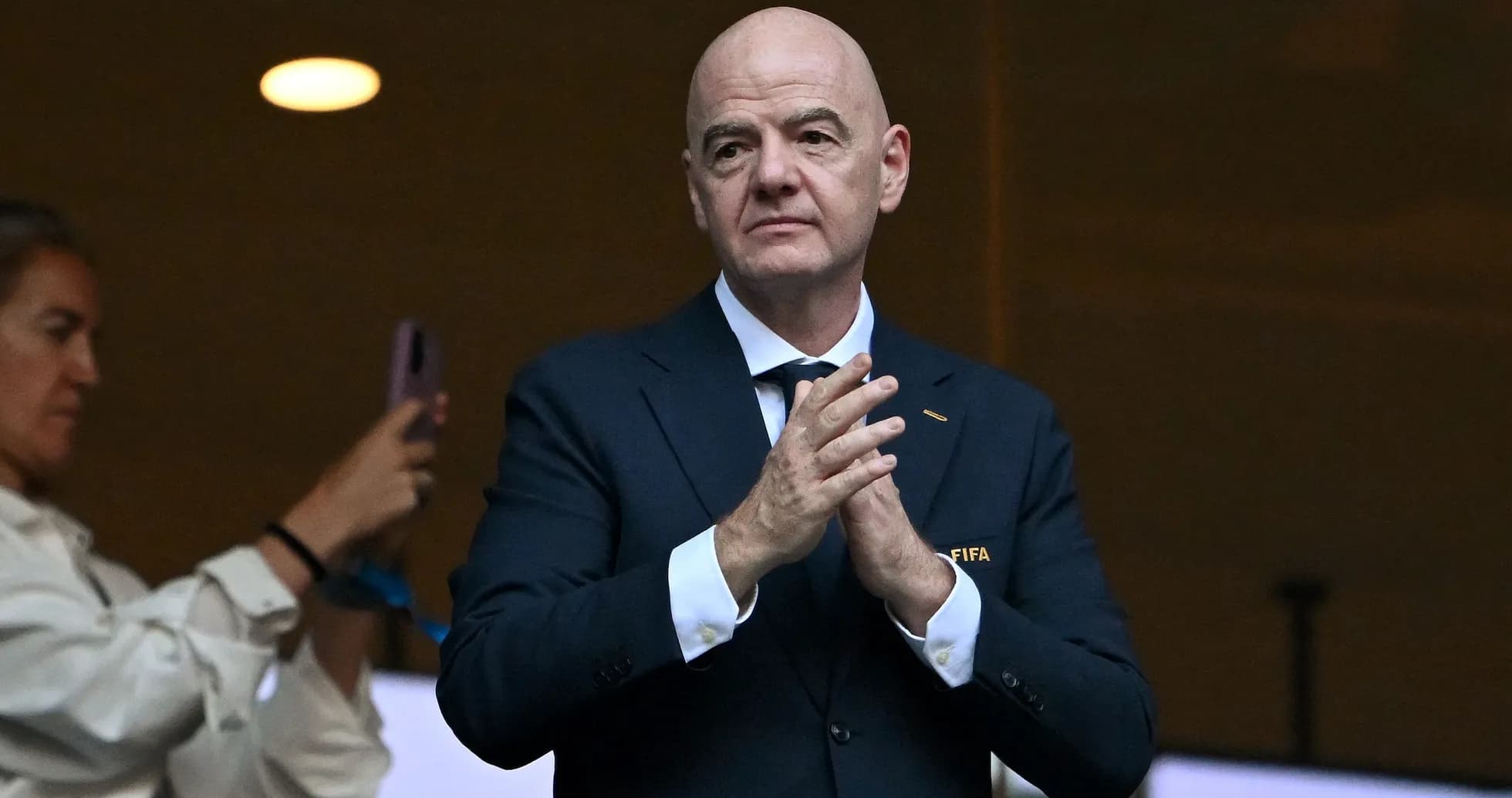
European Football on the Brink of Revolt: England's Stance
European football is edging towards open revolt, and England sit right on the fault line.
What began as another grand commercial vision from Gianni Infantino has detonated into a full‑blown crisis, with the threat of a boycott of FIFA competitions by England and several other European nations no longer empty rhetoric but a live, escalating possibility.
At the heart of the row lies a plan that has now been hurriedly scrapped: a new FIFA subsidiary designed to manage and sell off substantial stakes in some of the game’s crown jewels, including the World Cup itself. The proposal, rolled out with a mix of secrecy and swagger, triggered fury across Europe before collapsing late on Friday night.
By then, the damage was done.
UEFA draws a hard line
UEFA’s stance could hardly be clearer. In a searing statement to Sky News, a spokesperson spelled out the conditions for European associations to remain in FIFA competitions: the sell‑off proposals had to be fully withdrawn, and there had to be cast‑iron guarantees that such moves to, as they put it, “disfigure the game” would never return.
Those demands, UEFA say, have not been met.
The spokesperson went further, underlining that UEFA’s member associations have already lost confidence in Infantino’s presidency and that nothing in recent days has changed that position. A pointed swipe followed at those inside FIFA who have rallied publicly behind the president, with UEFA dismissing them as people whose careers “depend on his favour.”
The message from Nyon to Zurich: we don’t buy it, and we don’t back you.
FIFA apologises – but stands its ground
Facing a rebellion that was gathering speed, Infantino and FIFA secretary general Mattias Grafstrom moved to contain the fallout. A joint letter went out, an attempt to soothe tempers and slow the momentum towards a breakaway.
There was contrition. FIFA’s leadership admitted mistakes in how the commercial project was rolled out and mishandled once it leaked into the public domain. “We sincerely apologise for these errors and commit to them not happening again,” the letter read, with a promise of an internal review and a report to be presented at the next FIFA Council meeting.
Yet even as they reached for an olive branch, FIFA’s hierarchy dug in on the fundamentals.
Zurich insisted the abandoned project sat firmly within FIFA’s statutes and warned against further leaks of confidential material. The governing body stressed that “everything that was done, was done in full compliance with the FIFA regulatory framework,” and declared it would no longer tolerate what it called attacks on its “integrity, good governance and due process.”
The scheme may be gone. The battle over who controls football’s future is very much alive.
Boycott threat moves from theory to timetable
This is no longer a distant political squabble played out in committee rooms and press releases. The consequences could hit the pitch within weeks.
England’s youth and senior teams are now directly entangled in the standoff. The first major flashpoint is likely to be the Women’s U20 World Cup, where England have already named a training squad. If UEFA’s conditions remain unmet and the boycott threat hardens into action, those players could become the first to feel the cost of the power struggle at the top of the game.
And that is only the start.
The senior international calendar looms with even higher stakes. The qualifying play‑offs for the 2027 Women’s World Cup, involving England, Scotland, Wales, Northern Ireland and the Republic of Ireland, are locked in for October. Any coordinated withdrawal there would rip straight through FIFA’s flagship women’s tournament and expose just how fragile Infantino’s grip on the global game has become.
The commercial project is dead. The question now is whether FIFA can repair enough trust, and fast enough, to prevent Europe from walking away from its biggest stage.