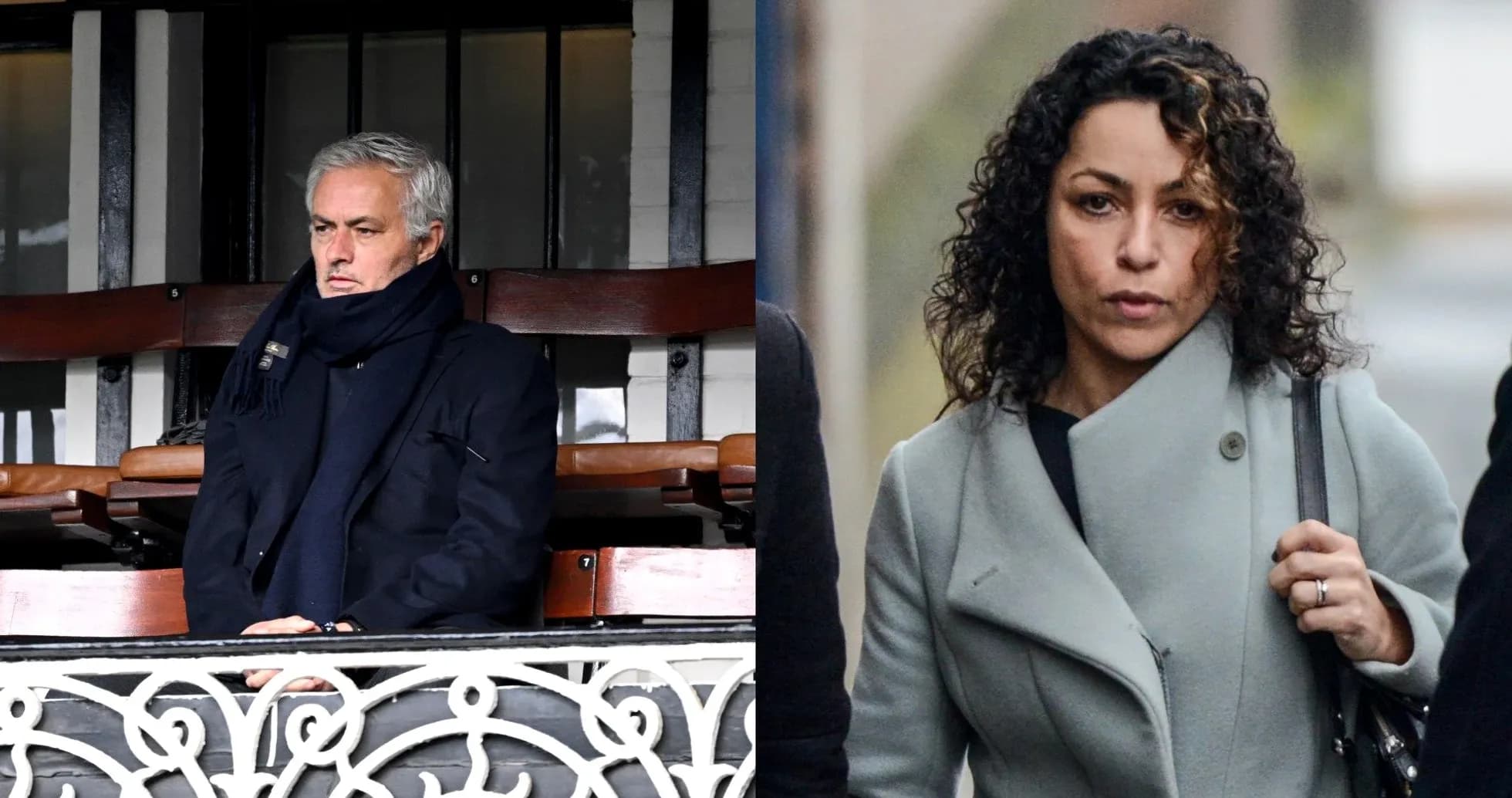
Eva Carneiro Responds to Mourinho and Terry's Netflix Documentary
Eleven years on from the night that blew up her Chelsea career, Eva Carneiro has watched José Mourinho and John Terry relive it on screen – and she has fired back.
The former Chelsea first-team doctor has condemned the way the infamous 2015 row at Stamford Bridge is revisited in the new Netflix documentary Mourinho, calling it a return to “the worst” period of her professional life and challenging Terry’s version of events in particular.
Carneiro hits back at Mourinho–Terry narrative
The flashpoint dates to August 2015, the opening day of Chelsea’s Premier League title defence, a 2-2 draw with Swansea City. Deep into stoppage time, Eden Hazard went down injured. With Thibaut Courtois already sent off, Carneiro and then-head physio Jon Fearn sprinted onto the pitch after being called, briefly leaving Chelsea with nine men.
Mourinho exploded on the touchline and then in public. The fallout cost Carneiro her job and ended in a legal claim for constructive dismissal, settled at an employment tribunal.
Now, with the documentary putting that moment back under the microscope, Carneiro has made her anger clear.
“11 years on and here we are reliving the worst. Hope they made some money,” she wrote on X, making no attempt to hide her disdain for the way the story has been revived.
Her sharpest words were reserved for Terry, who in the film backs Mourinho’s stance and speaks of a dressing-room “understanding” over when medical staff should enter the pitch.
“We are bound by a medico-legal code of conduct. Genuinely it would be healthy for John Terry to learn the rules of the game. It’s been long enough mate,” she posted, bluntly dismissing the idea that an unwritten agreement among players could override medical protocol.
Mourinho stands firm: ‘Impulsive and naive’
Mourinho, in the documentary, shows no sign of softening his view of that day. He insists the medical team were wrong to go on, insisting they misread the situation and damaged Chelsea’s chances of winning.
“I’m not a doctor, but my eyes know when a player is injured, and they know when a player is not injured,” he says. “I knew that he was not injured, but the doctors went to the pitch, and in that moment we were left with nine players.”
He describes the decision as “impulsive and naive” and addresses his own behaviour towards Carneiro, whose treatment sparked outrage at the time.
“For me, a lady doctor is the same as a man’s doctor. So, as always, I use my vocabulary when I’m not happy,” he says. “There are words in moments where the tension is very, very high. Normally, people with football culture, with football DNA, with football background, they go over it in one second. In that case, it was different.”
The implication is clear: in Mourinho’s world, this was a football matter that should have been absorbed and moved on from. Carneiro, once again, is having none of it.
Terry backs the boss – and Carneiro calls foul
Terry, Chelsea’s captain at the time, offers the players’ perspective in the film and backs Mourinho’s interpretation. He says there was a clear, if unwritten, rule in the dressing room about when the medical team should intervene.
“Medically, he would say unless it’s really, really bad, then they’re not coming on,” Terry explains. “That was the understanding for us as players, the medical staff, everyone bought into that.”
In his telling, Carneiro and Fearn broke that shared understanding in going on for Hazard. He also concedes that the storm that followed the Swansea game became a huge distraction in a season that quickly unravelled. Chelsea slumped to 10th in 2015-16, their worst finish of the Roman Abramovich era.
“It was a big moment, obviously, and he took a lot of backlash for that. There was a lot of heat on the football club,” Terry says.
Carneiro’s response cuts straight through that dressing-room logic. For her, neither Mourinho’s wishes nor any “understanding” among players carries more weight than the referee’s instructions and the immediate medical needs of the player on the turf.
‘My hands are bound as a medical professional’
On X, Carneiro laid out her version of the incident in stark, procedural terms, placing the authority firmly with the match officials and the player.
“So IT IS really simple. Referee Michael Oliver called us on TWICE, player Eden Hazard requested medical assistance we then made eye contact from side line and he confirmed he needed medical assistance, TWICE,” she wrote. “At that point my hands are bound as a medical professional.”
She also pointed to the backing she received at the time from the British Association of Sport and Exercise Medicine, highlighting its position that when a referee summons the medical team, it is their “absolute duty of care to attend and assess the player.”
That, for Carneiro, is the heart of the matter. Not dressing-room codes. Not game management. A referee’s call, a player’s request, and a doctor’s obligation.
The documentary may seek to reframe that August afternoon as a story of football culture and misunderstood tension. Carneiro’s response is a reminder that, for those whose careers were derailed, it was never just about football at all.