Everton's Season Review: From European Dreams to Mid-Table Struggles
For much of last season, Everton dared to look upwards.
Jack Grealish, borrowed and brilliant, lit up the early months. Kiernan Dewsbury-Hall kept deciding tight games with the air of a man who enjoys responsibility. Thierno Barry and Beto, once tentative and wasteful, began to bully centre-backs and find the corners of nets.
On 21 March, a 3-0 dismantling of Chelsea at Hill Dickinson Stadium pushed Everton up to eighth. Three points off the Champions League places. Seven games to go. The new ground finally felt like a stage, not a building site.
Supporters started to talk about Europe in the present tense, not as a distant memory.
Then it all fell apart.
Everton did not win again. Not once. The longest winless run since David Moyes walked back through the door in 2025, and a collapse that dragged them from the fringes of the top four into the murk of the bottom three form table over the run-in.
A 2-2 draw at Brentford on 11 April was the hinge. Everton led that afternoon, then lost control. From that point on, the numbers were brutal. Across the final stretch, only Burnley and Wolves matched their failure to win a single game. Those two went down. Everton merely drifted.
Even on the final home afternoon, there was something to cling to. Sunderland came to Merseyside with Everton still harbouring hopes of sneaking into Europe. In his programme notes, chief executive Angus Kinnear described himself as “happily dissatisfied” with the campaign, a phrase that jarred with the unease around the place.
Ninety minutes later, after a 3-1 defeat to the promoted side, it sounded even stranger.
Sunderland rode that victory to seventh and a first European campaign in 53 years. Everton, beaten and booed, finished 13th.
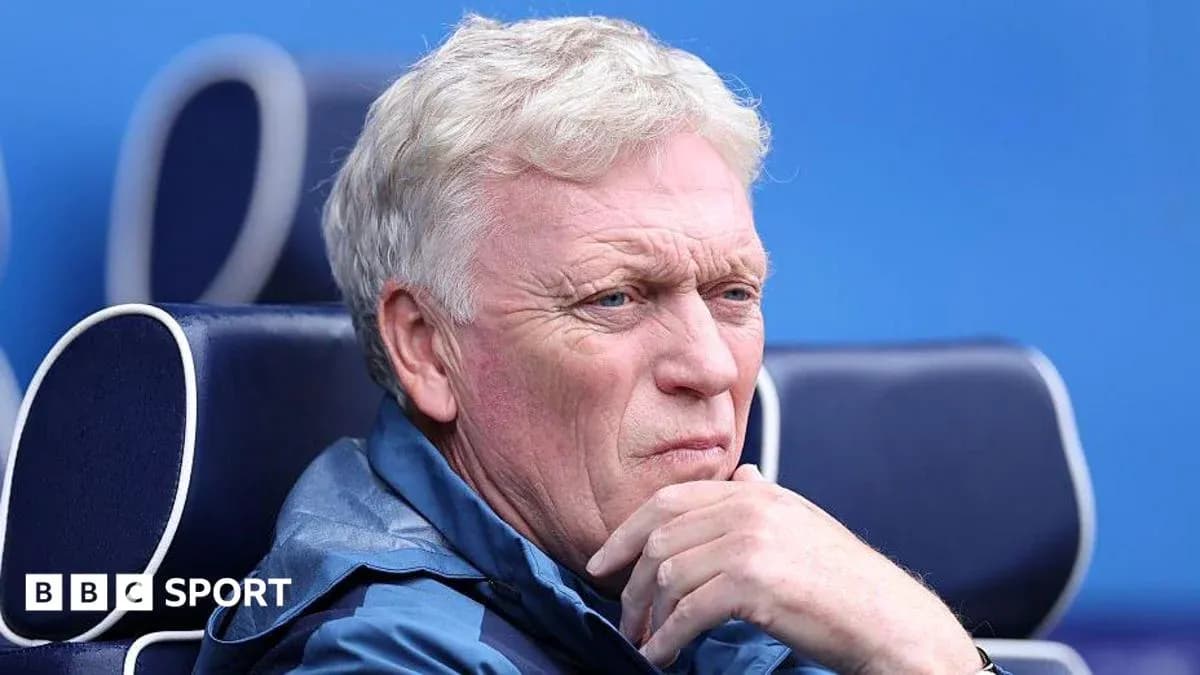
The sting for Moyes is that 13th is becoming a habit. Two seasons back at the club, two identical league positions. Yet the context could hardly be more different.
When he returned 18 months ago, Everton were a point above the relegation zone, exhausted by years of financial chaos, points deductions and survival scrambles. He dragged them 23 points clear of danger. That felt like a rescue mission completed.
Last summer, armed with a record net spend of £97m under the Friedkin Group, Everton aimed higher. New stadium, new money, new optimism. The final league table showed just one extra point.
To some, that looks like stasis. To others, it looks like the slow, awkward climb back to normality.
Leon Osman, who knows both the club and the manager as well as anyone, falls firmly in the latter camp. He sees two mid-table finishes not as a ceiling, but as a platform.
“When David Moyes first came in, we flew out the blocks and had a great start,” he said. “That continued for well over a year before the first sort of low period, which was the end of last season. I still feel that we made progress last season, which is what we wanted, along with stability.”
Moyes, 63 now, has been blunt about the financial arms race around him. Over the past five years, Everton sit 15th for net spend among current Premier League clubs. For a fanbase raised on talk of breaking the “big six”, that ranking is sobering.
Yet money alone does not explain the table. Bournemouth, who actually made a profit of £81m last summer, finished sixth. Brighton, £41m in the black, came eighth. Both are smaller clubs with sharper recruitment and clearer models.
Everton, by contrast, are still trying to work out exactly what they want to be.
The move to Hill Dickinson Stadium was supposed to mark a turning of the page. Instead, the numbers at home told their own story: 1.2 points per game, the lowest home return for any club starting life in a new Premier League stadium. Away from home, they were among the division’s best, ranked in the top seven.
The new ground felt like a landmark. It played more like a burden.
Osman believes that context matters. Bournemouth and Brighton, in his view, are simply “further along in their development”, their squads and structures settled while Everton continue to adjust to new surroundings and to life after years of turbulence.
The loss of Grealish in January, he argues, turned a promising season into a fragile one.
The data backs that up. With Grealish on the pitch, Everton won 45% of their matches and averaged 1.6 points per game. Without him, the win rate fell to 22%, the points return to one per match. Take out the creative hub and the whole machine juddered.
“David Moyes is an intense manager and by the end of the season, a small squad couldn't quite last,” Osman said. The legs went, and with them the belief.
He still backs the manager to see out the final 12 months of his contract.
“Changes take time. No one is thinking about relegation which shows you what Moyes has done. He's got 12 months remaining and I'd expect him to see that out.”
That, in itself, is a shift. For years, Everton lived with the threat of the drop as a constant drumbeat. Now the conversation has moved to how they close the gap to the clubs who have overtaken them.
Recruitment will decide how quickly that happens.
Under Farhad Moshiri, Everton became a cautionary tale: eight signings costing at least £20m eventually left for nothing. It was lavish, scattergun spending with no residual value. The Friedkin Group’s first summer in charge brought nine new faces and a clear tilt towards youth, but the payoff has been uneven so far.
Grealish and Dewsbury-Hall justified their fees and their roles. Around them, the picture is more blurred.
Tyler Dibling arrived from Southampton for £35m as a 20-year-old winger with pace and potential. He started only six league games. Adam Aznou, the young left-back signed from Bayern Munich, has yet to play a minute in the Premier League.
Barry, at 23, proved a handful in the air, winning more aerial duels than any other player in his debut top-flight season. His finishing, though, veered from ruthless to erratic. Merlin Rohl, 24, spent months on the fringes before finally stringing together four eye-catching starts in May.
Everton know they cannot afford many more missteps. Every deal has to carry a purpose.
The immediate future may again revolve around Grealish. BBC Radio Merseyside reporter Giulia Bould says the club expect to bring him back on loan towards the end of the window as he continues his recovery from a stress fracture in his foot. His wages, around £200,000 a week, remain a serious consideration.
Osman’s stance is clear: welcome, but not at any cost.
“I'd welcome Grealish back but only at a price that suits Everton,” he said.
The situation around Iliman Ndiaye is more delicate. Linked with a move to Saudi Arabia, he is one of the few in the squad capable of changing the tempo of a game with a single touch.
“Ndiaye, I'd hate to lose him,” Osman added. “There may come a point that the price is right and Everton can reinvest in two or three players but I think they should do everything they can to keep him.”
The dressing room is already losing experience. Seamus Coleman and Idrissa Gueye have gone, taking more than 600 Premier League appearances with them. That exodus of know-how explains Everton’s interest in adding a figure like Christian Norgaard, and it sharpens the blow of James Garner’s groin surgery, which will keep a key midfielder out at the start of the season.
Moyes now faces a familiar managerial paradox. He may have to lean on the very youngsters he has been reluctant to trust.
“They need to show they're capable and deserve to play,” Osman said. The message is blunt. No more hiding behind potential.
The hope inside the club is that a year of adaptation will now start to bear fruit. Dibling, Lewis Dobbin, Ishe Samuels-Smith, Youssef Chermiti, Elijah Campbell, Roman Dixon, the next wave – Everton have names, but they need performances.
“I'm hoping that a year in, understanding the demands that are required, players like Dibling and George will make that progression and then suddenly our squad looks more trustworthy,” Osman said.
From the outside, the picture is mixed: a club no longer fighting for its life, but not yet fighting for its dreams. The new stadium gleams, the spending is more controlled, the manager is proven, the mood less frantic.
Now Everton have to answer the only question that really matters: are they content to stand still in mid-table, or ready to risk something to climb again?