Fifa's Confidence Crisis: What Happened Behind Closed Doors?
Fifa says confidence is back. How do we know? Fifa has informed us.
In a statement so serenely detached from the mood of the game it governs, football’s world body emerged from a crisis of its own making and declared itself reassured. The rest of the sport, from national associations to fans, is still trying to work out what exactly just happened – and why almost nobody was told about it in advance.
A coup in all but name
At the heart of the storm sat the “Fifa Forward Enterprise proposal”, a plan so secretive that large parts of Fifa’s own machinery were left in the dark. The chief operating officer Kevin Lamour didn’t know the full details. Arsène Wenger, the organisation’s head of global football development, was not properly briefed. Confederations, clubs, national FAs, players, supporters – the people who are supposed to be the game – were treated as an afterthought.
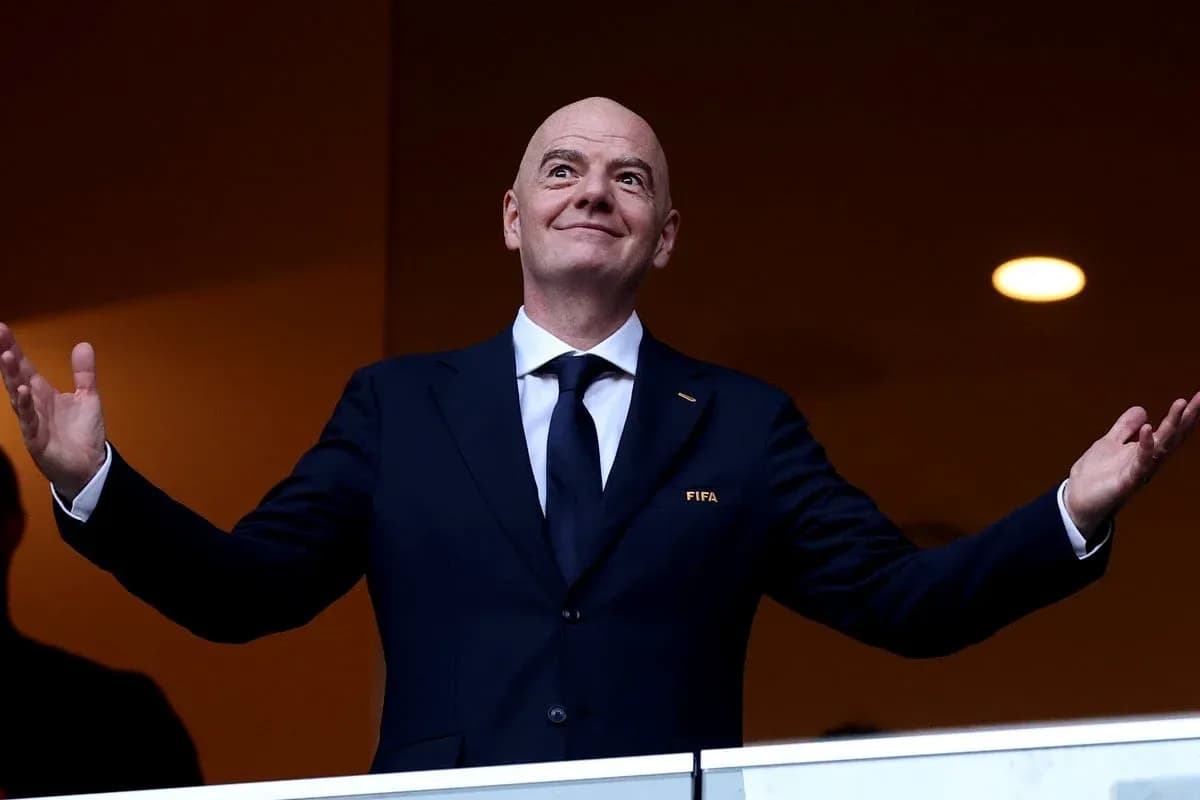
One man drove it: Gianni Infantino.
Either the Fifa president had a grand idea he simply forgot to share with almost everyone who mattered, or he attempted a power grab against the sport itself. A global game was dragged to the brink by one proposal and one presidency.
The plan, which critics saw as a thinly disguised attempt to sell off the World Cup, came with a financial twist. Associations understood that those who backed it would receive more money from Fifa than those who resisted. To some, that looked uncomfortably close to bribery, even if the word never appeared in any official document.
A meeting in Rabat, a statement from another planet
When the backlash became impossible to ignore, Fifa convened in Rabat, Morocco. Out of that “constructive and positive meeting”, as the governing body described it, came a joint letter from Infantino and secretary general Mattias Grafström.
Nineteen words leapt off the page: “Fifa’s top management is fully confident that the outcomes of today’s meeting will help restore confidence in the organisation.”
Restore confidence. Because Fifa says so.
This, from an organisation whose only official elected by all 211 member associations is the president himself – and a president many of those same associations now want gone. Plenty of others lined up publicly against the Forward Enterprise scheme, despite Fifa’s attempts to present it as a misunderstood, benign project.
“Mistakes made were acknowledged,” the letter insisted, as if that alone might draw a line under the mess. The closest thing to an apology read: “It was agreed that it was not the intention for the Fifa council and Fifa member associations to feel excluded from the process.”
Not the intention. Yet they were excluded. Deliberately, repeatedly, and on an issue that would have reshaped the sport’s most sacred tournament.
No contrition, just defiance
Infantino has now promised there will be no repeat. A review will be conducted. By whom? By the same Infantino-aligned leadership that tried to push the plan through. The same inner circle that kept key figures and entire confederations in the dark. The same regime that will now, we are told, examine itself and deliver the right conclusions.
The tone of the communiqué was revealing. The president’s thin-skinned social media posts in recent months have hinted at a growing sense of persecution. That touchiness has now become institutional.
“It was agreed that Fifa will no longer tolerate any attacks on its integrity, good governance and due process and will take all necessary measures to protect and safeguard its name and reputation,” the statement declared.
The victim complex is striking. Donald Trump has long painted himself as the target of unfair attacks; Fifa appears to have taken notes. Criticism is now framed as an “attack” on integrity, not as a response to decisions that have dragged the organisation’s reputation into the mud.
A record that speaks for itself
Fifa talks about safeguarding its name as though the damage is hypothetical, a future risk to be managed. The record of the Infantino era says otherwise.
Suspensions for Cristiano Ronaldo and Folarin Balogun were quashed. Rules were bent to ensure Lionel Messi’s Inter Miami made it into the Club World Cup. The United States was allowed to bar Somali referee Omar Artan from entering the country. Fifa leadership courted Trump while ordinary fans in America blamed Fifa, by name, for extortionate ticket prices.
The organisation that claims to represent the global game instead appeared to tilt towards one administration and one political orbit. Decision-making looked influenced by the White House. A peace prize was created and handed to a man who would go on to launch an illegal war. Neutrality, already fragile, disintegrated.
On the biggest stage of all, the attempted World Cup sell-off confirmed the direction of travel. Fifa did not just chase money; it tried to do so without even informing large parts of the sport that would be affected. The governing body of world football behaved less like a custodian and more like a closed shop.
What “restoring confidence” really demands
Now, with the Forward Enterprise proposal hastily pulled from the table, Fifa’s leadership wants the world to move on. The message from Zurich is clear: mistakes were made, lessons have been learned, confidence will be restored.
Yet the one thing Fifa has not offered is the only thing that could genuinely begin to repair the damage: honesty backed by change at the very top.
Infantino intends to stay. He either stands as the most divisive figure in modern football politics or as the man who has finally united an extraordinary coalition against him – national associations, confederations, clubs, players, fans, and officials who rarely agree on anything but now share a common frustration.
Fifa can threaten to “no longer tolerate attacks” all it likes. It can draft more letters, stage more carefully choreographed meetings and insist, again and again, that confidence is returning.
Until it confronts its own leadership and its own habits of secrecy and self-interest, the only confidence that truly exists is the one inside Fifa headquarters – the belief that it can keep running the game this way, and that the rest of football will simply accept it.