Fifa's New Strategy: More Tournaments and Higher Prices
Fifa has laid out, in stark black and white, how it plans to squeeze far more money out of the World Cup and its other competitions: stage more tournaments, charge fans more, and lean on debt.
A 25-page sales deck titled “Fifa Forward Enterprise Member Materials”, seen by the Guardian and circulated to all 211 member associations on Wednesday night, sets out the governing body’s vision for a new commercial arm – and the private investors waiting to buy in.
At the heart of the proposal is a new company that would run Fifa’s commercial operations, with 20% of that vehicle earmarked for sale to US investor Joshua Kushner, brother of Donald Trump’s son-in-law Jared Kushner. The prospectus has been drawn up by JP Morgan, the US bank that helped architect the doomed European Super League project five years ago.
More tournaments, more strain
JP Morgan’s pitch is blunt. Fifa’s financial “growth” will be driven by “a growing tournament portfolio”, “third party sources of capital and debt financing”, and a focus on “high yield” partnerships and events.
The numbers behind that vision are dramatic. The document refers to more than doubling the number of global tournaments each year, from 200 to 450. For players already complaining of burnout, that figure lands like a warning siren. For Fifa and its would‑be investors, it is presented as opportunity.
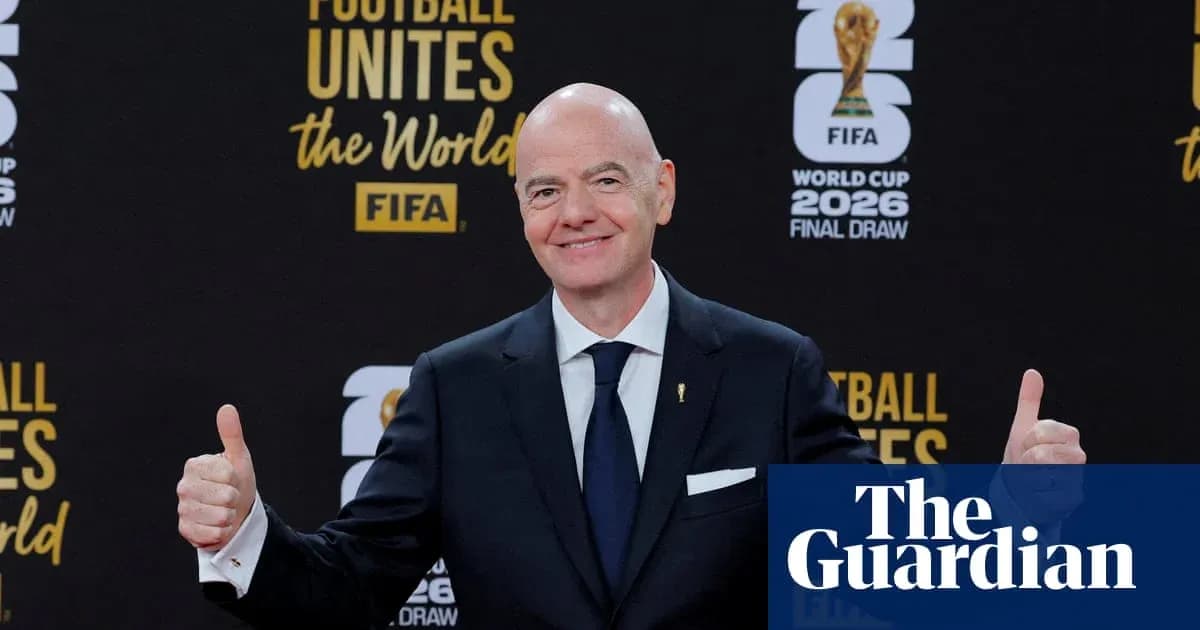
Staging the World Cup more often is the obvious lever. President Gianni Infantino floated a biennial World Cup five years ago and met fierce resistance from confederations, leagues and players’ unions. The new sales deck does not spell out a specific calendar change, but the logic is clear: more flagship events, more broadcast windows, more cash.
The pressure on fans is baked in as well. Higher ticket prices are explicitly flagged as part of the growth plan, alongside a push to “expand and optimize media rights monetization”. In plain terms, that means a greater willingness to move the biggest events – including the World Cup – towards subscription TV and streaming platforms, away from traditional free-to-air coverage in many markets.
A game of comparisons
To justify the push, JP Morgan leans on one central claim: Fifa is “undermonetized”. The deck sets Fifa’s stated annual revenue of $3.6bn against the NFL’s $21.2bn, Major League Baseball’s $13.1bn and the NBA’s $12.5bn.
The comparison is striking, but also jarring. Those US figures are based on club or franchise earnings in closed, privately run leagues. Fifa is a global governing body that oversees a sport with hundreds of national associations, multiple confederations and a calendar already stretched to breaking point. Several member officials have already questioned why such a comparison is being used to steer policy.
The financial carrot dangled to members is substantial. On top of the previously reported $20m sign‑up payment offered to each of the 211 member associations – money that could arrive as early as January – the deck projects a rise in four‑year Fifa Forward payments to $24m per member in the 2035‑39 cycle.
Those figures are designed to catch the eye of associations heavily reliant on Fifa funding. The question being asked privately is what strings come attached.
Debt, despite record reserves
The most basic challenge from within the membership is simple: why debt, and why now?
Fifa currently sits on cash reserves of around $4bn and has accumulated revenues of $15bn over the current four-year cycle. One senior figure, on reading the document, immediately questioned why an organisation in that position needs to take on debt or sell a stake in its commercial operations to outside investors.
Another official pointed to the “odd” choice of benchmarks, again highlighting the contrast between a world governing body and the private, member-run leagues used as comparators.
The proposed timetable has also raised eyebrows. According to the document, “Investors will be given access to a term sheet and select materials” in August – before Fifa’s 211 members have even voted on whether to approve the structure in the first place. For some associations, that looks uncomfortably like a deal being readied ahead of democratic scrutiny.
A silent page on the women’s game
Perhaps the most glaring omission sits not in what the deck promises, but in what it ignores.
Across 25 pages detailing future revenue streams, tournaments and commercial strategies, there is not a single mention of women’s football. No projections, no dedicated strategy, no reference at all.
In a decade when the Women’s World Cup has grown into a standalone global event and broadcasters have paid record sums for rights, that silence has jarred with officials who see the women’s game as one of Fifa’s most powerful growth engines – both sporting and commercial.
For now, the governing body is pressing ahead with its sales pitch. The member associations have the document. The investor – Joshua Kushner – has been identified. JP Morgan has set out the roadmap.
What remains to be seen is whether the people who vote Fifa’s policies into life are prepared to trade more tournaments, heavier player workloads and a more indebted future for a bigger cheque – and whether the world’s game is comfortable being remodelled to look a little more like the closed, cash-rich leagues Fifa claims to envy.