Fiorentina vs Atalanta: A Chaotic Serie A Clash
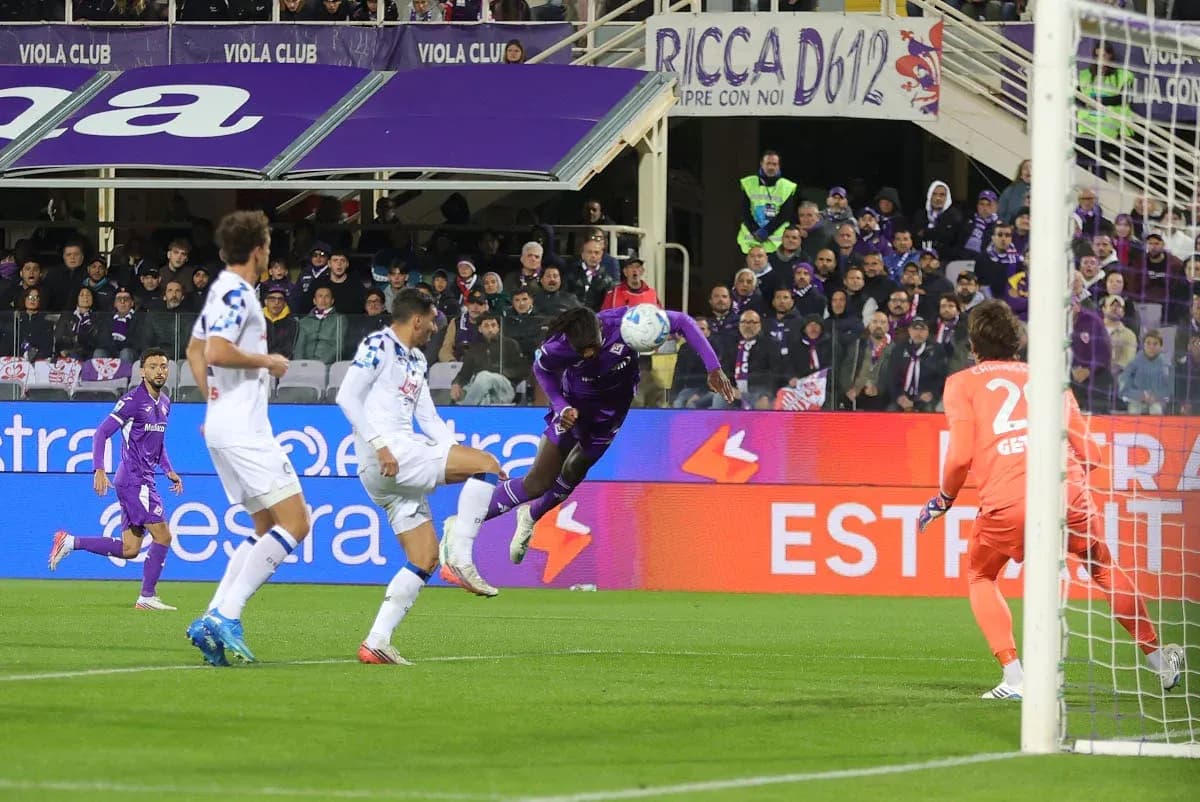
Under the Florence lights at Stadio Artemio Franchi, a chaotic, fractured season for Fiorentina found a strange kind of equilibrium in a 2–2 draw with Atalanta. Matchday 9 in Serie A ended with the points shared, but the numbers and the lineups tell a story of two teams wrestling with identity, absences, and structural risk.
I. The Big Picture – Fragile foundations on both sides
Heading into this game, Fiorentina were 17th with 5 points from 9 matches. Their overall goal difference was -10, built from 11 goals scored and 21 conceded. At home they had yet to win: 5 home matches, 0 victories, 2 draws, 3 defeats, with 5 goals for and 11 against. The 4-3-3 chosen by P. Vanoli was less a flourish than a necessity: an aggressive shape layered over a defence that, overall, was conceding 2.3 goals per match and 2.2 at home.
Atalanta arrived in Florence with more stability but their own cracks. They sat 12th with 11 points from 9 games, their overall goal difference -1 from 16 scored and 17 conceded. On their travels they had been fragile: 4 away matches, 0 wins, 1 draw, 3 defeats, with 5 goals for and 9 against, conceding 2.3 goals per away game. M. Sarri’s 4-2-3-1 was a nod to control in midfield, but the data painted a side that opened games with a punch and then gradually lost defensive grip.
The timing patterns were stark. Fiorentina’s goals came in waves after the opening quarter-hour: 20.00% between 16–30 minutes, then a double surge with 30.00% from 46–60 and another 30.00% from 61–75. Atalanta, by contrast, were front-loaded: 25.00% of their goals in the first 15 minutes, another 25.00% from 31–45, and a strong 18.75% between 61–75. The match that finished 2–2 felt almost pre-scripted by those distributions: early Atalanta punch, then Fiorentina’s mid-half and second-half response.
II. Tactical Voids – Absences and discipline shaping the chessboard
Both squads were heavily edited by injuries. Fiorentina were without A. Atta (abdominal strain), F. Parisi (knee injury), M. Pongracic (muscle injury), L. Ranieri (leg injury) and R. Sottil (back injury). The consequence was a back four that leaned hard on youth and versatility: Álex Jiménez and Joao Mário as full-backs, with R. Drăgușin and Viery as the central pairing. The absence of natural, experienced rotation options at the back forced Vanoli to double down on an expansive 4-3-3, trusting energy over conservatism.
Atalanta’s list was even more brutal in terms of profile: R. Bellanova, I. Hien, F. Kessie, S. Kolasinac, O. Kossounou, G. Raspadori and G. Scamacca all missed out. That stripped Sarri of two natural centre-backs, a key ball-winner in Kessie, and two centre-forwards in Raspadori and Scamacca. The response was to trust a hybrid back four anchored by T. Kristensen and R. Obrić, shielded by Éderson and G. Gaetano, and to lean fully into Nikola Krstović as the lone striker.
Disciplinary trends framed the risk. Fiorentina, overall, spread their yellows across the match, but 30.00% came between 61–75 minutes, a period where fatigue and tactical desperation often collide. Atalanta’s yellow cards were heavily back-loaded: 33.33% between 61–75 and another 33.33% from 76–90. More ominously, Atalanta’s red cards this season had arrived late: one between 76–90 and another between 91–105. In that context, Eljif Elmas and Gaetano, both already with a red card this campaign, walked a tightrope in a high-intensity midfield battle.
III. Key Matchups – Hunter vs shield, and the engine rooms
Hunter vs Shield: N. Krstović vs a leaking Viola back line
Nikola Krstović came into this round as one of Serie A’s most efficient forwards. Overall he had 6 league goals and 2 assists in 9 appearances, with 21 shots and 11 on target, and a 7.21 average rating. His movement profile suits Atalanta’s timing: a striker who attacks space early, when his side are most dangerous, and reappears in the 61–75 window when they surge again.
Across from him was a Fiorentina defence that had conceded 21 goals overall, with a late-game collapse pattern: 22.73% of their goals against arriving between 76–90 minutes and 18.18% between 61–75. At home they had already allowed 11 in 5 games. Viery, who has already collected 3 yellow cards and blocked 3 shots this season, is an aggressive front-foot defender; R. Drăgușin is more of the anchoring presence. The risk was clear: if Fiorentina pushed their line up to compress space for Krstović, the Montenegrin’s duels and off-shoulder runs threatened to tear through a unit that has not kept a single clean sheet this campaign.
The Engine Room: Gaetano & Éderson vs Ndour & Fagioli
The midfield duel was all about tempo and control. For Atalanta, Gaetano and Éderson formed a double pivot with very different mandates. Gaetano, who has 1 goal, 1 assist and 267 completed passes at an 88% accuracy, is the metronome and first presser. He has already been sent off once this season, a sign of how aggressively he engages. Éderson adds verticality and defensive coverage, with 8 tackles and 3 blocked shots.
Fiorentina’s trio of C. Ndour, N. Fagioli and M. Brescianini had to cope with that pressure while also feeding a very young, mobile front line. Ndour’s role as the connector, Fagioli as the passer between the lines, and Brescianini as the shuttler were crucial in getting the ball quickly to Franco Mastantuono, Mateo Pellegrino and A. Njie. The wide lanes were further energized by Álex Jiménez, whose season so far has produced 2 goals, 2 assists, 12 key passes and 20 tackles. His overlaps from right-back, combined with his 81% passing accuracy, made him a de facto playmaker from deep.
On the Atalanta side, the creative axis of C. De Ketelaere and N. Zalewski carried a heavy load. De Ketelaere arrived with 3 assists, 21 key passes and 273 completed passes, operating as the primary chance architect. Zalewski mirrored that productivity from wider zones, also with 3 assists and 7 key passes in fewer minutes, plus 8 interceptions that speak to his work rate in transition. Together they formed the supply line into Krstović, particularly in the central and left half-spaces.
IV. Statistical Prognosis – Chaos as the natural outcome
Looking at the season’s underlying patterns, a high-event match was almost inevitable. Fiorentina’s overall scoring average was 1.2 goals per game, but they conceded 2.3; Atalanta scored 1.8 and conceded 1.9. Both sides had more matches going over 1.5 goals than under, and both were vulnerable late: Atalanta conceded 23.53% of their goals between 76–90, Fiorentina 22.73% in the same window.
Fiorentina’s offensive peaks between 46–60 and 61–75 minutes intersect almost perfectly with Atalanta’s defensive soft spots: 23.53% of Atalanta’s goals against come between 46–60 and another 23.53% from 76–90, with 11.76% in the 61–75 range. Conversely, Atalanta’s early scoring spikes in the first 15 minutes and just before half-time met a Fiorentina side that concedes 18.18% of their goals in both the 16–30 and 31–45 windows.
Layer on Atalanta’s late-card tendencies and Fiorentina’s desperation near the bottom of the table, and the 2–2 final scoreline feels less like an accident and more like statistical gravity. Following this result, both teams remain what their numbers say they are: dangerous, flawed, and destined, for now, to live on the edge of control.