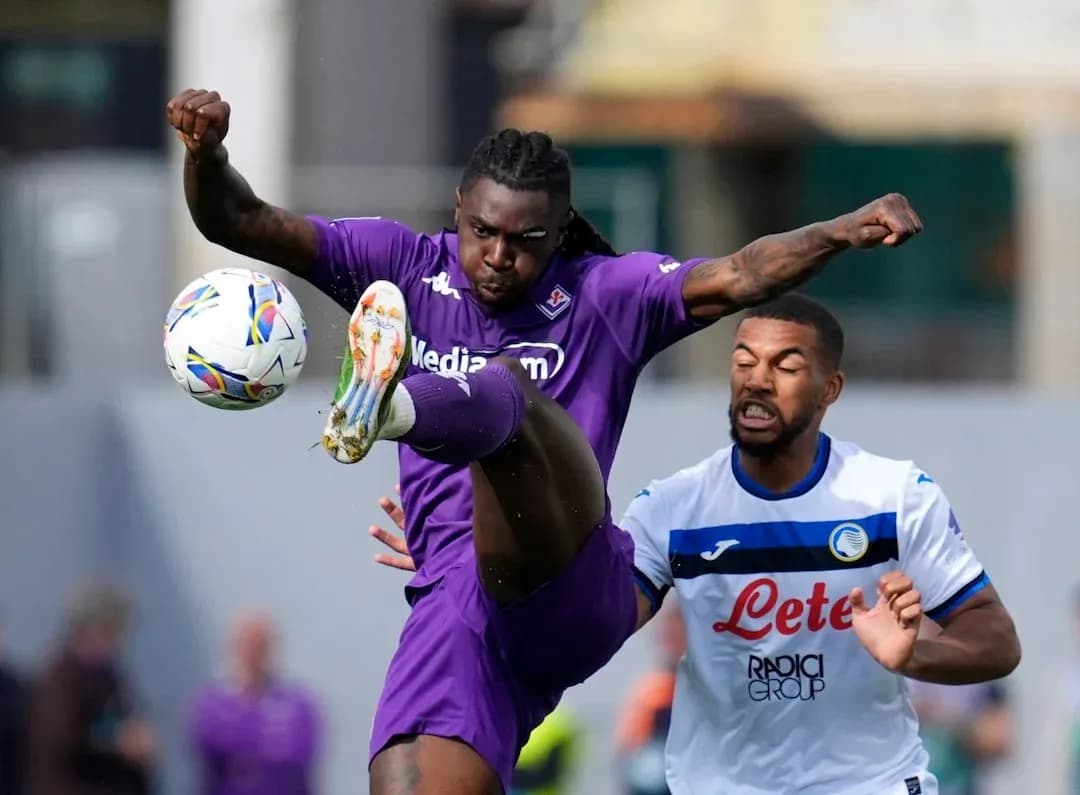
Fiorentina vs Atalanta: Serie A Showdown at Stadio Artemio Franchi
Under the floodlights of Stadio Artemio Franchi in Florence, 29 October 2026 offers Fiorentina a night that already feels like a crossroads. Deep in the lower reaches of Serie A and leaking goals, the Viola welcome an Atalanta side that has been unpredictable but remains far more comfortable in mid-table. Survival anxiety meets European ambition in a fixture that has quietly become one of the league’s most volatile matchups.
Season Context
For Fiorentina, the table is unforgiving. Sitting 18th with just 4 points from 8 matches, they have managed only 1 win and 1 draw, losing 6 times and carrying a heavy goal difference of 9 scored and 19 conceded. The numbers paint a fragile side: they average just over 1 goal per game (9 in 8) while shipping nearly 2.4 (19 in 8), a combination that has dragged them into the relegation zone.
Atalanta arrive in Florence with a little more breathing room but plenty of questions. Eleventh place with 10 points from 8 games suggests inconsistency: 3 wins, 1 draw and 4 defeats, with 14 goals scored and 15 conceded. Their attack remains a threat at 1.75 goals per game (14 in 8), but a defense conceding almost 2 per match (15 in 8) has kept them from pushing higher up the table.
Form & Momentum
Fiorentina’s recent league form reads LLLDW — a sequence that underlines how thin their margin for error has become. Six defeats in 8 league outings and 19 goals conceded in that span show a side that is repeatedly punished when they lose control of games (19 conceded in 8). Even the modest attacking return of 9 goals hints at a team that must work hard for every chance, with little room to waste opportunities.
Atalanta’s pattern is more chaotic than comfortable. Their league form string WWLLLWLD reveals sharp swings: bursts of momentum followed by abrupt drops. The attack is clearly a strength (14 goals in 8 matches), but the 15 goals conceded in the same run highlight a tendency to leave space and invite drama. They look more like a high-variance side than a stable force, capable of both overpowering opponents and slipping up when concentration dips.
Head-to-Head Patterns
Recent meetings between these two have been anything but dull, and the balance has swung back and forth. On 22 May 2026, they shared the points in Florence with a 1-1 draw (1-1, Serie A, season 2025, May 2026), a tight contest that reflected Fiorentina’s ability to make Stadio Artemio Franchi an awkward trip for Atalanta. Earlier in that same Serie A campaign, Atalanta had imposed themselves in Bergamo with a 2-0 home win (2-0, Serie A, season 2025, November 2025), showing their capacity to control the game when their press clicks. Go back to 30 March 2025 and the pendulum swings again, as Fiorentina edged a cagey encounter in Florence (1-0, Serie A, season 2024, March 2025), a reminder that the Viola can still grind out narrow victories when their defensive structure holds.
Tactical Preview
Fiorentina’s statistical profile points to a side still searching for balance. Their most used shapes are variations of a back four — primarily 4-3-3 and 4-2-3-1, each used 3 times — systems that demand coordinated pressing and compact distances between lines. Yet the reality has been far more porous: 19 goals conceded across 8 matches, with no clean sheets and an average of 2.4 goals allowed per game. This suggests a team that often gets stretched between midfield and defense, particularly when full-backs push high. In possession, the 4-3-3 offers width and the possibility to isolate attackers like Beto or W. Gnonto in one‑v‑one situations, but with only 9 goals so far, the execution has lagged behind the intent.
Atalanta, by contrast, are built for front-foot football. They have leaned heavily on a 4-3-3 (used 6 times) with occasional switches to 4-2-3-1, keeping plenty of attacking lanes open. The numbers back up the eye test: 14 goals in 8 league matches, with a strong home scoring record and enough away goals (3 in 3 away games) to remain dangerous on the road. Their problem lies in control rather than threat — 15 goals conceded and only 1 clean sheet show that when they commit bodies forward, they can be exposed in transition. That dynamic is sharpened by the presence of N. Krstović, one of Serie A’s standout attackers so far with 6 goals and 2 assists in 8 appearances, a striker who combines penalty‑box instincts with decent link play (20 shots, 10 on target).
Injuries complicate the tactical picture for both coaches. Fiorentina are without A. Atta, F. Parisi, M. Pongračić and R. Sottil, removing depth at full-back, center-back and in wide areas, while L. Ranieri is questionable — a concern for a defense already conceding heavily. Atalanta’s absentee list is even longer: R. Bellanova, I. Hien, F. Kessié, S. Kolašinac, O. Kossounou, G. Raspadori and G. Scamacca are all ruled out, with G. Scalvini and K. Sulemana doubtful. That cluster of defensive and attacking injuries may force Atalanta into a more cautious version of their usual 4-3-3, relying even more on Krstović and the creativity of C. De Ketelaere between the lines.
Statistical Snapshot
- Competition: Serie A, season 2026 — 29 October 2026.
- Venue: Stadio Artemio Franchi, Florence.
- Prediction: No clear model edge — No predictions available.
- Win Probabilities: Home 33% / Draw 33% / Away 33%.
- Model: Fiorentina 48.2 — Atalanta 51.8.
Betting Verdict
The market tilts slightly toward Fiorentina, with home win odds generally around 2.20–2.32, implying an approximate 43–45% chance of a Viola victory once bookmaker margins are considered. Draw prices hover roughly between 3.25 and 3.78 (about 26–31%), while Atalanta’s away win is typically offered around 2.73–3.17 (roughly 31–37%). Given Fiorentina’s defensive frailty (19 conceded in 8) and Atalanta’s open, attack-minded profile (14 scored, 15 conceded in 8), this shapes up as a game more likely decided by attacking quality than by control. With the prediction model essentially neutral and both defenses vulnerable, a cautious angle is to avoid picking a winner and instead lean toward a goal-focused market, with the narrative and numbers both pointing toward a high‑event contest rather than a cagey stalemate.