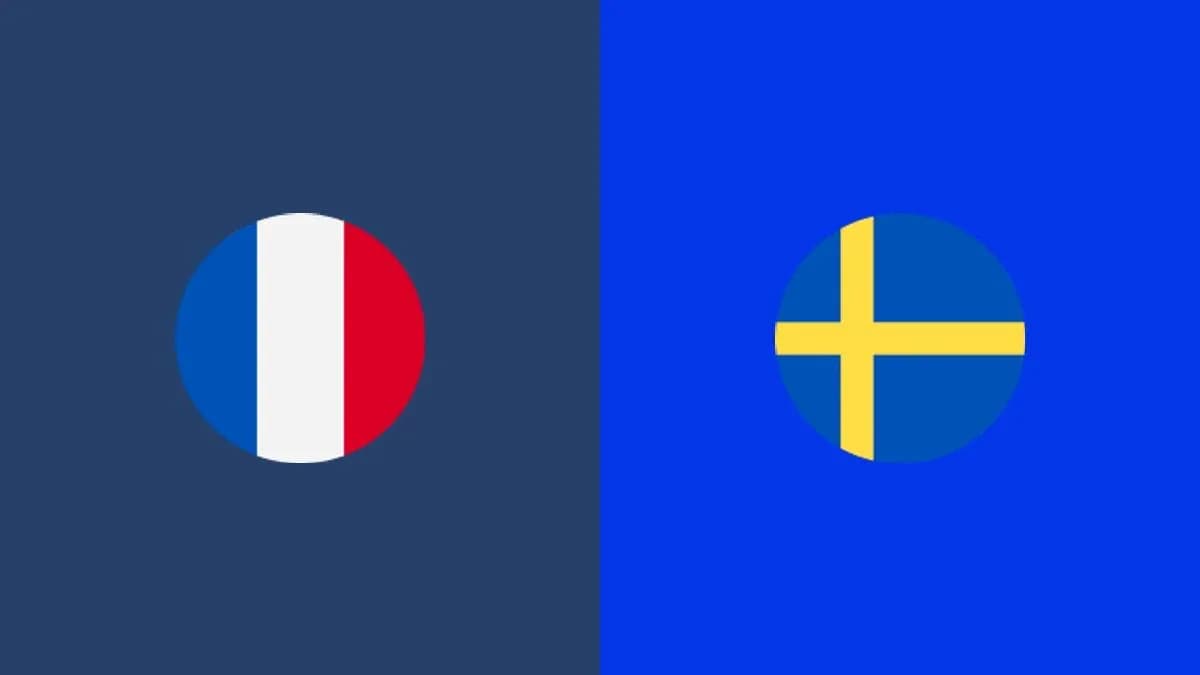
France vs Sweden: Deschamps’ Last World Cup Challenge
On a warm New Jersey night, under the steel and noise of the New York New Jersey Stadium, a World Cup heavyweight walks into a trap game.
France, perfect so far and playing like a side that knows this stage by heart, open their knockout campaign on 30 June 2026 at 21:00 GMT (17:00 EST). Across from them: Sweden, scarred, unpredictable, and just dangerous enough to ruin someone’s tournament.
This is Didier Deschamps’ last World Cup as France coach. He has already confirmed he will step down when it’s over. Every knockout tie from here is either the next step in a farewell tour or the final chapter of a 12-year reign.
France arrive in full stride. Sweden arrive on a tightrope.
France, flawless and loaded
Group I never really laid a glove on Les Bleus. Senegal, Iraq, Norway – all swept aside with the cold efficiency of a team that has been here too many times to be rattled by early hurdles.
Ten goals scored, two conceded, nine points from nine. The numbers tell one story. The manner tells another.
The 4-1 dismantling of Norway to close the group was the loudest statement. Not from Kylian Mbappé, but from Ousmane Dembélé, who tore through the Norwegians with a hat-trick that underlined just how deep France’s attacking well runs. When your “secondary” winger is running riot like that, the rest of the bracket takes notice.
Deschamps’ side have won four of their last five, the only blemish a pre-tournament friendly defeat to Ivory Coast that now feels distant. Since the World Cup started, they’ve looked like what they are: a complete, tournament-hardened machine.
Mike Maignan anchors a defence that, while not flawless, has rarely been stretched for long spells. In front of him, Aurélien Tchouaméni and Adrien Rabiot form a double pivot built to suffocate games, dictate tempo, and free the artists ahead of them.
Michael Olise and Désiré Doué glide into half-spaces, pull defenders out of shape, and leave Mbappé one-on-one more often than any back line would like. When those isolation moments come, games tilt. Quickly.
Sweden, bruised but still swinging
Sweden’s path could hardly be more different. Graham Potter’s side squeezed into the Round of 32 as one of the best third-placed teams from Group F, a journey that veered from humiliation to hope.
They were thrashed 5-1 by the Netherlands, then responded with a 5-1 win of their own over Tunisia. The same scoreline, opposite ends. That alone sums up this Sweden: volatile, entertaining, and unreliable in equal measure.
A 1-1 draw with Japan in their final group game was enough to drag them through. Across their last five matches, they have scored 10 and conceded 10. Every game feels like a coin toss.
Potter’s Sweden are not built to control France. They are built to hurt them in moments.
Anthony Elanga brings pure, blistering pace. His long-range strike against Japan was a reminder that he can change a game with a single stride and swing of the boot. Alongside him, Alexander Isak and Viktor Gyökeres offer power, movement, and vertical threat.
Give that front line grass to run into and they can turn France’s high line into a liability. Fail to connect those first passes in transition and they will spend the night chasing shadows.
Fault lines at the back
For all the attacking talent on display, this tie may be decided by who holds their nerve in central defence.
France have a concern, but it is manageable. William Saliba, rested against Norway with a back issue, is expected to play through discomfort to reclaim his spot. When fit, the Arsenal defender gives Deschamps calm distribution and imposing one-on-one defending alongside Dayot Upamecano.
Deschamps’ likely XI looks settled:
Maignan; Koundé, Upamecano, Saliba, Hernández; Tchouaméni, Rabiot, Olise, Dembélé, Doué; Mbappé.
That structure has a clear logic. Jules Koundé tucks in, Lucas Hernández offers balance on the left, and the midfield screen tries to ensure Maignan is rarely exposed to clean looks.
Sweden’s situation is more precarious. Isak Hien is out injured, and that single absence has forced Potter into a reshuffle that could define the contest.
Victor Lindelöf, used in midfield, is expected to drop back into central defence. Gabriel Gudmundsson should join him, with Gustaf Lagerbielke also in the back three. That, in turn, opens the door for Tottenham teenager Lucas Bergvall to step into the engine room.
The projected Swedish XI:
Zetterström; Lagerbielke, Lindelöf, Gudmundsson; Bernhardsson, Bergvall, Ayari, Stroud; Elanga, Gyökeres, Isak.
It is a bold, slightly improvised structure. Against a rampant France, it will need to be almost flawless.
Overloads vs open field
The tactical clash is stark.
France want the ball, the territory, and the rhythm. They want Tchouaméni and Rabiot to pin Sweden back, Olise and Doué to flood the pockets between the lines, and Dembélé to drag full-backs into impossible decisions.
When those overloads form on one side, Mbappé lurks on the other, waiting for the switch that leaves him isolated. From there, it is often a matter of how many defenders he beats, not whether he beats them.
Sweden’s answer is to bypass the midfield chess match entirely. They will look to go vertical, fast.
Turnover. First pass forward. Second pass into space. Elanga, Isak, Gyökeres running at a retreating French defence. That is the picture Potter wants to see, again and again.
The question is whether Sweden can withstand the pressure long enough to create those moments. Their back line has already shipped seven goals in three group games. Against a side that scored 10 in theirs, any lapse will be punished.
Maignan’s command, Zetterström’s trial
France’s defensive structure has one recurring flaw: brief spells where they switch off without the ball. Lapses in tracking runners, casual moments in possession. So far, opponents have not been ruthless enough to fully exploit them.
Maignan’s authority helps. He marshals his penalty area with confidence, and Deschamps will want his first-choice back four restored to give him maximum protection. With knockout margins razor-thin, one misjudged line or mistimed step can flip a tie.
For Sweden, the spotlight falls on Oliver Zetterström. He walks into a night where almost everything he does will be under scrutiny. Commanding his box, dealing with crosses aimed at Mbappé and Dembélé, staying composed when France pin Sweden deep – all of it will matter.
He will need help. Tight, disciplined tracking from the wing-backs to deny Dembélé and Olise the easy angles into the box. Compact distances between centre-backs and midfielders so Doué cannot turn and run. One missed assignment, and the French front line will tear through the gap.
History leans blue, jeopardy says otherwise
Recent history tilts towards France. The last meeting came in November 2020, a 4-2 French win in the UEFA Nations League A. Sweden did win the reverse fixture earlier that year, 1-0 in Stockholm, but across the last five clashes, France hold three victories to Sweden’s one.
They also split their World Cup qualifiers in 2016 and 2017, each winning at home. Familiarity is not the issue. The gulf in current form is.
France topped Group I with authority. Sweden crawled out of Group F in third. On paper, this should be straightforward. World Cups rarely obey paper.
Deschamps has a fully available squad, no reported injuries or suspensions clouding his decisions. He can lean on depth: N’Golo Kanté to close a game, Marcus Thuram or Jean-Philippe Mateta to change its shape, Bradley Barcola or Rayan Cherki to twist tired legs.
Potter has fewer cards to play, and one significant one – Hien – is already off the table. No suspensions, but a back line in flux against one of the most explosive attacks in the tournament is a brutal starting point.
And yet, this is knockout football. Ninety minutes, maybe 120, where one deflection, one breakaway, one goalkeeping performance can flip the narrative.
France know how to navigate these nights. Sweden know they have nothing to lose.
Deschamps is chasing one last deep run. Potter is chasing a shock that would shake the bracket.
Only one of them will walk out of New York New Jersey Stadium with their World Cup still intact.