Frank Lampard Reflects on Mourinho's Sacking and Its Impact
Frank Lampard still remembers the way he walked in.
Not into a stadium, not out of a tunnel. Into a dressing room that had just been told its world was about to change.
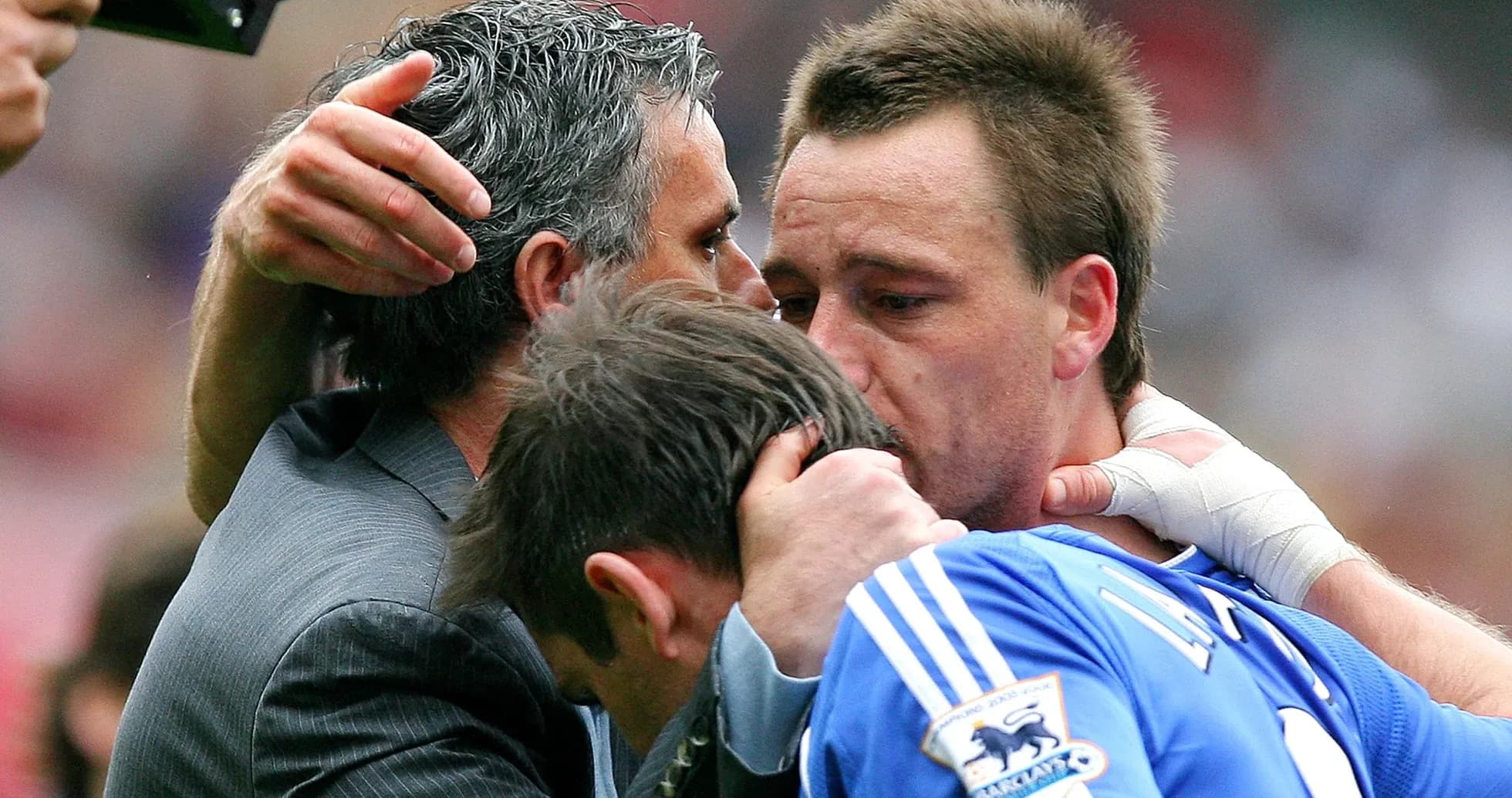
Jose Mourinho, the manager who had turned Chelsea into a snarling, title-winning machine and elevated Lampard into one of Europe’s elite midfielders, came through the door and delivered the news himself: he’d been sacked.
Lampard recalled the silence first. Then the shock. Then the tears.
"I remember him coming into the dressing room and he said to me that he’d been sacked," Lampard said. "I couldn’t think about how much this man had helped my career, how much I loved working with him. There were tears, which is not normal in the dressing room when a manager leaves."
This was not the usual handshake, the polite goodbye, the quick statement on the club website. This was the end of an era breaking over the heads of players who thought it would last longer.
Grown men in tears
John Terry felt it just as deeply. The captain, the on-field embodiment of Mourinho’s Chelsea, still carries the weight of that night against Rosenborg in the Champions League — the 1-1 draw that became the flashpoint for Mourinho’s dismissal.
"I would leave that pitch in a coffin for him," Terry said. The line tells you everything about the bond between manager and captain.
Inside that dressing room, the reaction was raw.
"You’ve got grown men, tears running down their face, not really understanding why," Terry said. "And even still today I’m like, that’s my fault.
"When we drew the Champions League game, my man scored. If I didn’t let that person score, would he have lasted another couple of years? Who knows? I still feel kind of responsible for that, if that makes sense. It’s just disappointing how it all ended, if I’m honest. I absolutely loved him and adored him and was more upset than anyone, to be honest."
For Terry, it was never just a bad result. It became a sliding-doors moment. One lapse in a group-stage game that, in his mind, helped push out the man who had transformed the club.
A triangle invaded
Mourinho’s version of events stretches beyond one draw and one defensive mistake. For him, the real fracture line ran through the boardroom and the owner’s box.
He spoke about a “triangle” that once defined Chelsea’s power structure: Jose Mourinho, chief executive Peter Kenyon, and owner Roman Abramovich. Clear lines. Clear roles. Clear trust.
"In my work, the triangle: Jose, Peter Kenyon, Roman was invaded by strangers," Mourinho revealed. In the early days, he said, Stamford Bridge’s executive box was a tight circle. "In the beginning, you play at Stamford Bridge, you look to the box, Roman, his wife, with one or two persons of his confidence."
Then the faces changed.
"A few seasons later: former players, agents. These kinds of people, they know where the money is."
That was Mourinho’s way of describing the slow erosion of control, the outside voices edging closer to the owner, the sense that football decisions were no longer made solely by the men tasked with winning matches.
The tension grew. So did the distance.
A request from Sardinia
One story underlined just how far the relationship had shifted.
Mourinho recalled an approach from Kenyon, sent on behalf of Abramovich, that went far beyond the usual demands of a billionaire owner.
"I think Roman changed," Mourinho said. "For example, one day Peter came to me quite embarrassed and he told me, 'Jose, I have to tell you something. The boss is in Sardinia with these boats, and the people that work in these boats they play football against guys from the hotel, and they are losing. Can you go there to win a game for him?'"
It sounded like a joke. It was not.
Mourinho’s answer was blunt.
"'No, Peter, I have training today. I have to prepare for tomorrow; I cannot go'. And he was not happy with that."
That refusal, in Mourinho’s eyes, was another small crack in a relationship that had once powered Chelsea to the top of English football. Training, preparation, the next match — those were non-negotiable. Even for an owner used to getting exactly what he wanted.
The split that followed left Lampard in tears, Terry with lingering guilt, and Mourinho convinced that the inner sanctum he had built had been compromised from the outside. The trophies remain on the shelf, the memories etched in club history, but the way it all ended still stings everyone who lived it.