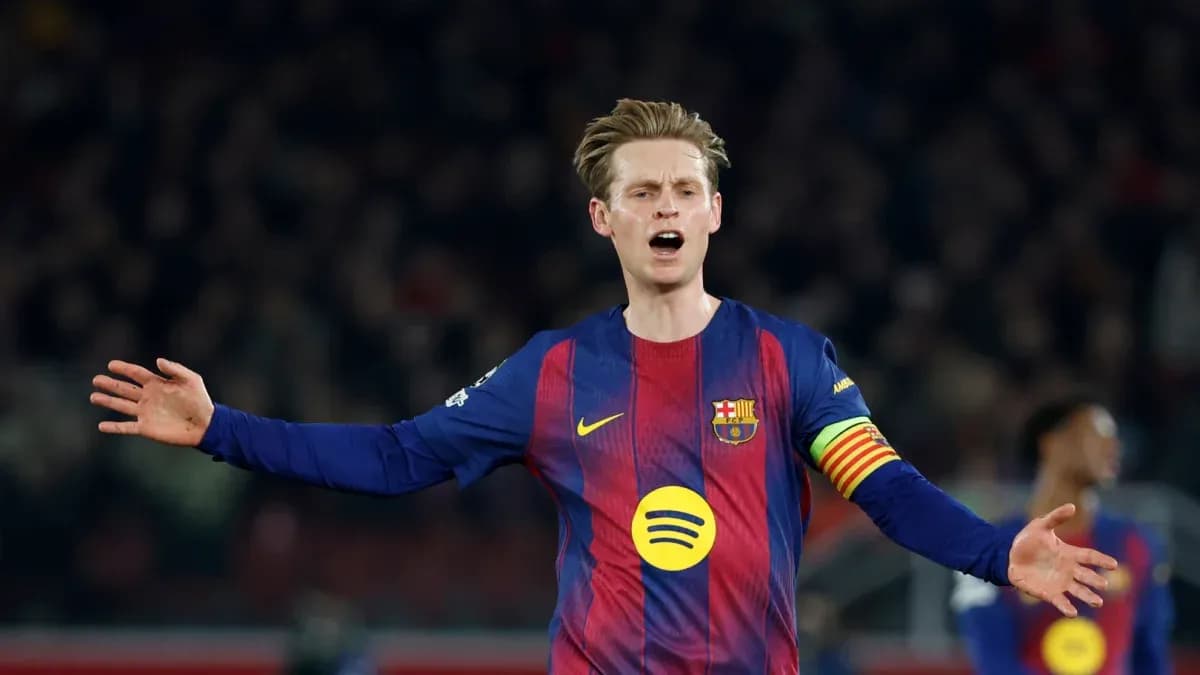
Frenkie de Jong's Injury Impact on Barcelona's Future
Barcelona are living on a knife edge with Frenkie de Jong.
The Dutch midfielder, cornerstone of their project and symbol of a new era, is in the middle of a recovery that could define not only his season, but the club’s planning for years to come.
A fragile countdown
De Jong returned from the last World Cup with more than just fatigue. Medical tests in Barcelona confirmed a ligament injury, serious enough for the club to close ranks and refuse to reveal any estimated recovery time. No optimistic dates, no comforting timelines. Just silence.
The player chose a conservative route: a demanding, carefully controlled treatment expected to last two months and keep him off the pitch for several more weeks after that. He is currently halfway through that process, walking a narrow line between full recovery and a much darker scenario.
Because the risk has never gone away. If the ligament does not respond perfectly, if there is the slightest setback, surgery looms. That option is not a distant threat; it is very much alive in the conversations inside the club. And if De Jong goes under the knife, the lay-off stretches brutally: four to five months on the sidelines.
For a player of his influence, that is not just an absence. It is a structural problem.
Plans under pressure
This uncertainty rips into the Sporting Directorate’s blueprint for the squad. The original plan was clear: no need to touch the midfield. Barcelona believed they were well covered in the middle of the park, numbers and profiles both deemed sufficient to carry them through the season.
So firm was that belief that, even after De Jong’s injury, the club still holds to the idea of selling Marc Casadó, a player who operates in the same area of the pitch. The message had been: trust in what we have.
Now that message sounds far more fragile.
If De Jong’s conservative treatment fails and he is ruled out for nearly half a year, the entire balance of the squad shifts. A position that looked crowded suddenly feels exposed. Minutes that were meant to be shared now become a burden for the remaining midfielders. Choices turn into compromises.
A worrying pattern
The calendar tells a harsher story than any medical report. The concern is not only the possibility of five months out. It is the pattern that precedes it.
De Jong is picking up injuries with growing frequency. Over the last three seasons, he has already missed 56 matches due to various physical problems. That is almost a full league campaign erased from his record, spread across setbacks that refuse to go away.
If the current issue forces surgery, the tally grows again, and the impact spills into the start of the 2026/27 season. For a club that built so much of its sporting project around him, that is a serious red flag.
Hansi Flick sees it. Deco feels it. Between the bench and the sporting office, the same question hangs in the air: can Barcelona still plan with De Jong as the untouchable pillar of their midfield, or must they start to prepare for a future where his availability is no longer guaranteed?
Market questions, uncomfortable answers
Against this backdrop, the club has started to quietly scan the market. Not with the fanfare of a grand rebuild, but with the urgency of an institution that knows one key decision could define its season.
Do they hold their nerve, trust the treatment, and hope De Jong returns as the same dominant force? Or do they move now, accept the medical risk, and adjust a squad that was never supposed to need emergency surgery of its own?
For Barcelona, this is no longer just about one ligament. It is about how much uncertainty a club of their ambitions can afford in the heart of their midfield.