Genoa vs Como: A Tale of Two Teams
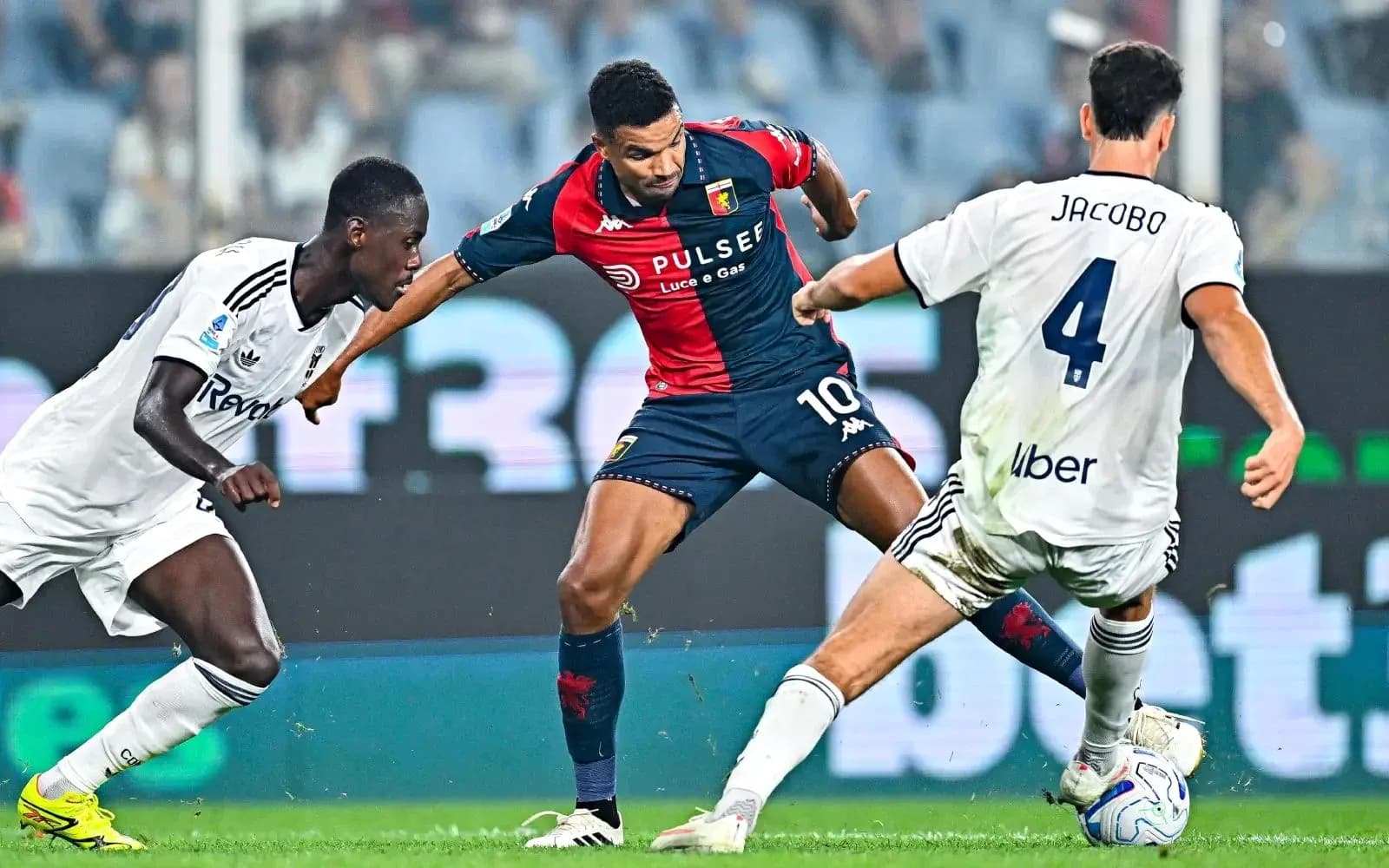
Under the Friday-night lights at Stadio Luigi Ferraris, Genoa’s early-season anxieties met Como’s rising confidence—and were brutally exposed. In a Serie A campaign still in its infancy, this 4–1 away win felt less like a blip and more like a statement about where these two squads currently stand.
I. The Big Picture – Diverging Trajectories
Following this result, Genoa sit 19th with 0 points from 3 matches, their overall goal difference at -6, the product of 1 goal scored and 7 conceded. At home, the numbers are even more alarming: 2 games, 0 points, 1 goal for and 6 against. The season’s statistical DNA is already clear—fragility at the back, bluntness up front.
Como, by contrast, leave Genoa in third place on 7 points from 3 matches. Overall they have 7 goals for and 3 against, a goal difference of +4 that underlines a side comfortable on their travels: all 3 of their league games so far have been away, yielding 2 wins and 1 draw, with 7 scored and only 3 conceded.
The formations told a story before a ball was kicked. Daniele De Rossi doubled down on a back three with a 3-4-1-2: J. Bijlow behind a defensive line of A. Marcandalli, L. Østigård and M. Ellertsson, wing-backs S. Sabelli and T. Baldanzi flanking a central duo of D. Sow and J. Vásquez, with M. Frendrup supporting the front pair of L. Colombo and M. Osmajić. It is a shape Genoa have leaned on—three at the back has featured in all three league games, with a slight tweak from 3-4-2-1 to 3-4-1-2 here—but the defensive returns remain grim.
Cesc Fàbregas’ Como arrived with a clear identity: a 4-2-3-1 that has been used in all their league fixtures. J. Butez started in goal, protected by a back four of Yan Couto, Jacobo Ramón Naveros, T. Chalobah and Álex Valle. Ahead of them, the double pivot of M. Perrone and L. da Cunha anchored a creative trio of Assane Diao, N. Paz and M. Baturina behind lone striker T. Douvikas. It is a structure designed for control and vertical punches in transition—and in Genoa, it worked to ruthless effect, especially in a first half that ended 3–1 to the visitors.
II. Tactical Voids – Absences and Discipline
Genoa’s squad was already stretched. C. Drameh was unavailable as “Inactive”, while E. Havel (thigh injury) and L. Venturino (knee injury) also missed out. None are central stars yet, but their absence thins De Rossi’s rotation options in wide and midfield zones—precisely where his 3-4-1-2 demands energy and depth.
Como were without J. Addai due to an Achilles tendon injury. Fàbregas could still field his preferred front four, but Addai’s absence removes one more explosive option from the bench—less of a problem when your starters are in this kind of form.
Disciplinary patterns underline Genoa’s chaotic edge. Across the season, their yellow cards are scattered: 16.67% in each of the 0–15, 31–45 and 61–75 minute windows, and another 16.67% in added time between 91–105 minutes, with a further 33.33% unassigned. It paints a picture of a side that can lose composure at any stage, particularly late on. Individually, L. Østigård already has 3 yellows in 3 appearances, while Alexsandro Amorim and D. Sow have 1 each. Even without a red card on record, this trio embodies a defensive unit constantly flirting with disciplinary trouble.
Como’s bookings are more controlled and concentrated: their only recorded yellow so far comes in the 46–60 minute range, 100.00% of their cautions arriving just after half-time. That suggests a side that occasionally oversteps when raising intensity after the break, but otherwise keeps its discipline.
III. Key Matchups – Hunter vs Shield, Engine Room Battles
The “Hunter vs Shield” duel tilted heavily in Como’s favour. Genoa’s defence has conceded 6 goals at home across 2 matches, an average of 3.0 per game on their own pitch. Into that vulnerability walked a Como attack averaging 2.3 goals per match overall, all away from home. The collision was inevitable: Como’s front four carved open Genoa’s back three repeatedly, turning the first half into a clinic.
At the heart of it, M. Baturina and Assane Diao confirmed their status among Serie A’s early-season stars. Baturina, already with 2 goals and 1 assist overall and a rating of 7.34, is both finisher and conduit: 90 passes at 87% accuracy, 3 key passes, and 5 fouls drawn make him the creative metronome between lines. Diao, also on 2 goals and 1 assist with a 7.6 rating, adds directness: 12 dribbles attempted with 6 successful, 26 duels with 13 won. Against Genoa’s back three, their movement between the lines and into half-spaces repeatedly isolated Østigård and his partners.
Genoa’s response in the “Engine Room” was led by D. Sow and J. Vásquez, with M. Frendrup pushing on. Sow has been tidy—91 passes at 91% accuracy—but this midfield lacks a destroyer who can slow transitions or break Como’s rhythm. When the wing-backs, Sabelli and Baldanzi, pushed high to support Colombo and Osmajić, the spaces behind them were ripe for Como’s counters.
Up front, L. Colombo remains more facilitator than finisher so far. With 0 goals but 1 assist and 4 key passes overall, he drops into pockets to link play. Yet Genoa’s overall attacking output—1 goal total this campaign, 0.3 per game—means his creative work is rarely rewarded. Against Como’s compact 4-2-3-1 block, his movements did little to unsettle a back line protected by Perrone and da Cunha.
IV. Statistical Prognosis – What the Numbers Foretell
Following this result, Genoa’s season profile is stark. Overall, they average 0.3 goals for per match and 2.3 against. At home, it is 0.5 scored and 3.0 conceded. They have failed to score in 2 of 3 games and have yet to keep a clean sheet. The defensive structure is leaking at every level, and with their card distribution spread across the match, there is no clear window of control.
Como’s numbers, by contrast, speak of a side built for away-day authority. On their travels they score 2.3 per game and concede 1.0, with no defeats in 3. Their biggest away win is already a 4–1, and while they have yet to record a clean sheet, their attack consistently outpaces any defensive lapses.
In xG terms—though the raw values are not provided—the shot volume and finishing records of Baturina, Diao and Douvikas (a combined 21 shots, 11 on target and 6 goals overall) suggest a forward unit outperforming most early-season defences they meet, especially one as porous as Genoa’s.
The tactical verdict is clear. Genoa’s 3-4-1-2, as currently executed, exposes a back line that is both overworked and ill-protected, with a midfield that cannot simultaneously shield and create. Como’s 4-2-3-1, meanwhile, is coherent, repeatable and ruthless in transition, led by a creative axis of Baturina and Diao that few sides have yet found an answer to.
Following this result, Genoa are staring at a relegation fight unless De Rossi rebalances his structure and shores up the defensive shield in front of Bijlow. Como, on the other hand, leave Ferraris looking every inch a Champions League contender in the making—organised, incisive, and already comfortable dictating games far from home.