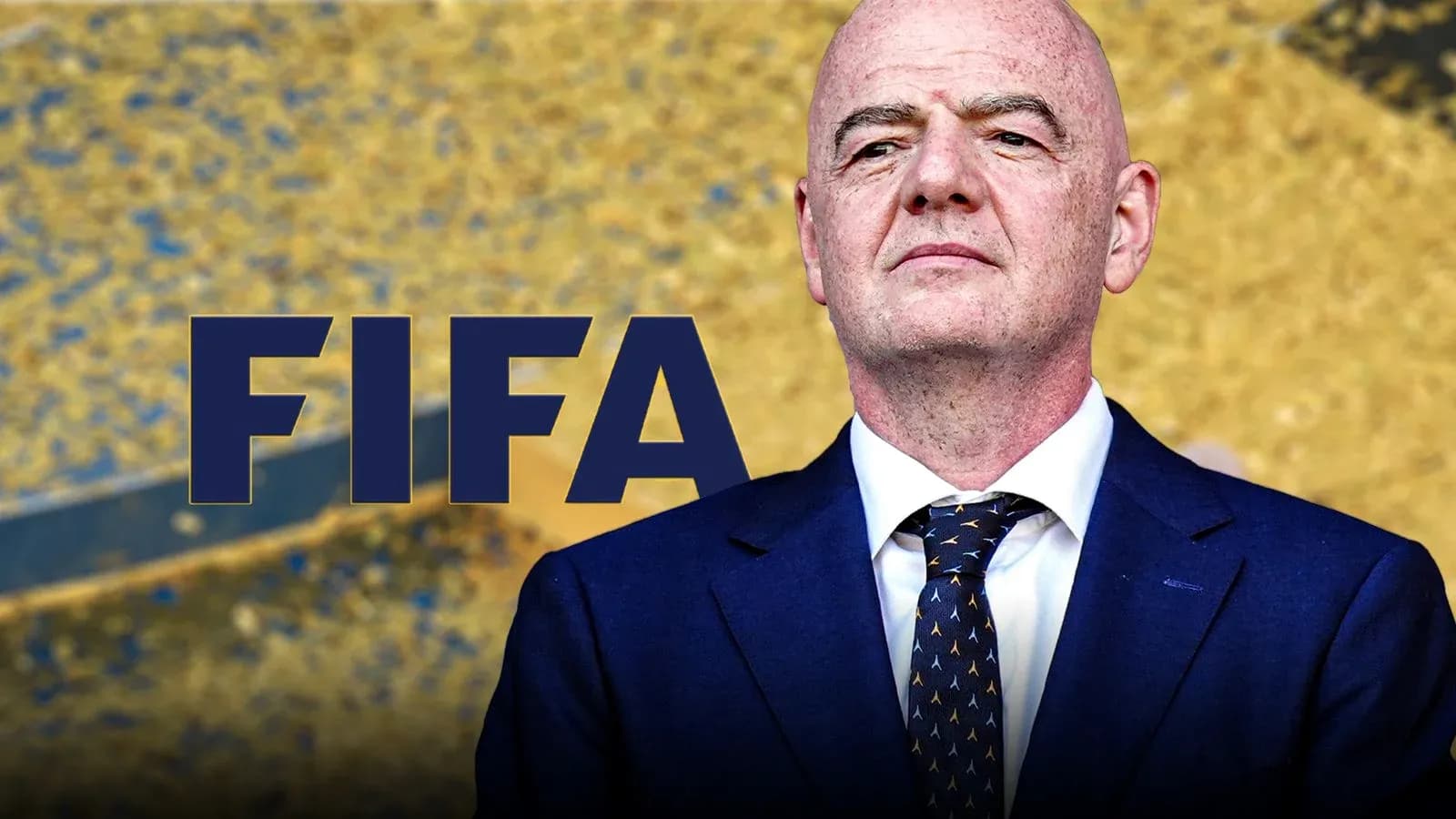
Gianni Infantino Abandons Controversial World Cup Sell-Off Plan
Gianni Infantino has scrapped his most audacious – and divisive – project yet.
The FIFA president has abandoned plans to sell a stake in future World Cup profits to private equity, a move that would have reshaped the game’s financial landscape and, in the eyes of many inside football, crossed a red line.
The climbdown came in the early hours of Saturday, delivered in a short, carefully worded statement. The timing was late; the pressure that forced it was anything but.
A £20bn vision that tore the game apart
On Tuesday, FIFA had unveiled its grand idea: FIFA Forward Enterprise (FFE).
The project would have bundled together the organisation’s most lucrative assets – commercial rights from broadcasting, sponsorship, ticketing and licensing – and tied them to the operational delivery of its tournaments. In simple terms, the World Cup and FIFA’s wider portfolio would be partially opened to private investors.
The numbers were staggering. FIFA aimed to raise up to $4.2bn (£3.1bn) by selling minority, non-controlling stakes in FFE, which it valued at around $20bn (£15bn). In return, the governing body claimed, more than $10bn in “football development funding” could be generated over the next four years.
To help sell it, Infantino dangled a direct incentive: national associations were given until September 19 to back the proposals, with a £30.1m sweetener on offer for those who signed up.
For some, it looked like a bold, modern funding mechanism. For others, it looked like the thin end of a very dangerous wedge.
The backlash was immediate and ferocious.
UEFA, CONCACAF and the Asian Football Confederation (AFC) lined up against the plan. The English FA voiced “deep concern”. On social media, Prime Minister Andy Burnham cut through the financial jargon with a blunt reminder: “football belongs to fans”.
Inside FIFA’s own corridors, the mood darkened.
Internal revolt and a project in freefall
Infantino’s authority did not just come under attack from rival confederations. It was hit from within his own camp.
Carlos Cordeiro, one of his senior advisors, walked away in protest, branding the privatisation plan a “bad deal for football” and “for the long-term future of the game”. In an exclusive statement, he stressed he had no involvement in the proposal and opposed it “unequivocally”.
That resignation alone would have been damaging. What followed made it worse.
Kevin Lamour, FIFA’s chief operating officer, accused the organisation’s leadership of a lack of openness, saying staff had been “deceived” and “deserve better than contempt and intimidation”. He described the World Cup sell-off as “the project of one person” and urged football’s leaders to act.
By Friday, with criticism building, FIFA had tried to stem the tide with a defensive line: “nobody is selling football”. The words did little to calm the storm. The perception, inside and outside the game, was that the World Cup itself was being part-privatised.
The pressure finally told.
Infantino backs down – but not with an apology
At 12:30am BST on Saturday, FIFA released a statement clearly marked as being from “the FIFA president”. For an organisation that usually speaks with one institutional voice, that attribution was telling. Infantino was now standing alone with his project.
He insisted the FFE plan had been “intended to provide a basis for further strengthening our FIFA Member Associations and our sport worldwide, especially in those countries where support is most needed”.
He underlined that it would only ever have gone ahead with majority backing from member associations and after consultation with the FIFA Council, confederations and stakeholders.
Then came the key admission: “Having listened carefully to all the views, it has become clear that the project has created divisions of a nature that, regardless of the level of support, are no longer in the interest of the objective set out in the first place. Our purpose has always been – and will always be – to unite and improve.
“As a result, this proposal will not proceed.”
The statement ended with a pledge to “bring all interested parties back together in the coming days and weeks” to keep growing the game, “particularly in those countries that mostly need our support”.
What it did not contain was any hint of regret. No apology. No “sorry”.
For Infantino, that word remains conspicuously absent from his vocabulary.
Confederations push back – and look ahead
If the president hoped his retreat would calm the waters, the tone from Asia suggested something else: a demand for a different way of doing business.
Writing on the AFC website, Sheikh Salman bin Ibrahim Al Khalifa welcomed FIFA’s decision to walk away from the sell-off. He stressed that any initiative “that has the potential to impact global football” must be presented and discussed with confederations, the FIFA Council, member associations and other stakeholders “in a timely, transparent and meaningful manner”.
He added that the future of global football “must always be shaped through proper consultation, collective dialogue and respect for the established governance structures of our game”.
The message was clear. The era of sweeping, top-down announcements from Zurich, delivered with minimal consultation, has met serious resistance.
A president fighting for survival
Behind the corporate language lies a brutal political reality: Gianni Infantino has pulled the plug to save his job.
Until this week, the FIFA presidential election in March looked like a formality. Infantino had secured public backing from more than 200 of FIFA’s 211 member associations, including the English FA. A challenge seemed unlikely.
Now, that certainty has evaporated.
Federations that once saw Infantino as a safe conduit for development money are reassessing. The sell-off saga has sharpened doubts about his judgment and style of leadership. Many will quietly start asking the same question: is there a better option?
Unseating a FIFA president is notoriously difficult. The system, by design, protects the incumbent. And those who know Infantino expect him to cling on for as long as the rules allow.
Yet the dynamics have shifted. Confederations that have traditionally been close to him are no longer in lockstep. CONCACAF, which has often stood firmly in his corner, rejected the proposal on Thursday. The AFC has gone public in its opposition. UEFA has been openly critical.
Behind closed doors, powerbrokers are now testing the waters.
Potential names are already circulating. Sheikh Salman bin Ibrahim Al Khalifa, who finished second in the presidential vote a decade ago and now leads the AFC, is one. Victor Montagliani, the CONCACAF president, is another. Both head confederations that have turned against the sell-off.
Aleksander Ceferin, the UEFA president, would be a popular choice in many quarters. He offers a starkly different vision of governance – one without hydration breaks, “FIFA Peace Prizes”, Qatari-owned private jets for the president or $1m World Cup tickets. But there is no indication he wants the job, and he has never publicly expressed a desire to move to FIFA.
For now, much of this remains speculation. No one has stepped forward. Candidates must declare their intention to run by November 18. That deadline now looms large over Zurich.
From Trump to “yesterday’s man”?
Infantino also faces awkward conversations beyond football’s inner circle.
He had courted powerful political allies, among them Donald Trump, and made big promises about what FIFA could deliver. Those promises now sit alongside a project that collapsed under internal revolt and global criticism.
Trump, famously, does not like losers. Infantino has just been forced to abandon a $20bn vision under heavy fire. For a man who built his presidency on control and certainty, this is a brutal look.
Inside FIFA, he still holds the office and the levers that come with it. But the aura of invincibility has gone. The World Cup sell-off was supposed to be the next great leap in monetising the game. Instead, it has exposed fractures at every level of the sport’s governance.
The proposal is dead. The political fallout is very much alive.
The only question now is whether this was a one-off miscalculation – or the moment the rest of football decided it was time to move on from Gianni Infantino.