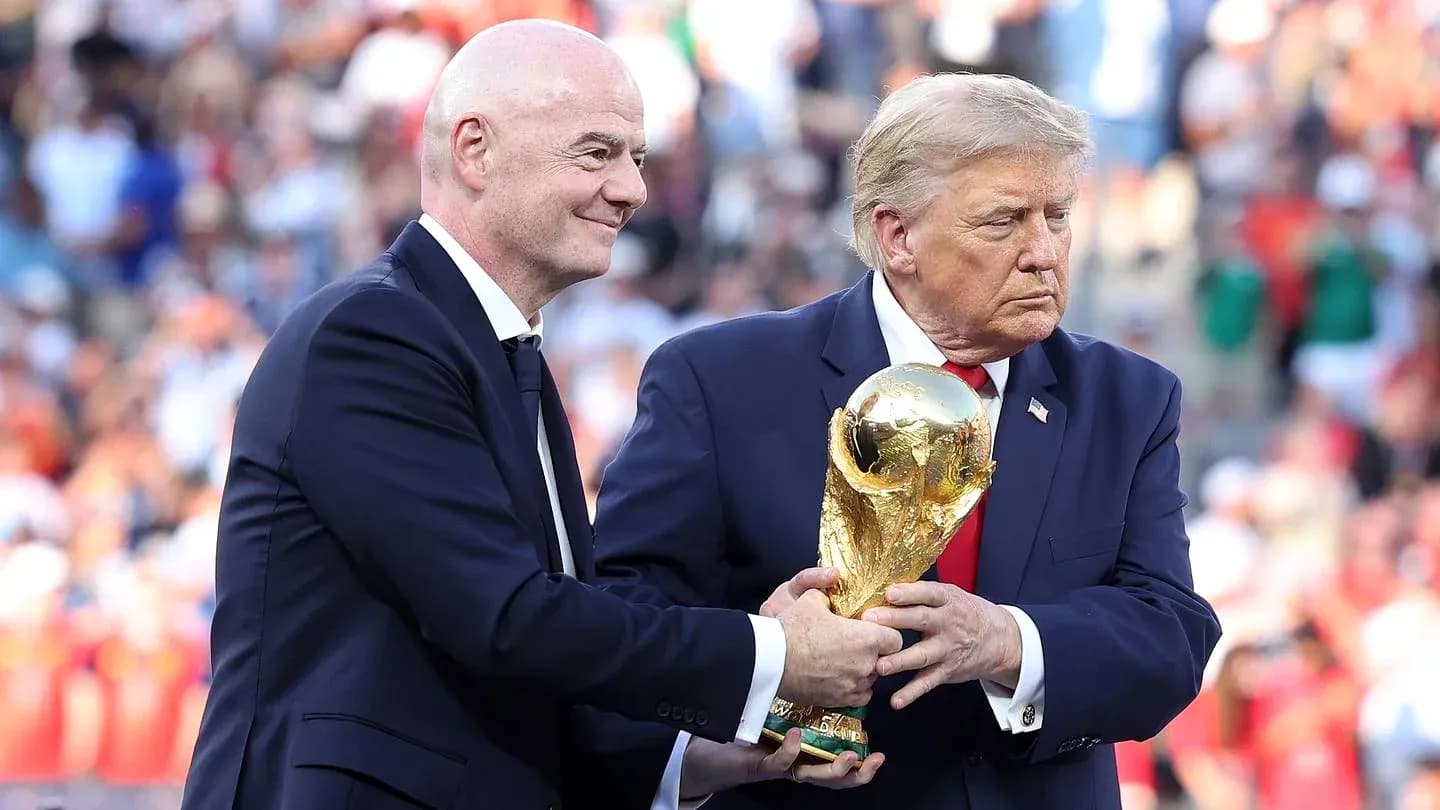
Gianni Infantino Faces Congressional Scrutiny Over Trump Ties
Gianni Infantino has been pulled into the heart of Washington’s political storm.
The FIFA president has been asked to appear before the House Judiciary Committee to explain, in detail, his relationship with U.S. President Donald Trump and the extent of the White House’s reach into world football’s governing body.
A Relationship Under the Microscope
Infantino and Trump have long been seen as close allies. That bond has now triggered formal scrutiny.
Over the years, Trump’s influence around FIFA has raised eyebrows. Infantino awarded the first-ever FIFA Peace Prize to the U.S. president, claimed office space in Trump Tower in New York, and shifted the World Cup draw to Washington’s John F. Kennedy Center — a venue that had, at the time, been effectively taken over by Trump’s team.
Those decisions already felt political. This summer’s World Cup pushed concern into overdrive.
During the tournament, Trump contacted Infantino to seek the lifting of a ban imposed on USMNT striker Folarin Balogun. The request was granted. That intervention prompted a formal complaint from the Norwegian Football Federation, one of the most vocal critics of Infantino’s conduct and of perceived political interference in FIFA affairs.
The pattern, for critics, is no longer subtle.
Raskin Turns Up the Heat
Rep. Jamie Raskin, a senior Democrat on the House Judiciary Committee, has now moved from criticism to action.
He has written to Infantino requesting a formal interview before the committee, asking the FIFA president to lay out the true nature of his dealings with Trump, including any arrangements away from the public eye.
Raskin’s language is blistering.
“The most recent quid pro quo that FIFA and President Trump orchestrated is not a victimless crime,” he wrote. “It hurts Americans.
“FIFA has taken its newfound favored status in the Trump Administration as a sign that it may rip off its consumers, most notably, by employing illegal price gouging and fraudulent sales tactics for the World Cup.”
The letter goes further, drawing a direct line between Infantino’s relationship with Trump and the corruption scandals that toppled former FIFA president Sepp Blatter. Raskin accuses FIFA of “outright bribery” and claims Americans have been “defrauded and manipulated” over the soaring financial demands tied to the World Cup — matters already under investigation by New Jersey attorney general Jennifer Davenport.
The letter “serves as notice” for Infantino to preserve and present evidence, including all communication “between FIFA personnel and individuals affiliated with the Trump Administration or its inaugural committee.” He is also requested to sit for a transcribed interview to defend his conduct and his ties to the president.
Power, Politics and a World Cup Future
For now, the political reality offers Infantino and Trump some breathing space.
Democrats sit in the House minority, which leaves Raskin without the immediate authority to compel testimony or documents from Infantino, FIFA or Trump. Any move toward subpoenas or legal action would require a majority vote on the committee — and that depends on November’s midterm elections.
If the Democrats gain ground, the pressure on FIFA’s leadership could escalate quickly. If they do not, this may remain a warning shot rather than the opening of a full-scale congressional probe.
Either way, the timing is sensitive.
The process for awarding hosting rights for the 2031 Women’s World Cup is gathering pace. The tournament is expected to be co-hosted by the U.S., Mexico, Costa Rica and Jamaica. With FIFA’s integrity once again questioned in Washington, every step of that bidding and allocation process is likely to be dissected, especially where U.S. interests are involved.
The White House Strikes Back
The response from Trump’s camp was swift and combative.
Asked by The Athletic to comment on Raskin’s letter, White House spokesperson Davis Ingle unleashed a scathing personal attack.
“Lightweight Jamie Raskin [is] a stupid person’s idea of a smart person,” Ingle said in a statement. He then pivoted to praise Trump’s role in the 2026 World Cup.
“No other president in history could have pulled off the historic feat that President Trump delivered for the American people and the world.
“Thanks to his bold vision and decisive leadership, the 2026 FIFA World Cup generated billions of dollars in revenue, created a massive economic boost across host cities, and delivered a safe, secure and seamless experience for millions of fans and athletes from around the globe.
“It will undoubtedly go down as one of the greatest and most successful sporting events in history.”
The message was clear: the Trump camp sees the World Cup not as a point of vulnerability, but as a triumph — and any attack on that legacy as partisan theatre.
Football’s Global Stage, America’s Political Arena
Infantino now stands at an uncomfortable crossroads.
On one side, a powerful ally in the White House, loudly claiming historic success and economic windfalls from FIFA’s flagship tournament. On the other, a senior lawmaker accusing him of corruption, political quid pro quos and financial exploitation of American fans.
The House may not yet have the numbers to drag FIFA into a formal reckoning. But with a World Cup legacy under dispute, a Women’s World Cup on the horizon and U.S. politics as combustible as ever, how long can Infantino keep football’s governing body out of the line of fire?