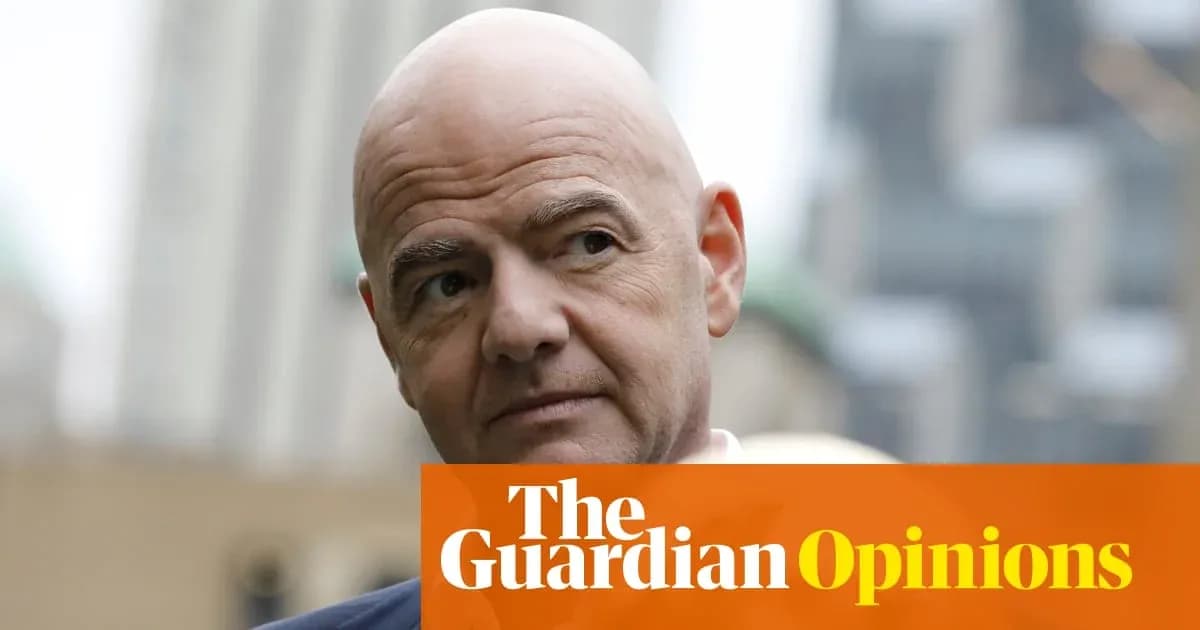
Gianni Infantino: The Ambitious Vision Behind Fifa's Growth
Gianni Infantino never really hid what he was about. It was there from the moment he walked into the Zurich ballroom in 2016, the surprise winner in the wreckage of the Sepp Blatter era, promising to clean up the game – and to make everyone richer.
He spoke of restoring “the image of Fifa”, of transparency, of accountability. He also told his electorate to expect a “very significant increase” in funding and predicted that “everyone in the world will applaud us”. Even then, there were whispers about his fondness for private jets. The signs were not subtle.
Back then, people painted him as a diligent Swiss technocrat, a safe pair of hands after years of scandal. Nobody uses that description now. Inside the sport, the language has shifted. “He thinks he’s running a nation state,” is the sort of line you hear from senior figures. That assessment feels especially sharp in the week Fifa, without any real consultation, announced plans to sell a slice of the World Cup’s commercial rights to outside investors.
This is the heart of Infantino’s project. Growth. Always more. More football, more tournaments, more revenue. The longer he has stayed in office, the more aggressively he has pursued that vision.
He moved quickly. In 2016, barely settled in the chair, he floated expanding the World Cup. He wanted a bigger Club World Cup too. Two years later came the idea of a global Nations League, to be delivered by a new corporate vehicle backed by external money. That scheme collapsed under pressure, but the direction of travel was obvious.
By 2017, Fifa had confirmed a 48‑team World Cup for 2026. In 2021, it emerged that the 12 Super League clubs had expected Fifa to quietly support their breakaway before that project also crumbled. At the end of the same year, Infantino went public with his plan for a biennial World Cup. The calendar, already creaking, was being stretched again.
After the Covid-19 pandemic, the pace only accelerated. Football’s finances were battered; Fifa stepped in with cash from its Forward Programme and Infantino saw an opening. Out came a 32‑team Club World Cup, and almost immediately talk of making it even bigger. The 2034 World Cup slid, virtually uncontested, into Saudi Arabia’s hands. The 2030 edition was scattered across three continents and six host nations, and there is already chatter about swelling that tournament to 64 teams. Even the introduction of mandatory hydration breaks, picked up at the end of last year, fed into the sense of a president constantly tinkering, constantly expanding his footprint.
Inside the game, a question keeps coming back: what is driving him? What is eating Gianni Infantino?
One answer, the most commonly heard, is patronage. More competitions mean more money. More money means more grants for member associations. And when election time rolls around, those grateful associations tend to vote the right way. Infantino has already rewritten the rules on presidential term limits since taking office; he has also, in effect, tripled Fifa’s revenues. You would think that would be enough to guarantee loyalty.
Yet he is already all but assured a third full term, and under the new statutes that should be his last. If job security is not the issue, what is?
The latest commercial scheme has sparked another theory: that Infantino is building his own landing pad for life after the presidency. Reports in the Times suggested he could become CEO of the new venture that would control World Cup commercial rights, stepping straight from Fifa’s top job into a lucrative corporate post with a salary to match.
Fifa has flatly denied that any such talks have taken place. Even if that role eventually materialises, it still feels like only part of the story. It doesn’t fully explain the relentless churn of ideas, the constant stretching of competitions, the willingness to absorb political heat.
So the conversation keeps circling back to a simpler, more uncomfortable explanation: status and power.
Infantino’s backstory is well known in football circles. The Italian kid from a working‑class family in wealthy Switzerland, bullied for his ginger hair, now sits at the very top of the sport. Once in office, he showed a clear taste for the high life and celebrity. During his 2016 campaign he surrounded himself with a dozen former stars – now branded Fifa Legends – to burnish his image. The private jets never went away.
Over time, his attention shifted from ex‑players to presidents and princes. His relationships with Vladimir Putin, the emir of Qatar, the crown prince of Saudi Arabia and, eventually, the US president, Donald Trump, have recast him on a much grander stage. He has started to behave less like the head of an NGO and more like a geopolitical operator.
That perception of power has allowed him to bulldoze through reform after reform with barely a murmur from within Fifa or the wider game. But alliances at that level are rarely romantic. They are transactional, fragile, and often come with a bill attached.
Which brings the story back to this new commercial plan and to one particularly stark assessment from a senior football figure. In their view, this isn’t really Infantino’s grand design at all.
“Gianni has got in way over his head with Trump,” they said. “He [Trump] is now extracting his share of the World Cup rewards.”
If that is even close to the truth, the question for football is no longer just what is driving Infantino – but how high a price the sport is prepared to pay for his ambition.