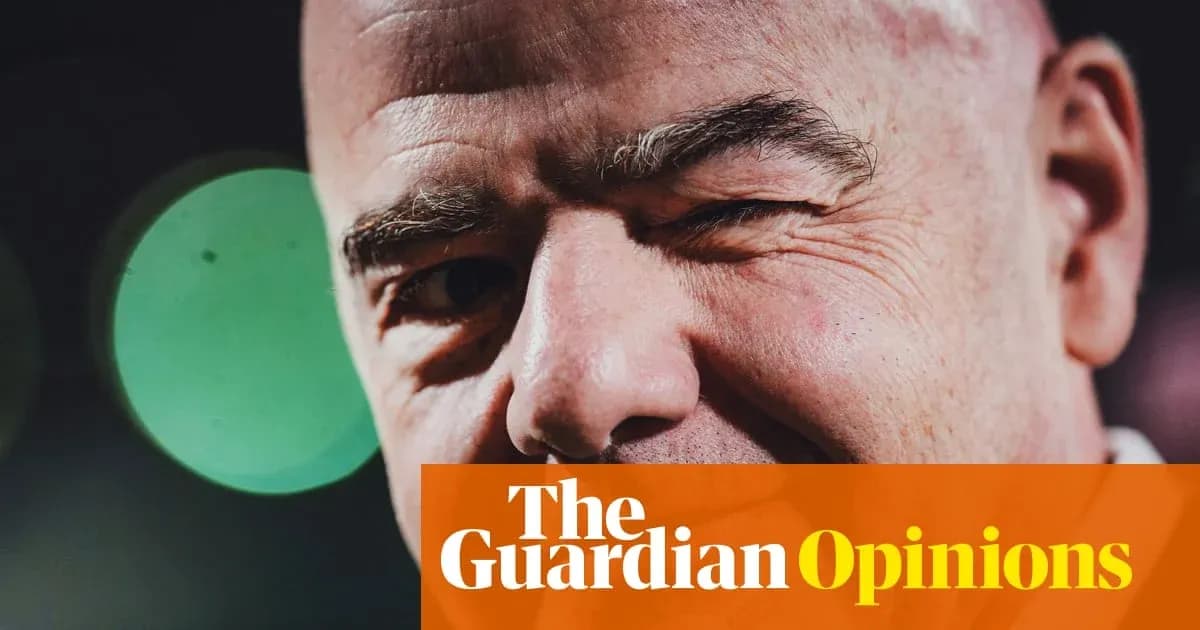
Gianni Infantino Must Resign: A Call for Change in FIFA
There is no room left for euphemism. Gianni Infantino has to go. Either he resigns as Fifa president or the game’s authorities find a legal route to force him out. Football cannot keep entrusting its future to a man who has shredded what little remained of Fifa’s credibility and dragged the sport’s global governing body back into the gutter.
His climbdown on Saturday morning only underlined the point. Confronted by a furious backlash, Infantino abandoned his plan to carve up parts of the World Cup and sell them to private investors under the Fifa Forward Enterprise (FFE) banner. He talked about resuming dialogue on football’s growth “in the spirit of shared interest in our game”. The words landed not as a vision, but as a survival tactic. A last-ditch attempt to cling on.
Each extra day he stays in office deepens the stain on an institution whose reputation is already on the floor.
A presidency at war with its own rulebook
The sheer audacity of launching the FFE project unilaterally – a scheme that would have handed vast influence over football’s future to venture capital – would, in most organisations, be enough to end a presidency. For Infantino, it is just another line on an already bloated charge sheet.
He has treated Fifa’s own statutes as optional. Governance rules have been bent, stretched and sidelined so often that the outrage now pouring out of confederations and federations feels less like a shock and more like a delayed reaction. “Football unites the world,” Fifa’s slogan insists. Under Infantino, it rings hollow.
Article 10.3 of Fifa’s regulations, the one that spells out the president’s responsibilities, could almost have been written as an indictment. The president must ensure Fifa’s “objectives, mission, strategic direction, policies and values are sustainably pursued, protected and implemented, and that a positive image of Fifa is fostered”. He must promote “friendly and peaceful relations within Fifa”.
Look around. Federations and senior officials have been lining up in recent days to distance themselves from him. Relations are anything but friendly, the image anything but positive.
The rules do not grant licence to launch a series of private projects, many of them aligned with the current US administration or its orbit, with barely a nod to transparency or oversight. Yet that is exactly the path Infantino has chosen.
A pattern of contempt
Where to start with the catalogue of misjudgments that brought the game to this point?
For many in European football, the tipping point came with the Folarin Balogun affair, which pushed leading figures close to the edge. That followed widespread disbelief and anger when Infantino handed a newly minted Fifa peace prize to Donald Trump in December. The process behind the award was opaque, the claims about Trump’s “qualifying achievements” hotly disputed.
Stakeholders were already weary of being treated as an afterthought. The introduction of “hydration breaks” at this summer’s World Cup – a fundamental tweak to the rhythm and flow of matches – arrived with scant consultation and left many wondering what, exactly, Fifa thought the game was for.
Then came the World Cup bidding farce. The accelerated process for the 2034 tournament ended with Saudi Arabia’s candidacy effectively waved through in December 2024, sparking another wave of criticism and deepening suspicions about how decisions at the very top are being made.
And still the plans keep coming. On Friday, fresh revelations emerged that a 64-team World Cup is now in advanced planning. Another expansion. Another upheaval. Another major decision driven from the president’s office.
So when Uefa issued a blistering statement on Saturday, demanding an end to “secret schemes on fast track timescales, cooked up by faceless individuals and of dubious benefit to the game”, it was not just the FFE proposal in its sights. It was the entire Infantino method.
Uefa draws a line
At last, a critical mass has formed. After more than a year of harsh words and private fury, Uefa finally moved from rhetoric to hard leverage. Its threat was clear: boycott future Fifa competitions if the FFE scheme went ahead.
That united stance mattered. It helped force Infantino’s retreat and handed Aleksander Ceferin, the Uefa president, a defining victory of his own tenure. But this is no time for self-congratulation in Nyon. If Infantino is allowed to regroup, to hire consultants, to work the phones and offer new promises, the old order can reassert itself quickly.
He has already brought in a major consultancy firm in recent days to soothe relationships with federations and rebuild support. Give him time and space and the same leaders who recoiled this week could be nudged back towards the comfort of the status quo.
Inside Uefa and across other confederations there is a growing recognition: the pace cannot drop. Senior figures are adamant that Infantino must not ride out this storm.
The next move: reclaiming the mandate
One key step lies with the national associations. Before this crisis exploded, an overwhelming majority of them had formally pledged support for Infantino’s re‑election next March. Those letters now look like a trap of their own making.
Associations can withdraw those pledges. Doing so requires a formal request to Fifa, but if enough of them act, the effect would be unmistakable – a de facto vote of no confidence in the president.
Fifa pushed hard to secure those commitments. Many FAs now face the prospect of public embarrassment if their earlier declarations of loyalty are dragged into the light. That discomfort cannot be an excuse for inaction.
Member associations carry a duty that goes beyond their own short-term interests. If they shrink from confronting an existential threat to the game’s governance, they become complicit. They fail football just as badly as Infantino has.
To step back now, to declare the job done because one reckless scheme has been shelved, would be to leave the sport half rescued and still in danger.
A chance to rebuild – or to sink further
Uefa has already signalled how a post‑Infantino world might look. It has promised to design a new model for distributing Fifa’s vast wealth, tapping into multibillion cash reserves without “selling the family silver” to private investors.
Behind closed doors, conversations are under way with other confederations to identify credible candidates to replace Infantino, ready to stand if he clings on until the election. This crisis, for all its toxicity, offers a rare opportunity to reset how football is run, to drag Fifa closer to the values it claims to represent.
That opportunity evaporates if the current president remains in place, still able to bend the machinery of Zurich to his will and to impose the final word on every major decision.
The alternative is bleakly familiar. Fifa – and with it the global game – stumbles from one self‑inflicted disaster to the next, trapped in a cycle of scandal and damage control.
When the world’s conversation about football keeps circling back to one man, his ego and his latest grandiose scheme, the sport has to ask itself: how much longer is it prepared to live like this?