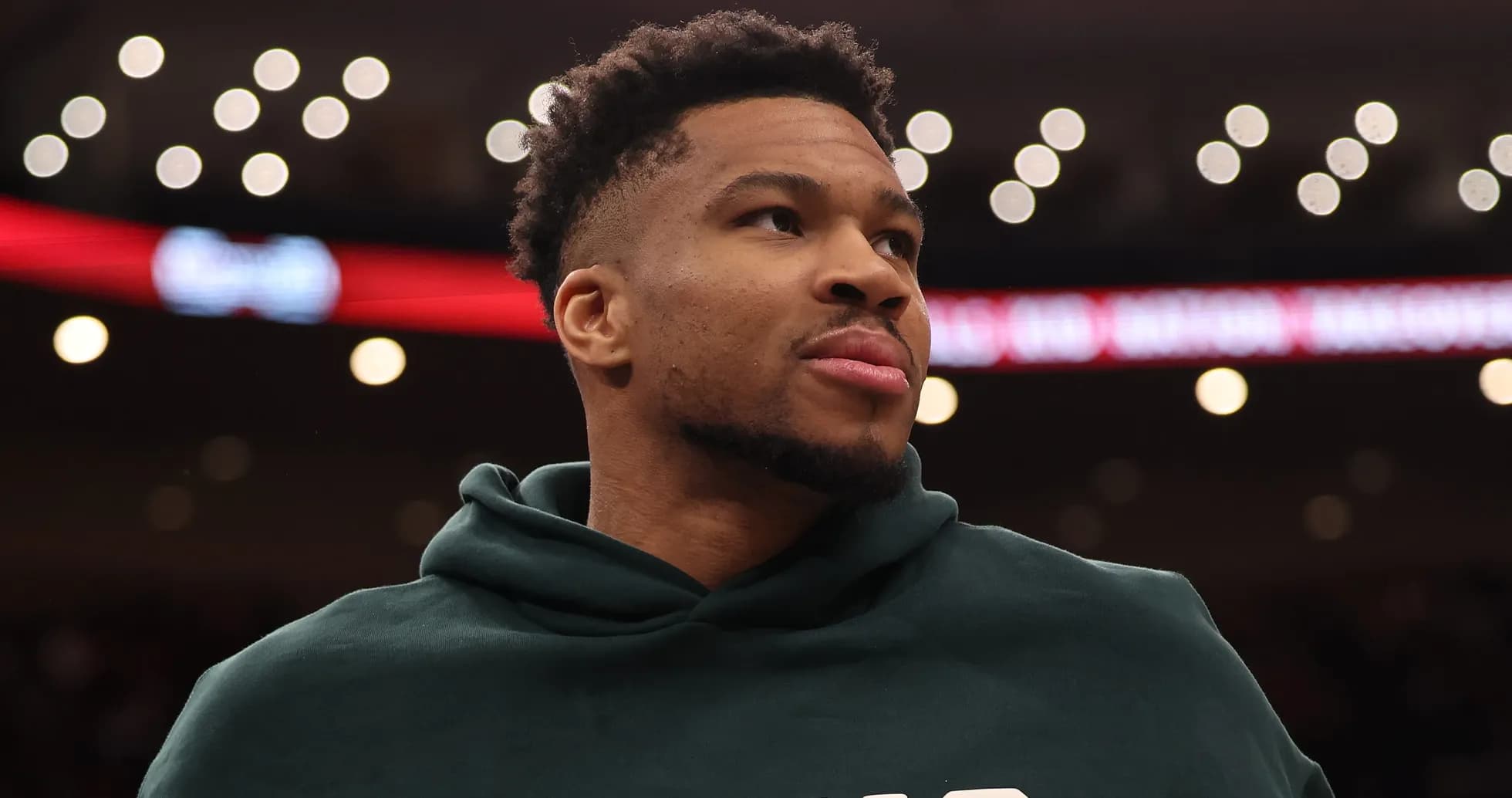
Giannis Antetokounmpo's Injury Sparks Crisis with Bucks
The uneasy truce between Giannis Antetokounmpo and the Milwaukee Bucks has snapped.
What began as a standard late-season injury absence has spiraled into a full-blown organizational crisis, with medical decisions, locker-room trust, and even shoe-contract money now tangled in the same knot.
A Knee Injury That Became Something Bigger
Antetokounmpo has not played since March 15, when a hyperextended left knee and bone bruise sidelined him. On paper, it looked simple: protect the franchise cornerstone, prioritize long-term health, regroup in the offseason.
Instead, Milwaukee slid out of postseason contention while its two-time MVP simmered on the sideline.
By early April, the frustration boiled over. Speaking on April 3, Antetokounmpo made clear he believed he should have been on the floor.
“For somebody to come and tell me to not play or not to compete, it’s like a slap in my face,” he said. “I’m available to play… So, I don’t know where the relationship goes from there.”
That last line hung in the air. It still does.
Cleared in His Mind, Blocked by the Team
The core dispute is stark. Giannis says he was ready. The Bucks say he wasn’t.
Antetokounmpo appeared in only 36 games this season, well short of the 41-game mark that became a flashpoint. According to Shams Charania, multiple sources said Milwaukee’s decision to keep him out cost him a significant bonus in his Nike endorsement deal, which would have triggered at 41 games played.
The missed time wasn’t for lack of trying, at least from his side. Sources told ESPN that Antetokounmpo pushed to return as early as March 17 against the Utah Jazz. When that didn’t happen, he circled dates on a Western Conference road trip — Phoenix, Los Angeles, Portland — as targets.
He never got back into uniform.
The Bucks’ medical staff declined to clear him, pointing to their internal evaluation process. During the NBA’s subsequent investigation, the team told league officials that Antetokounmpo had declined to take part in scheduled three-on-three scrimmages, a key step in their return-to-play protocol.
Giannis offered a very different version. He told people inside the organization and league investigators that he felt healthy enough to compete and wanted to finish the season playing, not watching.
One injury, two stories. And a widening gap in trust.
Union Steps In, League Takes Notice
This was never going to stay an internal matter.
The National Basketball Players Association stepped in on March 24, issuing a statement that raised concerns about how Milwaukee’s handling of Antetokounmpo could affect the integrity of the league. That language got everyone’s attention.
The NBA opened a formal review, interviewing Antetokounmpo, team officials, and medical staff. The question wasn’t just whether a star should have played through a bone bruise. It was who gets the final say when health, competitive drive, and financial incentives collide.
The Bucks insisted they were protecting their player. Antetokounmpo believed he was being held back against his will, with millions in endorsement money left on the table because of a decision he did not agree with.
Cracks in the Foundation
The fallout hasn’t stopped at the training room door.
According to team sources cited by ESPN, friction between Antetokounmpo and the front office — including general manager Jon Horst — has been building since the trade deadline. The injury saga didn’t create the tension. It exposed it.
Head coach Doc Rivers found himself caught in the middle of shifting expectations. Late in the season, Rivers told veteran players that ownership did not want guys sitting out for non-legitimate injuries. The message was clear: if you can go, you go.
That standard, however, was not applied to Antetokounmpo’s situation. The contrast only sharpened the sense of inconsistency inside the locker room and around the league.
On the court, Milwaukee never found its rhythm. Injuries piled up, performances dipped, and a team built to contend instead missed the postseason. When he did play, Antetokounmpo still produced at an elite level, averaging 27.6 points per game. But 42 missed games turned this into one of the most limited seasons of his career.
The numbers underline the frustration. The context explains the anger.
Money, Power, and a Franchise at a Crossroads
What makes this rift especially volatile is that it’s not just about minutes or medical charts anymore.
Antetokounmpo’s failure to reach 41 games had a direct financial consequence tied to his Nike deal. The Bucks’ decision to keep him sidelined didn’t just shape their season; it shaped his bottom line. For a fiercely competitive superstar who prides himself on availability and work ethic, that sting goes beyond spreadsheets.
Inside the organization, questions now swirl about what comes next. The Bucks are expected to examine every layer of leadership, from Rivers’ future on the bench to the broader roster construction around their star. The margin for error with a player of Antetokounmpo’s stature is thin. It just got thinner.
For Giannis, this offseason looms as one of the most important of his career. Extension talks, long-term commitment, even the specter of trade conversations — all of it now sits against the backdrop of a season defined by mistrust and missed opportunities.
One source close to the team told ESPN, “This is as toxic of a team situation as any in the league.” That’s not a throwaway line. It’s a warning.
The Bucks and their two-time MVP have built a championship together. Now they have to decide whether they still see the same future, or whether this fracture over when — and who — lets Giannis play is the moment that changes everything.