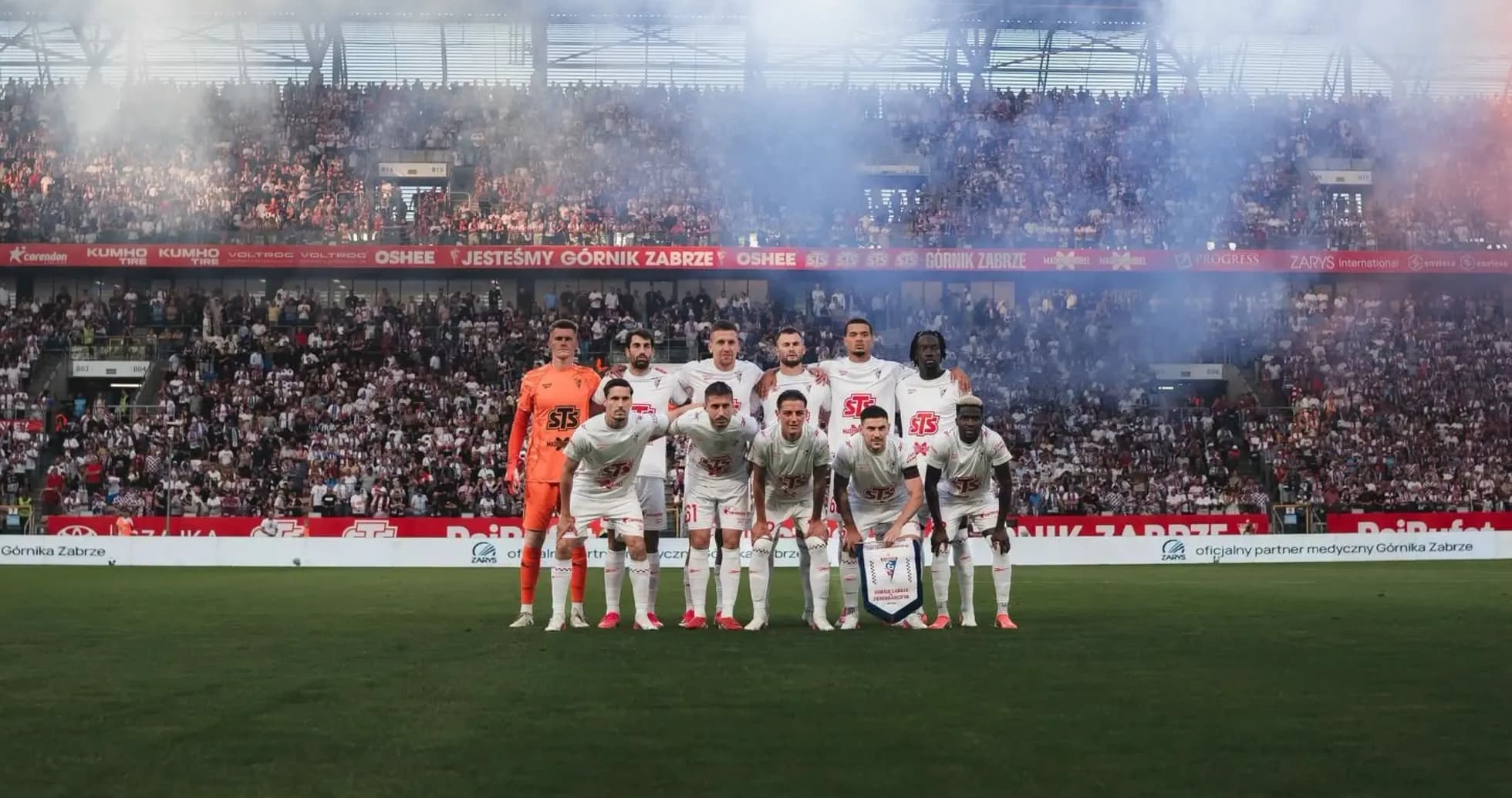
Gornik Zabrze vs Fenerbahçe: Tactical Analysis of 1-1 Draw
The 1-1 draw at Stadion im. Ernesta Pohla unfolded as a clear clash of structures and risk profiles: Gornik Zabrze in a 4-1-4-1 seeking vertical surges from a compact block, Fenerbahçe in a 4-2-3-1 aiming to dominate territory and circulation. Across 90 minutes, the hosts produced more shots on goal (6 to 2) despite having slightly less of the ball (48% to 52%), while the visitors leaned on their superior passing accuracy and technical security to control long phases of possession.
Gornik's Tactical Approach
Out of possession, Gornik’s 4-1-4-1 was defined by the single pivot, Maximilian Dietz, screening in front of the centre-backs and allowing the two advanced interiors, Lukáš Sadílek and Kacper Urbański, to jump aggressively onto Fenerbahçe’s double pivot of Mattéo Guendouzi and Fred. With Taofeek Ismaheel and Yvan Ikia Dimi starting wide and Erik Prekop leading the line, Gornik tried to funnel Fenerbahçe into the flanks, then compress aggressively. Their foul count (8 to Fenerbahçe’s 15) and four yellow cards, many for contact-related infractions (“Holding”, “Unsportsmanlike conduct”, “Roughing”), reflect a strategy of selective, tactical interventions rather than constant disruption.
In possession, Gornik’s structure tilted subtly left, with Erik Janža stepping higher from left-back and Ismaheel tucking inside, creating pockets between Fenerbahçe’s lines. The hosts attempted 379 passes, completing 297 at 78%. That passing volume, combined with 9 corner kicks and 15 total shots, shows a side that, while second in raw possession share, managed to sustain meaningful attacking phases. The shot profile is revealing: 15 total shots but only 5 from inside the box, and 10 from outside. Gornik were forced into long-range efforts by Fenerbahçe’s compact box defence, yet still carved out enough quality looks to test the visitors.
The key attacking pattern for Gornik was the overlap and underlap on the right, where Michal Sáček, nominally a right-back, was encouraged to step aggressively into the half-space. That culminated in the 45+10’ equaliser: Sáček arriving from deep, assisted by Prekop, symbolised the home side’s willingness to commit full-backs beyond the first line. The fact that Sáček was the scorer underscores how their structure was designed to release defenders into advanced zones once the first pressing line of Fenerbahçe was broken.
Defensively, Gornik accepted that they would concede territory but tried to protect the central corridor. They allowed Fenerbahçe 14 total shots but only 2 on goal, an impressive shot-quality suppression that points to effective last-line positioning by Rafał Janicki and Josema. Five blocked shots underline their readiness to defend the box with numbers. Behind them, Philipp Schulze (Gornik Zabrze) was rarely called into spectacular action, registering 1 goalkeeper save; this was less about goalkeeping heroics and more about the outfield unit forcing Fenerbahçe into low-percentage attempts.
Fenerbahçe's Tactical Approach
Fenerbahçe’s 4-2-3-1, by contrast, was built on technical control and circulation. With 432 total passes and 372 accurate (an 86% completion rate), they clearly won the passing battle. Guendouzi and Fred acted as the stabilising hub, recycling possession and enabling the advanced trio of İrfan Can Kahveci, Marco Asensio and Kerem Aktürkoğlu to roam between the lines. The visitors generated 10 of their 14 shots from inside the box, a much more penalty-area-focused profile than Gornik’s. Yet, the low shots-on-goal figure (2) suggests that while they reached dangerous zones, their final execution was often smothered by Gornik’s block.
Out wide, Fenerbahçe’s full-backs Nélson Semedo and Jayden Oosterwolde pushed high to pin Gornik’s wingers, creating a 2-4-4 structure in settled possession. This helped them win 7 corners and sustain pressure, but also exposed them to counters when possession was lost. The higher foul count (15) and five yellow cards — including cautions for “Tripping”, “Roughing”, “Delay of game”, “Unsportsmanlike conduct” — reflect both the intensity of their counter-press and a degree of frustration as the match wore on.
In goal, Mert Günok (Fenerbahçe) was significantly busier than his opposite number, making 5 saves. Given Gornik’s 6 shots on goal, that indicates a strong individual performance, especially under moments of aerial pressure from set pieces and late crosses. Fenerbahçe’s defensive line, marshalled by Milan Škriniar and Nathan Aké, limited clear one-on-one situations but allowed too many shooting opportunities from the edge of the area, forcing Günok into repeated interventions.
Second Half Tactical Adjustments
Tactically, the second half was shaped by substitutions rather than a radical structural shift. Gornik’s changes, such as the introduction of Maksym Khlan and Sondre Liseth, maintained the 4-1-4-1 template but refreshed legs in the press and offered a more direct reference up front. Fenerbahçe’s bench, including İsmail Yüksek, Mason Greenwood and Anthony Musaba, tilted their approach slightly more vertical and transition-oriented, yet the underlying 4-2-3-1 framework remained intact.
Statistical Verdict
From a statistical verdict, the draw feels like a fair synthesis of contrasting strengths. Fenerbahçe’s superior pass accuracy and marginal edge in possession (52%) underline their technical control and ability to dictate tempo, especially through the middle third. Their 10 shots inside the box point to territorial superiority and better access to prime scoring zones. However, Gornik’s higher volume of shots on goal (6 to 2), more corners (9 to 7), and strong blocking numbers (5 blocked shots) show a side that translated fewer possessions into more immediate threat.
Discipline tilted against the visitors: Gornik collected 4 yellow cards to Fenerbahçe’s 5, with a total of 9 bookings, which inevitably disrupted rhythm and pointed to a physically intense contest. Without explicit xG values, the clearest inference is that Fenerbahçe created more box entries, while Gornik generated the more frequent on-target attempts. The result — 1-1 — ultimately reflects a tactical stalemate: Fenerbahçe’s control versus Gornik’s compactness and set-piece pressure, with neither side able to turn their structural advantages into a decisive second goal.