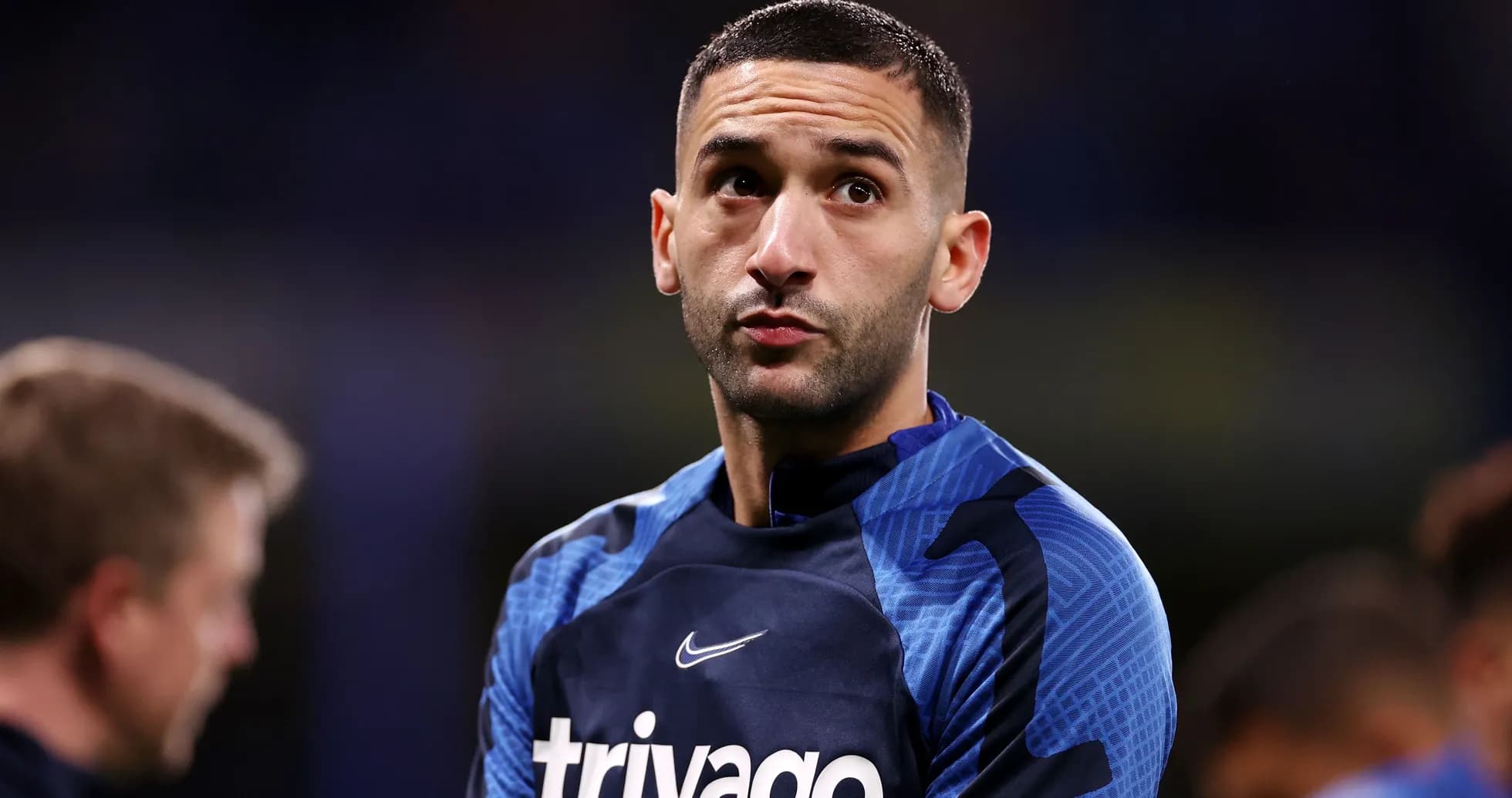
Hakim Ziyech vs Itamar Ben-Gvir: A Footballer’s Stand Against Israel’s Death Penalty
Hakim Ziyech is used to tense atmospheres. They usually come with a ball at his feet and a stadium roaring around him.
This time, the noise is political, and the arena is Instagram.
The Wydad Casablanca playmaker has ignited a fierce public clash with Israel’s Minister of National Security, Itamar Ben-Gvir, after openly criticising Israel’s policies towards Palestinian prisoners and a controversial death-penalty bill.
An Instagram post that lit the fuse
The confrontation began when Ziyech shared a photo of Ben-Gvir on his official Instagram account, just as the Knesset was debating legislation on the death penalty for those who carry out armed attacks.
Beneath the image, Ziyech posted a pointed question, casting doubt on the legal and moral foundations of the proposed law. He wrote: “Will [Ben-Gvir] claim this time that the passing of the new law is merely self-defence?”
No slogans. No long speech. Just a sharp line aimed directly at one of the most hardline figures in the Israeli government.
The post did not go unnoticed.
Ben-Gvir hits back
Ben-Gvir, a leading figure of Israel’s far right and the man overseeing the prison system, responded with the same combative tone that has defined his political career.
He dismissed Ziyech with a loaded accusation: “An anti-Semitic player cannot lecture the State of Israel on morality.”
Then he doubled down, turning the exchange into a broader warning.
“From now on, Israel will no longer deal cautiously with its enemies… Since I took office, the prisons have changed, and God willing, we will apply the punishment to all militants,” he said.
In a few lines, the row moved beyond a footballer’s social media post and straight into the heart of Israel’s security policy and its treatment of Palestinian detainees.
The law at the centre of the storm
The backdrop is a bill passed by the Knesset in late March, allowing the death penalty for perpetrators of armed attacks. Sixty-two MPs backed the legislation, a clear majority for a measure that has long been one of the most divisive topics in Israeli politics.
The vote triggered an immediate wave of reaction from international and Palestinian human rights organisations. Their concern is not abstract. Thousands of Palestinians are held in Israeli prisons, and rights groups have repeatedly reported deteriorating living and health conditions in detention centres.
For those organisations, the new bill raises the stakes dramatically: it adds the possibility of execution to a system they already describe as abusive and opaque.
That is the context in which Ziyech chose to speak. His post did not mention statistics or legal clauses, but it tapped straight into a long-running moral and political battle.
A footballer, a cause, and a country behind him
Ziyech’s stance quickly resonated back home.
Morocco’s Justice and Development Party, a major political force in the country, publicly backed the player. In an official statement, the party declared its solidarity with Ziyech, hailing his position as “humane and courageous”.
For the party, his words on Palestinian prisoners are not just a personal opinion. They argued that his message reflects the feeling of the Moroccan street and aligns with the Kingdom’s historical positions on the Palestinian cause.
In other words, this is not just Hakim Ziyech versus Itamar Ben-Gvir. It is a Moroccan international, speaking from a club with deep roots in Casablanca, stepping into one of the most charged conflicts in global politics and finding political backing at home.
Football, power, and the price of speaking out
The clash underlines a familiar but still striking reality: modern footballers no longer live in a sealed sporting bubble. Their platforms carry weight, their words travel fast, and their political stances can provoke cabinet ministers as easily as rival defenders.
Ziyech chose to question a law. Ben-Gvir chose to brand him an anti-Semite and to answer with the language of enemies and punishment.
The bill is moving forward. The criticism is growing louder. And a player known for his left foot has placed himself squarely in the middle of a debate that stretches far beyond the pitch and deep into the future of Israel’s treatment of Palestinian prisoners.