Hakim Ziyech's Bold Stand Against Israel's Death Penalty Law
Hakim Ziyech has spent most of his career deciding tight games with the ball at his feet. This time, a single Instagram story was enough to drag him into the heart of one of the most volatile political storms on the planet.
The Moroccan international, now with Wydad after high‑profile spells at Ajax, Chelsea, Galatasaray, and Al‑Duhail, publicly condemned Israel’s newly approved death penalty law for Palestinian prisoners. His reaction did not go unanswered.
An Instagram story that crossed borders
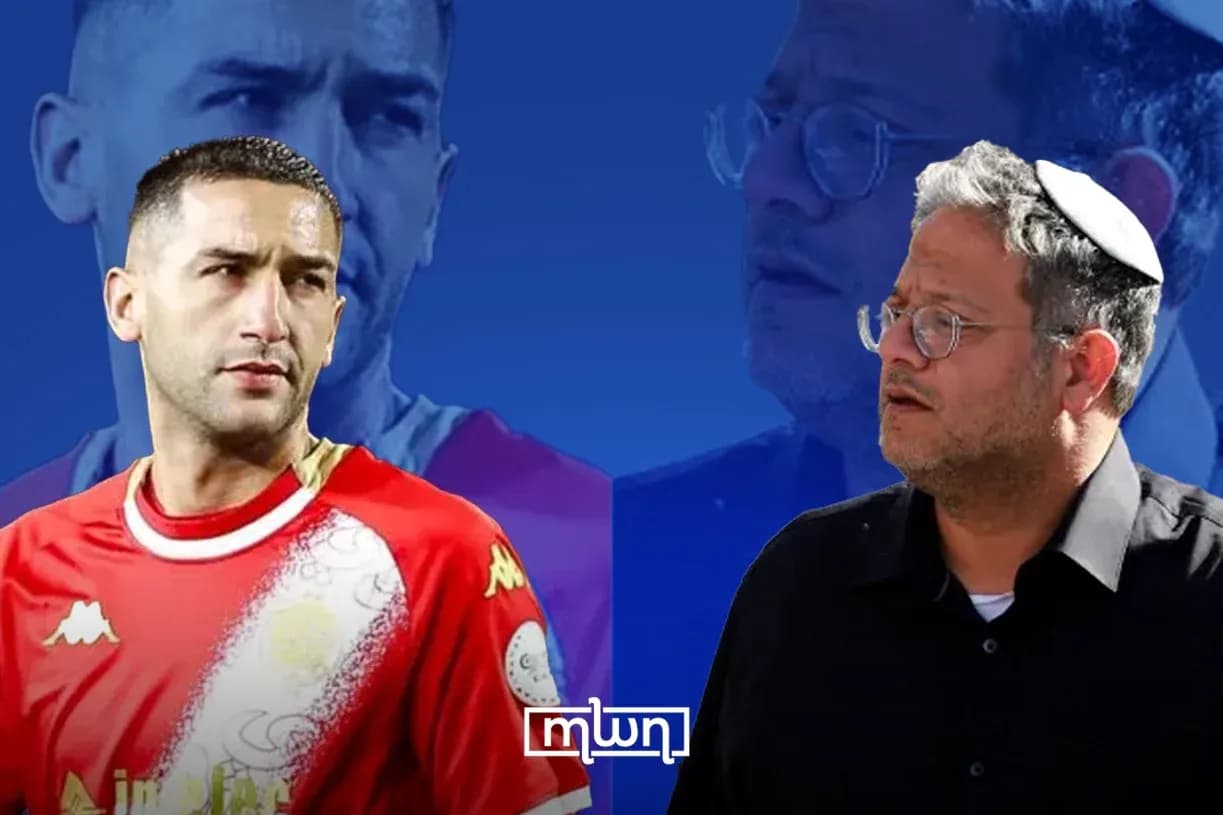
The spark came when Ziyech shared an image of Israeli National Security Minister Itamar Ben‑Gvir celebrating in the Knesset after the law passed. Alongside the picture, Ziyech questioned whether the decision would once again be dressed up as “self-defense.”
One story. One pointed line. It was enough.
Ben‑Gvir fired back, branding Ziyech “antisemitic” and dismissing any criticism of the law. In comments carried by Israeli and regional media, he went even further, warning that “Ziyech and all other antisemites will not escape.”
This was no longer a footballer posting an opinion. It had become a direct confrontation with one of the most hardline figures in the Israeli government.
A law that shook the region
On March 30, Israel’s parliament approved the controversial measure by a 62–48 vote. The law sets death by hanging as the default sentence for Palestinians convicted in military courts.
Human rights groups and international observers reacted with alarm. The UN human rights office has criticized the legislation as discriminatory and a threat to due process, arguing that it targets Palestinians in a system already widely condemned for unequal treatment.
That is the backdrop against which Ziyech chose to speak. He did not weigh his words in the language of diplomacy. He spoke as he has for months: bluntly, emotionally, and without stepping away from the political consequences.
A player who has never stayed silent
For those who have followed his off‑field voice, none of this came as a surprise.
Since the start of Israel’s devastating campaign on Gaza on October 7, 2023, Ziyech has used his platforms to highlight what he describes as massacres carried out by Israeli Occupation Forces against Palestinians. He has not limited himself to vague statements or symbolic gestures; his posts have carried strong language and clear positions.
Back in October, he published one of his earliest messages of support for Palestine, pairing it with a quote on oppression and the way media narratives can distort reality. It was a line in the sand from a player who has often appeared reserved in traditional interviews but unfiltered online.
Months later, as new footage from the occupied West Bank spread across social media, Ziyech spoke up again. He condemned Israel’s actions, urged people not to look away, and called for sustained public pressure. He also turned his criticism on governments he believes have enabled the situation, accusing them of complicity by silence or support.
This is not the calculated activism of a brand‑managed star. It is a pattern: repeated, consistent, and increasingly confrontational.
Ben‑Gvir’s response under the microscope
Ben‑Gvir’s decision to single out Ziyech has drawn attention not only because of the player’s global profile, but also because of the minister’s own record.
The National Security Minister has a past conviction for incitement against Arabs and long‑documented ties to an extremist movement that was banned in Israel. Those details have resurfaced quickly in the debate, sharpening scrutiny of his attempt to label a high‑profile critic as antisemitic.
The clash exposes a wider fault line. On one side, a footballer whose influence stretches far beyond the pitch, speaking to millions across North Africa, the Middle East, and Europe. On the other, a senior Israeli official using the full weight of his office to answer back.
This is no passing social media spat. It is a collision between sport, politics, and power, with a player who refuses to retreat from a cause he has made his own.