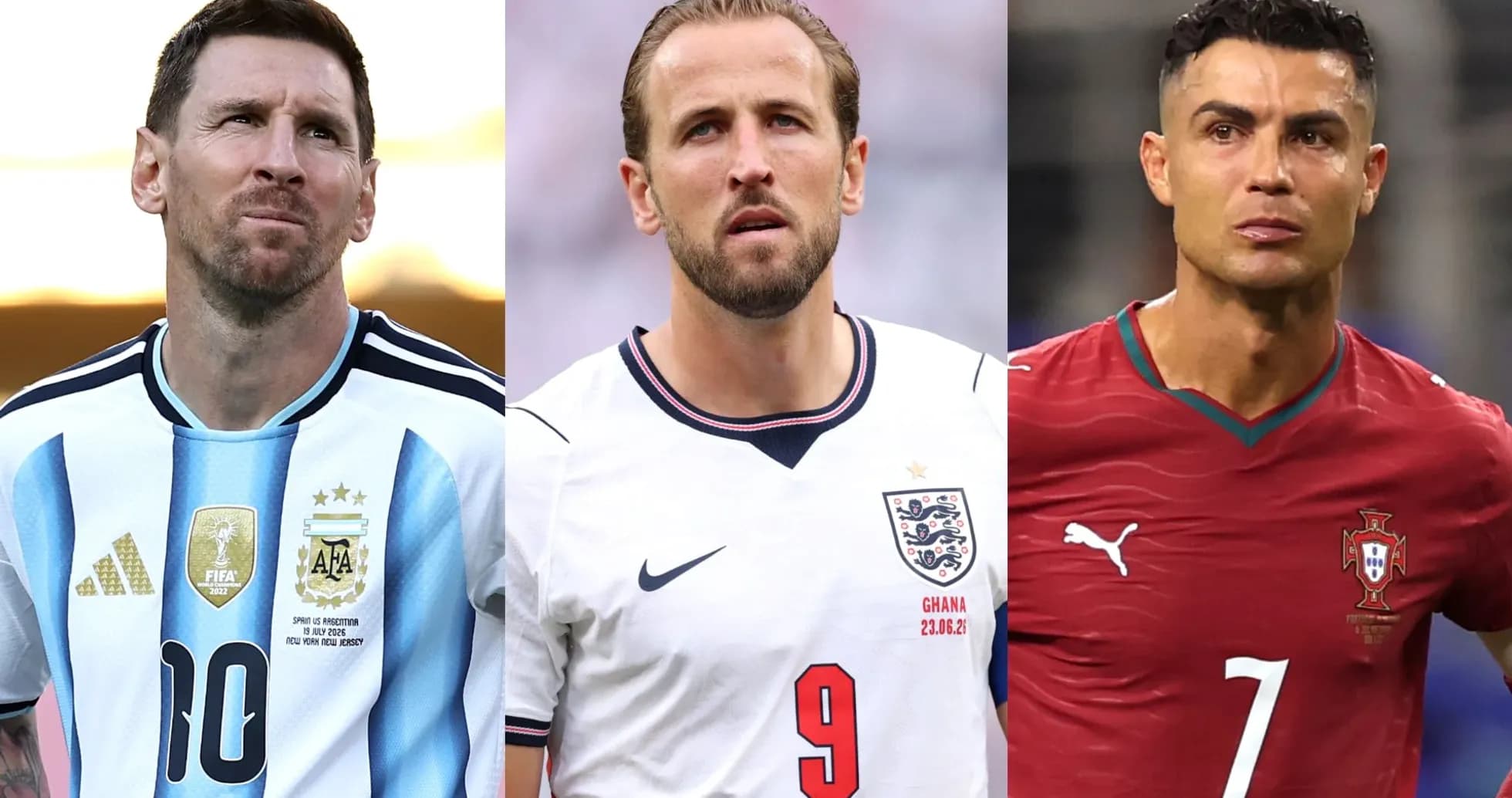
Harry Kane: England's Captain at a Career Crossroads
Harry Kane stands at a strange crossroads: still scoring at a ridiculous rate, still the heartbeat of England and Bayern Munich, yet already the subject of debates usually reserved for fading greats.
He has just come through another gruelling international campaign, dragging the Three Lions to a semi-final before Argentina slammed the door on their World Cup dream and England settled for third. Six goals, the captain’s armband, and once again that familiar feeling: a tournament that promised everything and delivered nothing silver.
This is the paradox of Kane. The numbers say one thing, the trophies another.
He is England’s all-time leading scorer, 85 goals and counting. He owns the same record at Tottenham. In Germany, he has treated the Bundesliga like a personal scoring range, hitting 146 goals in 147 games for Bayern. Those are computer-game figures, the kind that usually end arguments rather than start them.
Yet the conversation around Kane now is less about what he is and more about how long he can stay that way.
Bayern’s talisman, England’s dilemma
At Bayern, there is no hesitation. A new contract is on the table at the Allianz Arena, with only 12 months left on his current deal. They want him tied down, and quickly. Why wouldn’t they? He has barely missed a game in Munich, the “evergreen” tag feeling less like flattery and more like a statement of fact.
He has just turned 33. He is still the favourite to land the Ballon d’Or in 2026. He is still the man every defender worries about first when the team sheets land.
For England, the stakes are even higher. There is no obvious heir to that No.9 shirt. No logical successor ready to take the central striking role. The expectation is simple: Kane will lead the line, and wear the armband, at Euro 2028 on home soil.
After that, the questions get louder.
‘It’s a big ask’
Dietmar Hamann has seen enough elite football to know what the years can do to even the best. Speaking to GOAL via MrQ, the former Bayern midfielder didn’t dress it up when asked if Kane could stretch his international career to another World Cup.
“He’s turned 33 now so he'll be 36 going on 37 in four years' time. It's a big ask,” Hamann said.
He pointed to the recent World Cup, where two of the game’s all-time greats were still on show at 39 and 41. One coped. One did not. Kane, he stressed, does not belong in that rarefied bracket.
“Even though he would be a few years younger than these two guys playing in the World Cup, I think it's a big ask,” Hamann added. “It's a big ask because he started playing pretty early. He went out on loan in the lower leagues, played an awful lot of games in the Premier League, didn't really have many injuries. The odd ankle injury, I think he's had.
“He hardly missed a game in the last couple of years here in Munich. To see him in the World Cup in four years' time, if you put me down to an answer now, I'd probably say no.”
The logic is brutal: miles in the legs matter. Kane’s durability, the very thing that has made him indispensable, could be the reason his international career closes earlier than some expect.
Waddle’s warning
Chris Waddle, another man who knows the weight of an England shirt, has his own doubts about Kane stretching himself to one more World Cup.
“Fitness is a great thing to have. Some players develop, get better as they get older. Some find it easier. Not easier, but easy,” the former winger told GOAL.
His focus, though, was on the tell-tale signs, the little details that betray when a player is no longer operating at the very top level.
“We'll see how his legs are in two years' time, at the Euros even. People will be questioning that,” Waddle said. “The thing with Harry's advantage is he's a fit lad, we know that. He doesn't rely on pace. He's got a great football brain.”
That last point is key. Kane has never been about raw speed. His game lives in the spaces he sees before others, in his timing, in his finishing. Players like that often age better. They can drop deeper, change their role, dictate games in different ways.
But even the smartest football brain cannot completely outrun time.
“Sometimes you see players in tournaments and you think, ‘His legs are going there’,” Waddle continued. He used Cristiano Ronaldo as the example, recalling Portugal at the World Cup. “I watched Portugal play in the World Cup and his legs were gone in my eyes for that level of football. Lionel Messi still had bits of brilliance until the rest of his team-mates decided to try and kick everybody out of the country.”
The message was clear: even legends reach a point where the top level no longer fits, even if their name still does.
How long at the very top?
Waddle sees a future where Kane, like Messi in Miami or Ronaldo in Saudi Arabia, can still thrive at a slightly lower intensity, in a league that suits the stage of his career. The question is when that moment arrives.
“So I think there's a time and a place where you've actually got to think, ‘Yeah, he can still play, and he can still play like Messi does in Miami, a good level for him’. You know, Ronaldo in Saudi can still handle it. And Harry, eventually he'll come to a time where you think the Bundesliga is too quick. Where do you go from there?” Waddle said.
That line cuts straight to the heart of England’s planning. If the Bundesliga one day becomes “too quick” for Kane, what does that say about the World Cup, the most intense stage of all?
“The next World Cup, it's a big ask for him, I think, to play in that tournament,” Waddle added. “I think some of these players can think, ‘Yeah, I'm still playing football, but that level's out of me now, and I've enjoyed it’. I think some of these players try and play too long and it doesn't look great on them. But I'm sure Harry will know when the time's right to say, ‘No, I can't play for England anymore’.”
That, ultimately, might be the defining trait of the final phase of Kane’s career: knowing when to walk away from the international stage, rather than being pushed.
For now, he remains England’s captain, Bayern’s spearhead, and a frontrunner for the Ballon d’Or. The goals keep flowing, the records keep falling. But somewhere beyond Euro 2028, a decision waits. Will Kane chase one last World Cup, or choose to leave the biggest stage on his own terms?