Harry Kane: Defining Moments at the World Cup
Thierry Henry does not hand out compliments to strikers lightly. So when the greatest finisher of his generation paused on television to deconstruct Harry Kane’s second goal against the Democratic Republic of the Congo, you listened.
Inside of the foot. Body leaning away. Ball wrapped, not just struck. All while off-balance in the dying minutes of a World Cup game. Henry called out the difficulty of generating that kind of power at that stage, joked he would “break his back” trying it now. It was the sort of finish only elite forwards even attempt, let alone execute.
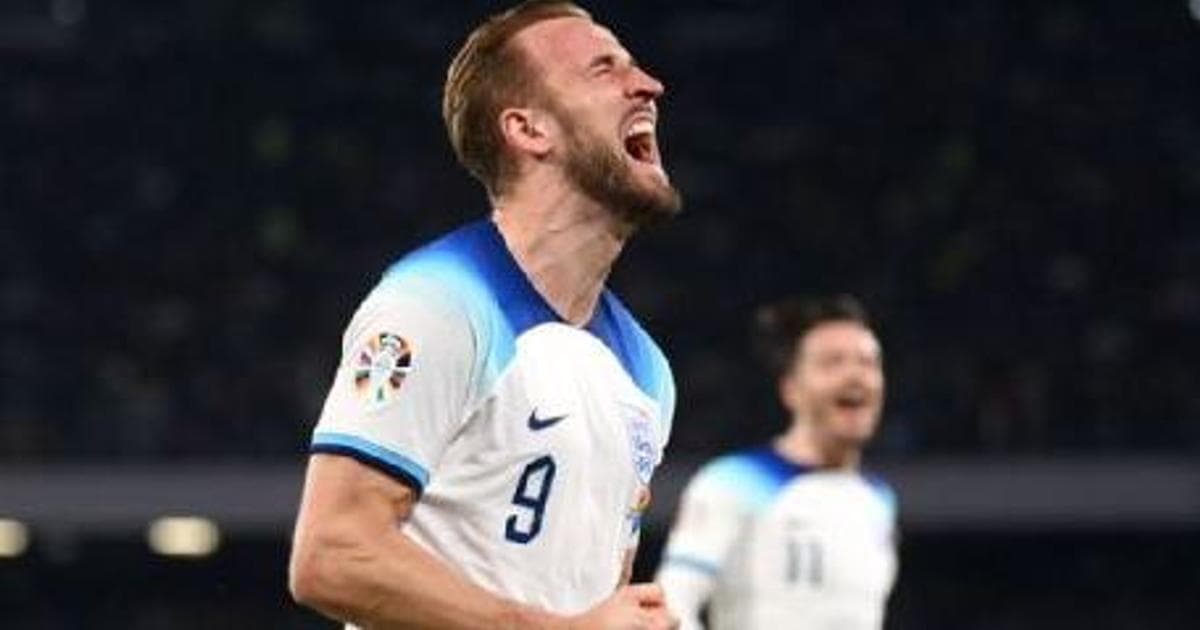
Kane did not just hit the ball. He hurled his whole frame at it. Hips rotating, arms whipping through the strike, zero concern for the landing. A technically perfect, physically brutal piece of finishing.
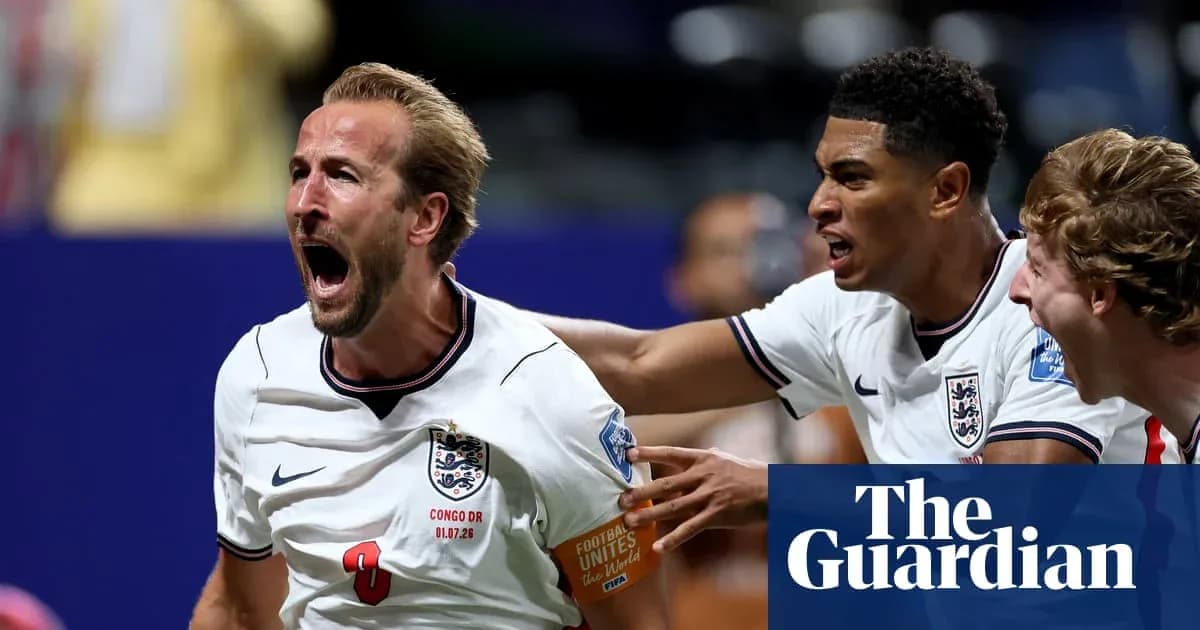
That moment summed up where he is. This is an athlete at absolute peak power, and right now he is the reason England are still at this World Cup and Thomas Tuchel is still in work. Against the DRC in Atlanta, with England stumbling, their captain dragged them through: a clever header to level, then that thunderous winner to seal a last‑16 tie with Mexico at the Azteca.
For all Kane has done in an England shirt, this felt different. This felt like a defining night.
A modern great, chasing ghosts
The numbers are already historic. Those two goals took him to 84 in 118 caps. Nobody from this country has ever scored more for England. He has five in four games at this tournament, right in the hunt for another Golden Boot, and he has moved past Gary Lineker’s World Cup tally.
So where does he sit in the all-time conversation?
On raw output, he is out on his own. On influence, he is closing fast. When Gary Neville, Roy Keane, Ian Wright and Jill Scott sat on the Stick to Football podcast and calmly placed Kane in England’s top three with Bobby Moore and Sir Bobby Charlton, it did not feel outlandish. It felt like an overdue admission.
Yet there is still a gap. Moore lifted the World Cup in 1966. Charlton won the Ballon d’Or that same year. Kane’s tournament story has always come with an asterisk. He has arrived undercooked, faded late, or simply fallen short when the stakes were highest.
He was subdued in the Euro 2020 final. In Qatar, he ballooned a late penalty against France that could have dragged England’s quarter-final into extra time, a miss that stalked him for months. At Euro 2024 he trudged off, substituted in the final against Spain, and the whispers grew louder: Kane is slowing. Kane is on the slide.
The evidence on the pitch this season has torn that theory apart. He has 72 goals for club and country. He is firmly in the Ballon d’Or conversation. At this World Cup he has covered 43,433 metres, more than any other England player. This is not a forward winding down. This is a forward reinventing what his prime looks like.
Layers on layers
Kane has never stood still as a footballer. Early in his career he was a penalty-box finisher. Then came the deeper drops, the quarterback passes, the clipped through-balls that turned him into a playmaker and a No 9 at the same time. There is no striker in world football who combines those two roles better.
The strike against the DRC was a reminder of the work behind that evolution. The conditioning, the recovery, the willingness to squeeze every marginal gain out of his body. The winter break in Germany has helped. So has Bayern Munich’s domestic dominance, which has allowed Tuchel to rest him at times instead of running him into the ground.
“It’s probably the best I’ve felt in my career,” Kane said. That is not a throwaway line. He spoke about a deliberate decision last summer to become “even fitter”, to upgrade his recovery, to chase any detail that might keep him on the pitch. Then he added the one ingredient no player can control: “You need a bit of luck to stay injury free.”
The numbers back up the feeling. He tracks his stats after every match. Distance, sprints, high-intensity runs. It is not vanity; it is a feedback loop. If the captain is emptying himself every game, there is no hiding place for anyone else.
“If you’ve got the leaders training and running like I do, it only helps,” he said. That is the standard now.
Carrying a flawed team
England need every inch of that standard, because this is not a flawless side. The wingers have flickered rather than burned. The midfield looks like it has heavy legs. The defence has had its uneasy moments. At right-back, injuries have turned selection into a weekly puzzle.
Kane and Jude Bellingham have become the spine, the certainty, the difference. When the rest of the structure wobbles, those two hold the thing up.
Now comes Mexico in Mexico City. The Azteca. Altitude. Noise. History. All of it.
Kane is not pretending England can control every variable. “There is not much we could do with altitude training,” he admitted. They spent 10 days in Florida working in the heat, trying to acclimatise to something, anything. Altitude was another matter. To prepare properly, they would have needed to base themselves in Mexico for a long stretch. That was never realistic.
So they accept the disadvantage. They lean on professionalism and small tricks – hydration, pacing, rotations – and they get on with it.
“We have to deal with adversity every now and then,” Kane said. If they come through, the conditions will not be an excuse; they will be part of the story.
Learning how to win ugly
Kane talks a lot about peaking at the right time. Tournament football has taught him that the perfect performance is a luxury, not a requirement. Kyle Walker, watching on now as a former England right-back, pointed out that sometimes the most important wins are the ones you almost don’t deserve.
Kane agreed. “You very rarely see the team come out of the gates hot and then sustain that all the way through to the end,” he said. It happens, but not often. Most successful campaigns are built on awkward nights, on games that don’t flow, on moments where you simply refuse to let go.
Against the DRC, England were poor for long spells. They still found a way. That matters. “There’s not always a perfect way to win,” Kane said. At the Azteca they may have to grind, to suffer, to embrace a game that looks nothing like the idealised version drawn up on a tactics board.
Mexico will be at home. They will be playing for pride, for the country, for a place in the next round. England will need to be ruthless, but also resilient.
A captain who now speaks up
Kane has never been a ranter. His leadership has usually been quiet, built on example rather than volume. That is changing.
After the final whistle in Atlanta, he pulled his teammates into a huddle on the pitch and spoke. It was raw, visible, the kind of thing he normally shies away from because it can “look a little bit staged”. This time, he felt it was necessary.
He wanted them to feel the moment. To enjoy it. To understand that a dramatic World Cup win is not something to be brushed aside with a shrug and a “job done”. He had seen the opposite before. After beating Panama at a previous tournament, he sensed that England had treated progress as routine, as if these things always fall into place.
“It’s easy as an England player sometimes to take things for granted,” he said. He is determined this group will not.
The aim is not to relive old memories. It is to create new ones.
The edge that never leaves
That edge was visible when he talked about the first-half penalty that never came. Kane is still incredulous that the officials decided he had manufactured contact with Lionel Mpasi. From his perspective, he reached the ball first, took a shove in the back, and then had a goalkeeper charging at him.
“It’s a clear penalty,” he insisted. He outlined the calculation every striker makes in that split second: try to hurdle the keeper and you probably go down anyway, without a foul; leave your leg in and you risk “serious, serious injury”. He chose to protect himself. The keeper, he argued, initiated the contact. If it had been a defender rather than a goalkeeper, he is certain the whistle would have gone.
He expected the referee to give it. He expected VAR to intervene when he did not. Neither happened. The anger still lingers, but the result has dulled its edge. “In the end it doesn’t matter because we won.”
That is Kane now. Still burning at perceived injustice, still forensic about the details, but increasingly ruthless about what actually counts.
The next test is the Azteca, the altitude, and a Mexico team that will run until their lungs burn. England will go there with flaws, questions and a captain playing the best football of his life. If this is the tournament where Kane finally nails that career-defining run, how far can he drag them?