Hellas Verona vs AC Milan: A Tale of Two Seasons
The afternoon at Stadio Marcantonio Bentegodi closed with a familiar feeling for both sides, but for very different reasons. Following this result, Hellas Verona’s 1-0 home defeat to AC Milan in Serie A’s Regular Season - 33 felt like another chapter in a grim survival story, while Milan’s narrow win was the professional, controlled performance of a side chasing the title rather than spectacle.
I. The Big Picture – contrasting trajectories
Heading into this game, the table already told a stark story. Verona were 19th with 18 points from 33 matches, marooned in the relegation zone and carrying a bruising goal difference of -33 (23 scored, 56 conceded overall). At home they had played 16 times, winning just once, drawing 4 and losing 11, with only 12 goals scored and 25 conceded. It is the statistical profile of a side constantly under siege, averaging just 0.8 goals for at home against 1.6 conceded.
Milan arrived in Verona as the antithesis: 2nd in Serie A with 66 points from 33 games, their overall goal difference a healthy +21 (48 for, 27 against). On their travels they had been relentless: 17 away matches, 10 wins, 5 draws, only 2 defeats, scoring 26 and conceding just 11. An away average of 1.5 goals for and 0.6 against underpinned the quiet authority with which they approached this fixture.
The 1-0 scoreline, sealed by a first-half strike before the interval (Milan led 1-0 at half-time and held it to full-time), felt almost preordained by those numbers: Verona struggling to create and convert, Milan efficient and defensively assured.
II. Tactical Voids – Verona’s thin margins, Milan’s control
Paolo Sammarco set Verona up in a 3-4-2-1, a shape designed to crowd central zones and protect a fragile back line. L. Montipo stood behind a trio of V. Nelsson, A. Edmundsson and N. Valentini, with D. Oyegoke and D. Bradaric tasked with patrolling the flanks. Inside, J. Akpa Akpro and R. Gagliardini formed a combative double pivot, while R. Belghali and A. Bernede floated behind lone striker G. Orban.
The absences only deepened Verona’s structural fragility. K. Bowie was out injured, while D. Mosquera and S. Serdar were sidelined by knee injuries, and A. Sarr listed as inactive. In a squad already short on top-tier creativity and depth, these missing pieces reduced Sammarco’s ability to alter the game’s rhythm from the bench or to rotate his defensive line.
Discipline has been a season-long tightrope for Verona. Overall, they have collected a spread of yellow cards with a notable mid-game spike: 23.38% of their yellows come between 46-60 minutes, and a late flurry of 14.29% between 76-90. More telling is their red-card pattern: 25.00% of reds arrive in the opening 0-15 minutes, another 25.00% between 46-60, and a volatile 50.00% in the 76-90 window. It is a profile of a side that can be emotionally fragile under pressure and late in games.
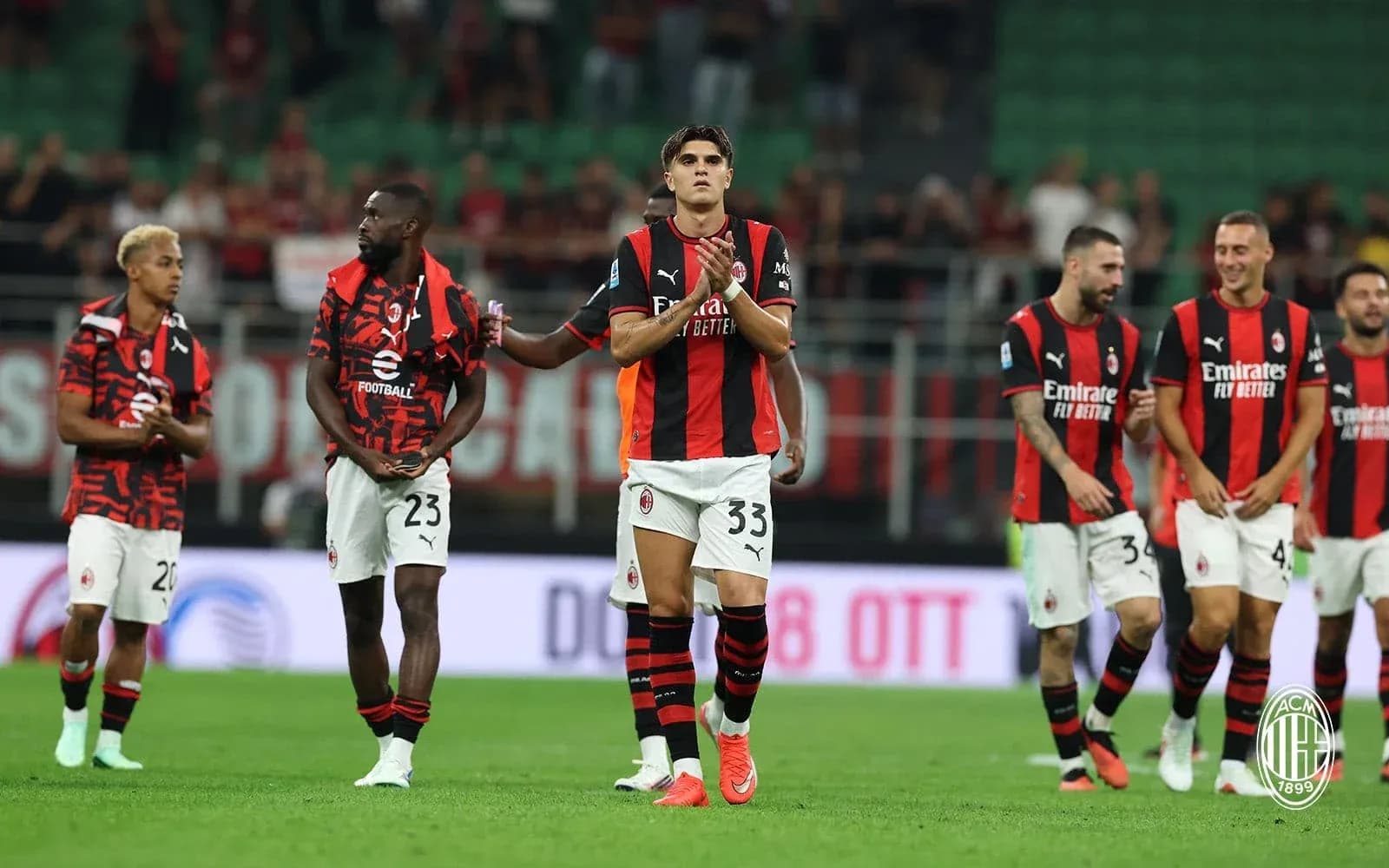
Milan, by contrast, arrived with a stable 3-5-2 that has been their backbone all season (29 league matches in this shape). M. Maignan anchored a back three of F. Tomori, M. Gabbia and S. Pavlovic, with Z. Athekame and D. Bartesaghi wide and a central trio of Y. Fofana, L. Modric and A. Rabiot. Up front, R. Leao and C. Pulisic formed a fluid, mobile front two.
Their disciplinary record is firmer but still aggressive: 24.00% of yellow cards come between 76-90, and 20.00% between 46-60, reflecting a team that often defends leads by raising intensity. Red cards have been rare but impactful, with 50.00% of them shown in the 46-60 window and 50.00% between 91-105, usually when protecting narrow advantages.
III. Key Matchups – Hunter vs Shield, Engine Room wars
Hunter vs Shield was always going to be framed around Milan’s attacking stars against Verona’s fragile defensive record. Overall, Verona concede 1.7 goals per game, with 1.6 at home, while scoring only 0.7 in total and 0.8 at home. Into that imbalance walked Rafael Leão, whose Serie A campaign has produced 9 goals and 3 assists in 25 appearances, and Christian Pulisic, with 8 goals and 3 assists in 26 games.
Leão’s profile – 40 shots, 23 on target, 51 dribbles attempted with 22 successful – is that of a forward who constantly stresses defensive lines. Pulisic adds incision and craft: 36 shots (23 on target), 36 key passes and 56 attempted dribbles with 26 successful. Together, their movement between Verona’s wide centre-backs and wing-backs repeatedly tested the 3-4-2-1 structure, particularly when Verona’s midfield line was dragged out by L. Modric’s positioning between the lines.
On Verona’s side, the “Hunter” was G. Orban, whose season has been a mix of promise and frustration: 7 goals and 2 assists in 28 appearances, but also a red card and a modest rating of 6.51. He has taken 61 shots with 28 on target and attempted 38 dribbles with 19 successful, numbers that suggest volume but not ruthless efficiency. Against a Milan defence that concedes just 0.6 goals away and has kept 8 away clean sheets, his margin for error was always slim.
In the Engine Room, A. Rabiot was the game’s quiet conductor. Across the season he has 6 goals and 4 assists in 24 appearances, underpinned by 1,115 passes at 85% accuracy and 21 key passes. Defensively, he has 46 tackles, 5 blocked shots and 14 interceptions, and has drawn 43 fouls. Alongside him, Modric and Fofana provided circulation and pressing triggers, suffocating Verona’s attempts to build through Gagliardini and Akpa Akpro.
For Verona, Gagliardini and Akpa Akpro epitomise their combative, survivalist midfield. Gagliardini has made 61 tackles, blocked 10 shots and produced 50 interceptions, while committing 37 fouls and collecting 8 yellow cards. Akpa Akpro mirrors that edge: 39 tackles, 6 blocked shots, 18 interceptions, 34 fouls and another 8 yellows. Their job was to disrupt, but against Milan’s superior technical base they were often chasing shadows rather than dictating tempo.
IV. Statistical Prognosis – xG in disguise, and what this result confirms
Even without explicit xG numbers, the season-long data sketches a clear Expected Goals landscape. Heading into this game, Verona’s total scoring rate of 0.7 goals per match, combined with 17 total matches in which they have failed to score, suggests a consistently low attacking xG profile. Milan’s 1.5 goals per game overall, coupled with only 5 total matches without scoring and 14 clean sheets, points to a side that regularly wins the xG battle through controlled, repeatable patterns rather than chaos.
The 1-0 outcome fits that pattern almost perfectly. Milan, with 48 goals for and 27 against overall, are built for narrow, controlled victories on their travels; Verona, with 23 goals for and 56 against, are built – by necessity rather than design – to cling on and hope. When Milan went ahead before half-time, the weight of those numbers hung over the Bentegodi: Verona’s limited firepower against one of the league’s most disciplined away defences.
Following this result, the trajectories harden. Verona remain locked in a relegation narrative shaped by a porous defence and blunt attack, their 5 total clean sheets and 3 total wins from 33 matches a stark reflection of their reality. Milan, with 19 total wins and a defensive record of just 27 goals conceded in 33 games, continue to behave like a side whose xG and defensive solidity will keep them in the title conversation until the final weeks.
This was not a spectacular match. It was, instead, the logical consequence of two seasons: one of control and upward ambition, the other of attrition and impending fall.