Inter Milan Secures Serie A Title: A Season of Dominance
By the time the final whistle blew, it felt less like a coronation than a confirmation. Inter were always going to be champions. Parma were just the last name on a long list.
They did not even need this win at San Siro. A draw would have done. This weekend. Next weekend. Any of the two after that. Their rivals had already folded, one by one through the spring and then, brutally, all together. Napoli, Milan, Juventus – none of them won. It barely mattered. The title race had been over for weeks; the maths just took a little longer to catch up.
Inter finish this round 12 points clear, having started it 10 ahead. They are the best team in Serie A by a distance that feels almost indecent. Eighty-two league goals in a campaign where nobody else has yet reached 60. Seventeen clean sheets, a mark only Como can match. The numbers tell you one story. The way they handled Parma told you the rest.
Champions in cruise control
Parma arrived in Milan with nothing tangible left to chase, safe in mid-table, but they refused to play the part of willing victims. They snapped into tackles, they ran, they tried to break whenever the chance appeared. For 44 minutes they even kept Inter out.
They needed help from the woodwork. Nicolò Barella rattled the crossbar on 25 minutes, the ball cannoning down on to Zion Suzuki, who reacted superbly, scrambling back to claw it off the line as Marcus Thuram closed in. It felt like a reprieve. It was only a delay.
Just before the interval, Piotr Zielinski threaded a pass into the right channel, and Thuram did the rest, sliding his finish across Suzuki and into the far corner. One chance, one incision, one more reminder of the gulf between a good side and a great one.
The second goal underlined another of this Inter’s defining traits. Two substitutes combined, Lautaro Martínez rolling the ball across goal for Henrikh Mkhitaryan to finish. Fresh legs, same standard. This is how titles are won over 38 games: not just with stars, but with a bench that looks like a starting XI.
Inter’s depth has carried them through a season that should have broken them. Lautaro, their captain and Serie A’s top scorer, has missed 10 starts with a persistent calf problem. Denzel Dumfries lost three months and needed ankle surgery. Hakan Calhanoglu, a metronome in midfield and good for a goal every 183 minutes, managed only 22 league appearances.
The wobble never came.
Chivu’s gamble, Chivu’s title
That resilience is shared across the dressing room, the boardroom and the stands, but it reflects most clearly on one man: Cristian Chivu. When he was appointed last summer to replace Simone Inzaghi, few saw this coming. Inter were not even chasing him at first.
The club went after Cesc Fàbregas, only to be told he was staying with his Como project. Chivu was the curveball, a former defender revered by Inter fans but still raw as a coach. His only senior management job had been a 13-game rescue mission at Parma in the second half of the 2024–25 season, when he dragged them clear of relegation.
What he did have was history. Seven years as a player in nerazzurro, three Scudetti, and a place in the treble side. Six more years in the club’s youth setup, learning the trade and the culture. Even so, handing him a team still traumatised by last season’s collapse looked like a huge roll of the dice.
Inter had chased a quadruple under Inzaghi, only to end with nothing and a 5–0 humiliation by Paris Saint-Germain in the Champions League final. There was no time to lick wounds. The Club World Cup in the United States began two weeks later. Inter went out in their first knockout tie, losing 2–0 to Fluminense. Tempers flared.
Calhanoglu and several other injured players were allowed to leave the training camp to continue their rehabilitation at home. Rumours swirled that he was talking to Galatasaray. Lautaro, who had played through his own injuries, let rip.
“You have to want to be here. We are fighting to achieve something. Anyone who doesn’t want to be here, can leave.”
Ten months on, both he and Calhanoglu were on the pitch at San Siro, parading a giant cardboard Scudetto badge with the number 21 printed across it, passing it between teammates like a trophy before the real one arrives. Calhanoglu spoke of a group that had become a family under Chivu. Lautaro, speaking to Dazn, stood by his words from last summer but insisted they belonged to the past. The tension that once threatened to tear Inter apart has instead hardened them.
Evolution, not revolution
Chivu did not arrive with a wrecking ball. Inter under Inzaghi had already played some of the most daring, intricate football in Europe. The new coach chose to evolve, not erase. The basic structure remained; the tweaks came in the margins – a sharper press, a more direct edge when the space opened up.
On the European stage, the step back is obvious. Last season’s Inter beat Barcelona and Bayern Munich before collapsing against PSG. This season they did not even reach the last 16, falling to Bodø/Glimt in the knockout phase playoff. At home, they stumbled in the big showdowns too: two defeats to Milan, just one point from two games against Napoli, and a solitary win over Juventus that came after a contentious red card for Pierre Kalulu.
And yet, leagues are not decided in half a dozen scontri diretti. They are decided in January away days, in heavy pitches, in the grind. From November to February, Inter won 14 of 15 league matches, interrupted only by a 2–2 draw with Napoli. While others gasped for air, they kept running.
They have outlasted everyone.
This is not a title won solely by familiar faces. Francesco Pio Esposito, Ange-Yoan Bonny and Petar Sucic have all played their part, fresh energy stitched into an old shirt. Inter even had to rip up their transfer blueprint last summer when they failed to land their top target, Ademola Lookman. They built something different instead.
Federico Dimarco filled any creative gap with one of the most outrageous seasons you will see from a full-back: 17 assists from the left flank, a constant outlet and a constant threat. It is the sort of contribution that shifts a season’s balance almost on its own.
A club that keeps finding a way
This Scudetto is Inter’s third in six years, each under a different manager. The club has changed faces but not its habit of finding solutions. Chivu, still carrying doubters in some corners, has already achieved what giants of the dugout could not: he is the first Inter coach since José Mourinho to win the league at the first attempt.
He may not be finished. Lazio await in the Coppa Italia final on 13 May, with the chance of a domestic double on the line. The official Scudetto party has been pushed back until after that, with the Serie A trophy to be lifted following the final home game against Verona four days later.
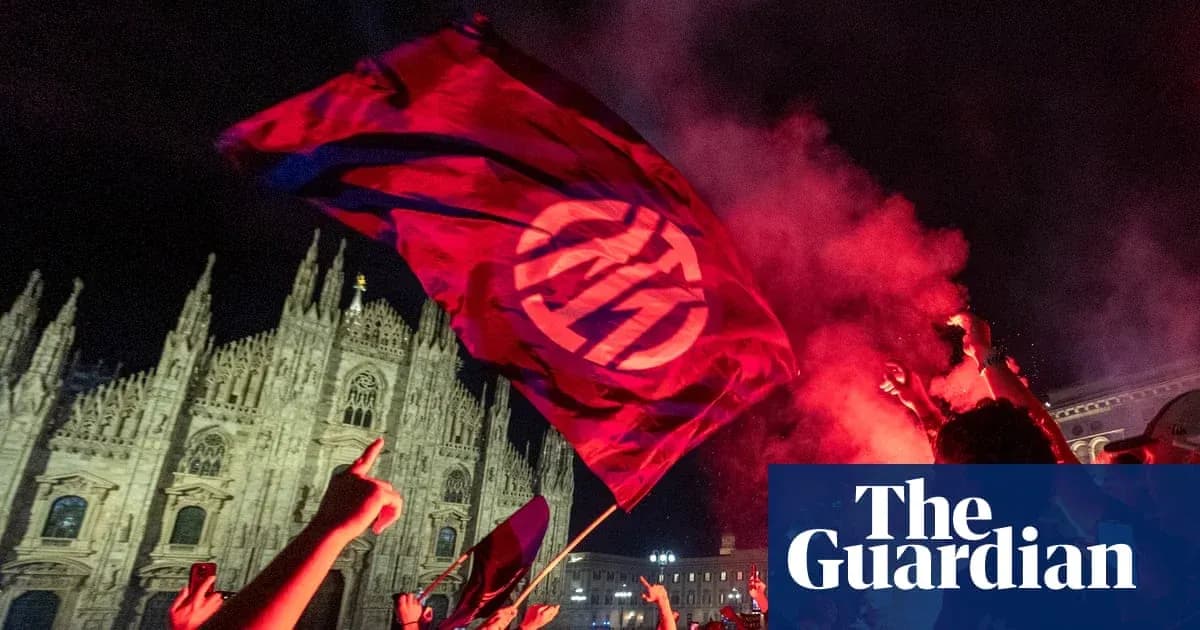
Yet there was no sense of restraint on Sunday night. Once the fireworks and streamers had cleared from the San Siro pitch, Lautaro, Dimarco, Thuram, Barella, Pio Esposito and others made the familiar pilgrimage into the city centre, joining thousands of supporters in Piazza Duomo. Horns, flares, flags, songs that have waited a year to be sung.
Twelve months ago, Inter stood on the brink of something historic and watched it all crumble. This time they did not let go. The question now is not whether they deserved this title. It is how long this new cycle, born from the ashes of the last, can keep rolling over Italy.