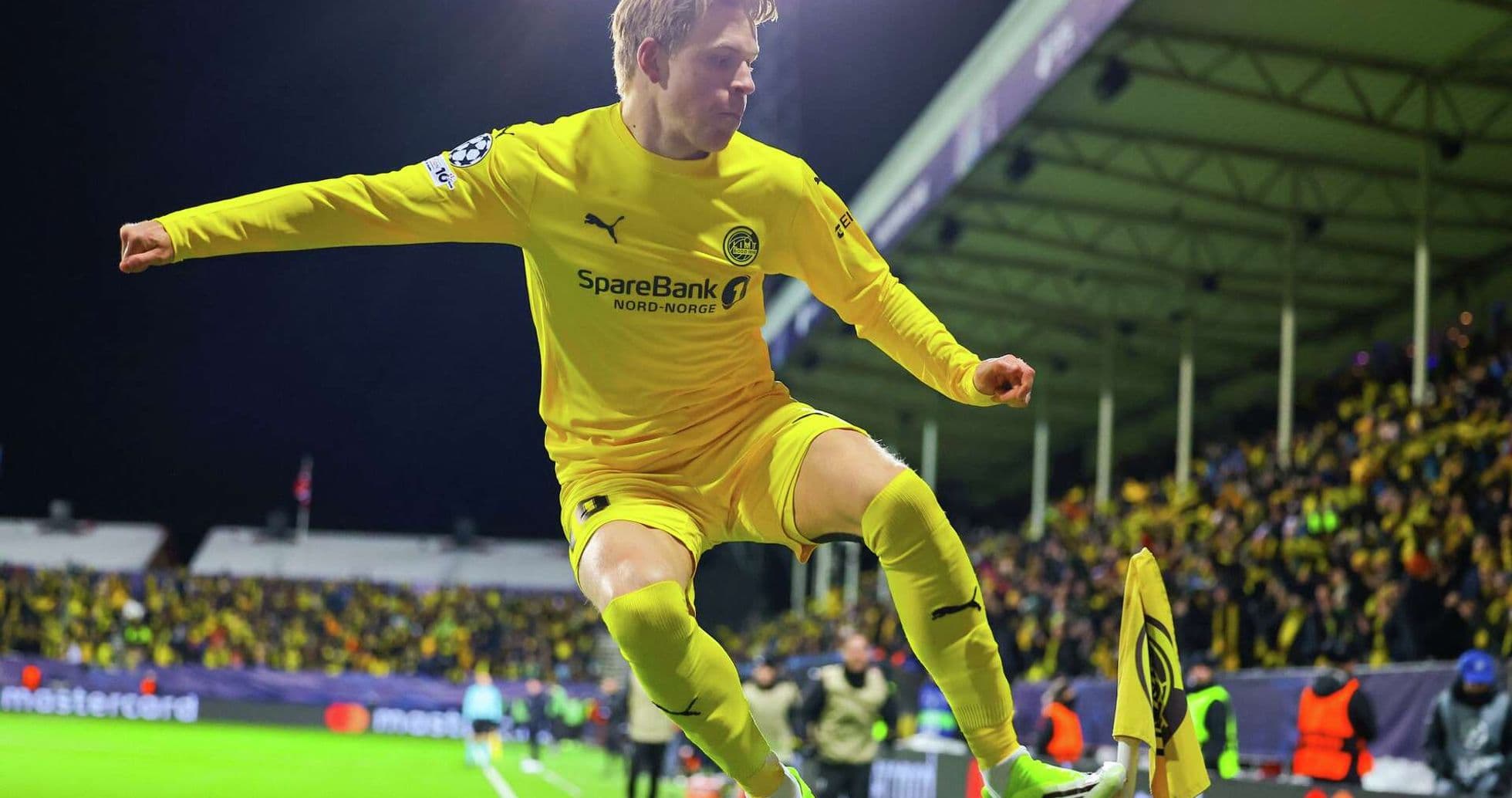
Inter vs Bodo/Glimt: Champions League Redemption in Milan
The Champions League returns to Milan with a compelling Round of 32 second leg as Inter host Bodo/Glimt, and the narrative writes itself: redemption versus belief. Just six days earlier in the Arctic cold of Bodø, the Norwegian side stunned Europe with a 3–1 home win, turning this tie on its head and leaving the Italian giants with a mountain to climb. Now, under the lights in Milan, with A. Hernandez in charge, Inter must overturn a two-goal deficit to keep their European campaign alive.
In the broader Champions League standings, Inter sit 10th in the overall table with 15 points and a strong +8 goal difference, a side expected to push deep into the knockouts. Bodo/Glimt, 23rd with 9 points and a -1 goal difference, are the upstarts who have already exceeded expectations. Inter’s recent form (WLLLW) hints at inconsistency at the worst possible time, while Bodo/Glimt’s sequence (WWDLL) suggests a side capable of both brilliance and vulnerability. The stakes are simple: Inter fight to avoid embarrassment and elimination; Bodo/Glimt chase the biggest scalp in their European history.
Form Guide & Season Trends
Inter’s Champions League campaign has largely been impressive, even if the recent wobble is worrying. Across the competition they have won 5 of 8, losing 3, scoring 15 and conceding just 7. That defensive record – fewer than a goal per game – underpins why they were fancied to control this tie. At home, though, they have been less than invincible: 2 wins and 2 defeats in 4, with 6 goals scored and 5 conceded. San Siro (even if unnamed in the data) has not quite been the impenetrable fortress Inter would want at this stage.
Their attacking numbers still inspire confidence. Inter average 1.8 goals per game in this Champions League run, with a clear trend of striking before the break: 5 of their 16 goals have come between 31–45 minutes, and another 3 between 16–30. If they are to turn this tie around, an early wave of pressure in the first half feels almost inevitable. Defensively, they concede late too often – 30% of goals against arrive in the final quarter of an hour – a warning sign if this second leg becomes chaotic.
Bodo/Glimt, by contrast, embody the fearless, open style that has become their trademark in Europe. Over 11 Champions League matches this season they have scored 23 times – a healthy 2.1 per game – with a particularly strong home output (2.5 per game). Even away from home, they average 1.6 goals, proof that their attacking threat travels. They share Inter’s tendency to score in bursts: 5 goals between 16–30 minutes and another 5 between 61–75 underline their capacity to hurt opponents either side of the hour mark.
The issue for the Norwegians is at the other end. They have conceded 18 goals (1.6 per game), and away from home that rises to 2.0 per match. Their defensive minute distribution is telling: nearly half of their goals conceded come between 16–60 minutes, precisely when Inter’s own attack tends to hit its stride. Bodo/Glimt have just one clean sheet in the competition and none away; they rarely fail to score, but they almost always give you chances. In a second leg where Inter must attack, this shapes up as a high-risk, high-reward encounter for both.
Head-to-Head History
The recent history between these two is short but explosive. The first leg in Bodø finished 3–1 to Bodo/Glimt, a result that reverberated around Europe. Inter had drawn level by half-time after going behind early, only to be overrun in the second half as the Norwegians struck twice more to take a commanding lead. That game encapsulated many of the trends in the data: Bodo/Glimt’s ability to score in multiple phases of the match, and Inter’s vulnerability late on.
Beyond that single recent clash, there is no long-standing European rivalry to draw on, which adds to the intrigue. This is not a meeting weighed down by history but one being written in real time. What we do know, from that 3–1, is that Bodo/Glimt are not overawed by the name or reputation of Inter. They attacked with ambition, pressed bravely, and exposed spaces in transition. For the neutral, that first leg suggests the return in Milan is unlikely to be cagey; both sides know where the weaknesses lie.
Team News & Key Men
Inter’s biggest concern is not just the scoreline but the absence of their talismanic striker Lautaro Martinez. The Argentine is ruled out with a calf injury, a huge blow given his importance as a goalscorer and reference point in Simone Inzaghi’s 3-5-2 system. Without him, Inter must redistribute the goal burden across the remaining forwards and midfield runners. The team’s season numbers – 16 goals in 9 Champions League matches – show they can share the scoring load, but losing their primary finisher on a night that demands goals is a significant setback.
For Bodo/Glimt, the absences are less damaging in terms of star power. M. Bro Hansen and G. Sunday are listed as missing, but neither is among their headline attacking threats. Crucially, their two standout forwards are available – and in outstanding form. Jens Petter Hauge has been one of the Champions League’s surprise stars this season, with 5 goals and 3 assists in 10 appearances, backed up by an impressive all-round contribution: 27 key passes, 56 dribble attempts with 29 successful, and 18 tackles underline a winger who works as hard as he dazzles.
Alongside him, Kasper Høgh has also delivered 5 goals and 3 assists in 10 matches. He is more of a classic centre-forward presence, with 27 shots and 14 on target, constantly asking questions of defences. That twin threat – Hauge cutting in from wide areas and Høgh occupying centre-backs – is exactly what troubled Inter in the first leg and will again test their three-man backline. With Bodo/Glimt comfortable in 4-3-3 and capable of switching to other shapes, their front line will be central to any away goals that could kill the tie.
The Verdict
All the ingredients are in place for a dramatic Champions League night in Milan. Inter, wounded and missing Lautaro Martinez, must balance urgency with control against a Bodo/Glimt side that thrives in open, end-to-end contests. Expect Inter to start aggressively, looking to score before half-time, while the Norwegians will back their attack to find space on the break. The hosts have the pedigree and underlying numbers to win on the night, but Bodo/Glimt’s firepower and first-leg cushion mean the tie itself feels finely poised. Inter look likely to edge the match; whether that is enough to advance is another question entirely.